Vikrant K. Nikam1*, Sachin Suryawanshi1, Jyoti Khapare2
1Amrutvahini College of Pharmacy, Sangamner 422 608, (MS), India
2Dr. Naikwadi College of Pharmacy, Jamgaon Sinnar 422 113, (MS), India
*Address for Corresponding Author
Vikrant K. Nikam
Amrutvahini College of Pharmacy, Sangamner (M.S.) 422608 India
Abstract
The protein and Peptide delivery system is the Novel drug Delivery System. Proteins and peptides are the most abundant components of living cells. There are those that act as enzymes, hormones, structural element and immunoglobulin. Twenty different naturally occurring amino acids combine with each other through peptide bonds and form polymers targeting peptides and proteins. Although the difference between peptides and proteins in peptide contains less than 20 amino acids, they have a molecular weight of less than 5000, while the protein has 50 amino acids or more and its molecular weight is above this value. Most pharmaceutical proteins and peptides are absorbed by IM, IV and the Subcutaneous route of Absorption, but the oral route is better absorbed by protein compared to another. Various problems associated with protein and peptide drug administration are needed to overcome various drug regimens. A few ways available to increase pharmacokinetic and pharmacodynamics properties are chemical modification, construction vehicles, mucoadhesive polymeric system, use of enzyme inhibitors, absorption enhancers, infiltration enhancers etc. Current review defines structure, protein separation, need, benefits, protein function and peptide drug delivery system.
Keywords: Properties of protein and peptide, advanced techniques of protein, peptide drug delivery
Introduction
Proteins are amino acid strings, each joined to its neighbor by a particular sort of covalent bond. The polymerization of L-α-amino acids by peptide bonds shapes the basic structure of proteins. The term Protein is found as samples consisting of about 50 amino acids. The term peptide is utilized for particles made out of under 50 amino acids (Bhargav, 2017). Protein and peptide is a very high potential of a therapeutics now the market of protein Drugs are projected to be more than US$ 40 billion a year and the prescription industry accounts for 10 percent. These protein and peptide such as some limitation as like less bioavailability and the metabolic liability. Peptide is mainly designed for the target the broad range of molecule and gives such a limitless possibilities in the field such as a oncology, immunology, infectious disease and endocrinology (Bruno et al., 2013). Protein and peptide are biopolymer that containing a two or more amino acid on hydrolysis. And their principle is a protoplasm of cell and are more molecular weight of compound that consist an alpha amino acid connected by the peptide linkage. One disadvantage of protein peptide is when we given by the orally is not achieve the target of therapeutically acceptable bioavailability because of their enzymatic barrier (Gupta and Sharma, 2009). the important commitments and enormous accomplishment of organic proteins (hormones and monoclonal antibodies) keep on elevating the enthusiasm of pharmaceutical makers Reasons, for example, wide range of activity just as high adequacy, wellbeing, and selectivity to focuses, among others, represent the expanded acknowledgment of restorative proteins and peptides However, difficulties, for example, poor in vivo soundness of proteins and peptides, helpless oral bioavailability and low film penetrability keep on influencing the full abuse of this class of therapeutics. The current report gives an outline on the key creation strategies just as drivers and limits to the abuse of protein and peptide therapeutics (Agyei et al., 2017).
Properties of protein and peptide
Advanced technique of protein and peptide drug delivery
Pulmonary drug delivery
Pulmorrhea is the alternate path to the medication delivery mechanism for protein and peptides. Lungs is the region supplying more surface to consume the drug. So it's between 80-140 m2. Alveolar epithelium is also a rapid absorption of drugs, and its size is about 0.1-0.5 mm thick. Pneumonic conveyed drugs are quickly assimilated aside from huge macromolecular medications which yield low bioavailability on account of enzymatic debasement or potentially low mucosal action. Pneumonic bioavailability of these medications can be upgraded by consolidating entrance enhancers and convey medications to ailing lungs by utilizing perfluorocarbon liquid dispersing the oedematous liquid by sedate broke up perfluorocarbon (Agarwal et al., 2018). Newest turns of incidents: Many brand new operators are currently under scrutiny to get pneumonic conveyance, the two for focused lung just as foundational conveyance. These incorporate advancement hormones (for development hormone inadequacies) Antitrypsin (for emphysema and cystic fibrosis), interferons (including various sclerosis and hepatitis B and C), and harmone to para-thyroid glands (PTH) and unique peptides (for osteoporosis). Means of tissue focusing on and manhood concentrating as immunizations may similarly applies to quality treatment inward breath conveyance plans. As steam with Amylin Pharmaceuticals, Inc.,'' Alkermes has built up a formerly seven days Medisorb® detailing of BYETTA® (exenatide) for the procedure of type two diabetes known as exenatide LAR. Like being a crew with Eli Lilly and organization, Alkermes is utilising the AIR® (Advanced Inhalation study) pneumonic medication conveyance innovation to generate breathed in definitions of insulin and recombinant parathyroid hormone. Aradigm has generated in distributing insulin and morphine into the lungs AERx pneumonic innovation, which would assist. Nektar Therapeutic at a joint attempt using Pfizer began dosing first diabetics for stage III preliminary for insulin Exubera®. A few medications are as of today explored for anticipated essential ingestion by Way of pneumonic frame that comprises insulin, calcitonin, luteinizing-hormone discharging hormone (LHRH) analogs, granulocyte state animating variable (rhG-CSF) and human growth hormone (hGH) (Agarwal et al., 2018).
Transdermal technology
The upsides of transdermal medication conveyance (TDD) have helpful advantages, for example, supported conveyance of medications to give a consistent plasma profile.Various methodologies have been proposed for beating the skin's imposing obstruction work; albeit, certain techniques just follow up on the medication detailing or transitorily increment skin penetrability, others are intended to evacuate the furthest skin layer. Transdermal class for its conveyance of proteins and peptides is especially alluring for an variety of factors as just about every other path (i.e., rectal, buccal, rectal, rectal, vaginal and pneumonic) present enzymatic action and debasement because of esophageal tract and also the first pass digestion, though, epidermis has amino peptidases, which show less probiotic action. Meaning this peptide tranquilize's bioavailability conveyed is enlarged. Macroflux Ep-i transdermal fix innovation has been created to communicate medications in a controlled, reproducible way That Improves the bioavailability and adequacy without Having enormous distress to the sufferers.
Microneedle technology
Micro-needle scope include additional projection constructed using a single part of their inviting base various in elevation from twenty five to 900 µm. Micro-needle selection is genuinely a easily bypass the stratum corneum barrier by generating momentary compound aqueous channels in your skin In which drug molecule the thick microcirculation contained from your dermis will coagulate. Each type of micro needle includes its particular points of attention and obstacles as well as the type of micro needle required for this purpose. The enlarged trans-dermal conveyance of a particular medication. Strong micro-needles might be joined with any regular drug definition of aloof dispersion (for example trans-dermal fix, structure, cream, or gel), yet that the two-advance application method is significantly more unfeasible than alternative techniques and may dishearten perception usage. The use of coated microneedles evacuates that the two-advance application method, nonetheless, the limited surface of this needle cluster constrains the amount of medication which might be applied. Within This Fashion, Coated Micro-needles are generally restricted to utilize strong medications. (Kirkby, Hutton and Donnelly, 2020) There are a no of application is given in micro arrays in the figure 1(Chandrasekhar et al., 2013).
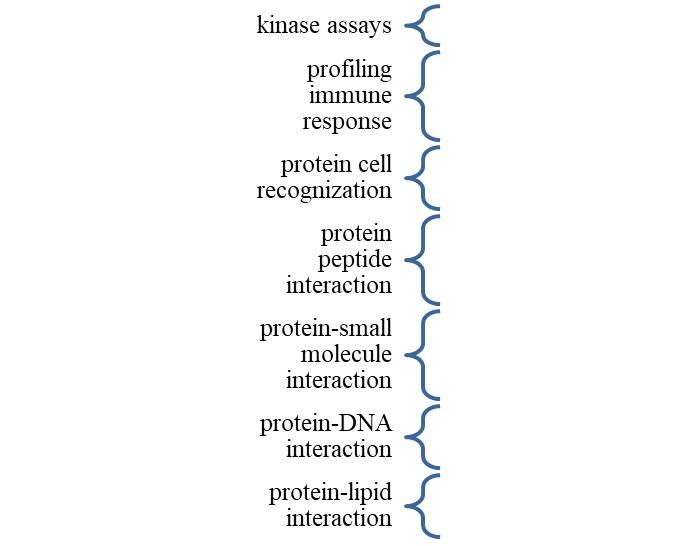 Figure 1. Application of microarray
Thermal ablation
Presently a day's warm removal conveys various medications, for example, human development hormone and interferon α-2β and insulin Thermal Ablation skin surface are warmed by many degrees for microseconds to milliseconds. By applying heat for milliseconds, heat disintegrates water in the layer corneum and causes microscale pores in the layer. In warm Ablation, heat doesn't engender to the reasonable tissues underneath (Bhatt and Aqil, 2010). Thermal ablation is the increase the drug delivery of the ablation of stratum corneum. And their application is high temperature at a short period of time. Altea Therapeutics (Atlanta, GA) has built up a protected innovation, the Pass Port® fix, which comprises of metallic fibers. At the point when an electric heartbeat is applied on the fibers, it is changed over to warm vitality, subsequently causing the restricted high temperature on the layer corneum surface which disintegrates the locale (Kalluri and Banga, 2011). Creature contemplates have exhibited the capacity of warm removal to convey various mixes, for example, human development hormone and interferon α-2b. Skin warming has been accomplished utilizing ohmic micro heaters and radio-recurrence removal. The minuscule length sizes of limited skin disturbance brought about by warm removal have brought about the strategy being all around endured. Unpublished investigations report clinical preliminaries for the conveyance of various medications, including human development hormone and insulin (Kalluri and Banga, 2011).
Oral delivery of peptides
The design of the oral ingestion of peptide is really persistent challenge. This challenge would be that the beacause of their physical and chemical attributes of protein and peptide. In which vary from the wide no of molecular size, sensitivity to enzymatic degree, fast half-life of plasma, ion permeability, immunogenicity and propensity to aggregation, adsorption and denaturation. In addition, there are a few physiological factors that influence, and as a general rule frustrate, the oral bioavailability of protein and peptide drugs, for example, gastric exhausting, travel time, the nearness of food, variety in pH over the GI tract (pH 1~8), stomach related catalysts, intestinal flora, and epithelial vehicle. Thusly, without a doubt the oral bioavailability levels of most peptides and proteins are under 1% (Mahato et al., 2003).
Strategies of the oral drug delivery is the formulate the delivery through the gastrointestinal tract. Dosage form is the stabilize the drug, at the time of taking orally. When we deliver the drug via stomach or intestinal tract then that time the protein and peptide is protect the enzymatic degradation since digestive process are designed to break down protein and peptide without any discrimination in favor of therapeutically active compound (Richard Soltero, 2000). Artificial changes such as enlargement of publication practical collecting or protease inhibitors are efficiently utilized to create the bioavailability of protein substances at the exploration centre in spite of the simple fact which they even despite what give some health concerns once regulated In vivo. Thus, there are several jobs to restrain those proteins and peptides using a non-intrusive Study Course (Gupta et al., 2013). It has been exhibited that peptides can be shielded adequately from compound and corrosive assault when managed orally by covering with specific polymers. Besides, since it is currently realized that there are destinations in the small digestive tract and colon where assimilation of these medications can happen, the chance of accomplishing conveyance of peptides by the oral course is progressively turning into a reality. This paper presents an outline of the endeavors towards the improvement of a proficient orally directed protein and peptide sedate conveyance framework and some displaying contemplations (Arhewoh and Okhamafe, 2009).
Some oral peptides are in a preclinical studies this examples are given in table. 1(Aguirre et al., 2016).
Table 1. Example of oral peptide technology in preclinical studies
|
Product |
Peptide |
Methodology to advance retention |
|
Nanomega's nanoparticulate system |
Insulin Exendin-4 |
Nanoparticles |
|
TrabiOralTM/TBL-1002OI |
Insulin |
Solid lipid nanoparticles, embattled |
|
Intravail® |
Octreotide/ D-Leu-OB-3 (Leptin)/ PTH/ GLP-1/ AFpep |
PE: alkylsaccharides |
|
Robotic pill |
Insulin |
Micro-needles/ Local pH modulator: citric acid |
Ionotophoresis
Ionotophoresis is a type of invasive method it uses a mild electric current facilitate the transdermal delivery of drug. The ongoing consideration given to this around 100-year-old innovation originates from progresses made in three advancements. Right off the bat, the far reaching quiet acknowledgment and budgetary accomplishment of latent transdermal fixes, for example, nicotine, fentanyl, nitroglycerin and estradiol include invigorated enthusiasm inside the pharmaceutical business for extra transdermal medication applicants. Also, mechanical forward leaps in the microelectronics business have empowered scaling down of programmable electronic parts at lower cost. At long last, the advances in recombinant DNA innovation and objective medication configuration are yielding a developing number of remedially significant peptides and proteins (Green, 1996). DC Iontophoresis: Siddiqui et al. utilized the phoresor framework or as of-late promoted DC iontophoretic gadget, as the induce hot spot for direct recent and had the selection to convey insulin transdermally to diabetic ants that were smooth, using satisfaction of a decrease in hyperglycemia. As of overdue a human anatomy wearable DC iontophoresis conveyance gadget, called power repair instrument, has been made and implemented to parasitic bunnies Pulse DC iontophoresis: By dispersing a heartbeat present with a 20% liability bicycle (4µsec), trailed by a 80% depolarizing interval (16µsec), a β‐blockers was efficiently conveyed foundationally into five human subjects without any polarization initiate skin aggravation. A transdermal intermittent ion to therapeutic framework (TPIS) was organized also it's designed for conveying the rhythm guide current with all variable blends of waveform, recurrence, on/off ratio and present power to get a certain span treatment. Proteins or peptides medications including insulin, TRH, salmon calcitonin, remainder actuating peptide that is delta vasopressin, leuprolide could be applied as a Result of iontophoresis (Ratnaparkhi et al., 2011; Panzade, 2012).
Selection of drug in iontophoresis
The drug applicants should be storable in fluid or dry arrangement in the mend and should really be regular. It needs to be dissolvable in watery media and be charged. The isoelectric position ought to maintain the scope of littler than twice or more noteworthy compared to 7.4. The iontophoretic gadget needs to express that the medication at subsequent way 20-50 milligrams tranquilize/day of atomic load of 300 Da, 2-5 milligrams sedate/day of sub-atomic loading of 1000 Da along with 100μg medicate/day of sub-atomic load of 5000 Da (Panzade, 2012).
Cell Pentrating peptide (CPP)
Cell-Pentrating peptides (CPPs) are short cationic as well as amphipathic peptides that can be conjugated or complexed with huge macromolecules and indeed, even minuscule particles to encourage their cell section. These peptides are typically under 30 amino acids long and disguise is seen in for all intents and purposes all cells, though with various efficiencies that rely upon the CPP, the freight and the cell-type (Holm, no date) Protein conveyance is a important apparatus in the action of disease or on the other hand disease multiplication, asthma, apoptosis, ischemia, diabetes, what's more, CPP-intervened protein conveyance is an exceptionally fascinating chance to learn such treatments. It is a difficult prospect since proteins are huge, massive particles, which should regardless hold their 3D compliance and keep up its organic action during while at the same time crossing regular obstructions for example, the blood-cerebrum obstruction and the testicular boundary. CPP can convey particles from 30 to 120– 150 kDa; be that as it may, the size of the payload may likewise represent an matter to a successful treatment (Figueiredo et al., 2014). Pentrating peptide is also usage in a anticancer therapy. A developing methodology for the procedure of malignancies depends upon dietary therapy. Twenty years back, Dowdy and spouses mentioned the objective fact that CPPs, for example, TAT may conveyance huge naturally dynamic proteins (120kDa β-galactosidase) into a few organs after intraperitoneal infusion to the mouse, without intersection exactly the BBB (Habault and Poyet, 2019). The chances to misuse precisely the one of a type houses of CPPs and bioportides as organic devices and creative therapeutics co-ordinated to intracellular goals are all complex. Within this fashion, it is exceptionally plausible the limitation of bioportides to regulate potential drug methods, fundamentally intracellular PPIs for your large part viewed as annoying focuses for habitual therapeutics, will misuse that the inherent objective explicitness, higher power and comparative protection of'biologics.' The mix rebuilding of a percentage of them guide mixes to peptidomimetic therapeutics, a technique normally implemented to overcome the frequently speedy proteolysis of simple peptides, is likewise totally possible. A number of CPPs including pVEC (H-LLIILRRRIRKQAHAHSK-NH2) plus a juxtamembrane protein component, deposits 615 to 6 32 out-of murine vascular endothelial cadherin, can be understood to cross round the blood-mind deterrent to dependably enter the cerebrum parenchyma. Inside this manner bioportide programs are not restricted to cells and tissues (Howl and Jones, 2020).
Systemic stability enhancement
A large number of the solidness enhancers talked about in the principal part of this survey have a job in expanding the fundamental steadiness of protein therapeutics also. For instance, unsaturated fat conjugation prompts broadened plasma half-lives, site explicit conveyance and supported discharge upon iv organization. Since these medications are lipophilic, they balanced out by serum lipoproteins and egg whites and will probably be solubilized. Moreover, these unsaturated fats may be expelled by way of science determined by pH, decrease, peptidases, or esterase from the protein. Non-reversible lipidization is also an option, also has been demonstrated to construct disguise and movement over non-lipidized partners (Bruno et al., 2013).
Fusogenic modification of Liposome
Various changes are made to liposomes into increment intracellular Included in a endosome. Particles littler than 300 nm as a rule do not input Cells during the pathway particles Five Hundred --700 nm are taken up by endocytosis Conveyance of carbohydrates. Now when liposomes input the phone they're (Bruno et al., 2013). A case of oral-protein polymer-covered liposomes medicate conveyance framework is Orasome TM which is an exclusive stable liposome innovation created by Endorex Corporation in advancing oral bioavailability of numerous helpful hormonal proteins and peptides, similar to insulin and development hormone (Sani et al., 2014). Proteins/peptides can once in a while be amphiphilic which makes them partner with both lipid vesicle and watery inside in this way prompting improved spillage. A genuine model for this is salmon calcitonin when all is said in done, proteins/peptides are delicate loads prompting denaturation and unfurling causing loss of their bioactivity (Swaminathan and Ehrhardt, 2012). The upsides of liposomes as peptide and protein drug delivery system are as per the following: they can encase the hydrophilic macromolecule in their inward fluid compartment encompassed by the bilayer of phospholipids, which lead to a high medication embodiment productivity and lessening the underlying medication discharge And their size, charge and exemplification proficiency of hydrophilic medications can be improved by expansion of different excipients to the lipid blend before liposome readiness as well as by utilizing diverse planning strategies (Li et al., 2012).
Nanoparticle
In the nanoparticle there is containing a protein nanocrystallization technology. So as to broaden the time span of usability of protein drugs, protein drugs are normally freeze-dried into strong structure. Be that as it may, freeze-dried protein tranquilizes regularly display protein accumulation and auxiliary structure changes, which in the long run lead to sedate loss of organic movement. Nanocrystallization is one of the approaches to keep up high soundness and organic movement of proteins. Protein nanocrystallization is another sort of oral medication conveyance framework. Protein nanoparticles with a molecule size of 50–500 nm are shaped by crystallization innovation, and stable nanoparticles are framed by charge or space adjustment of surfactants. Protein nanocrystallization can adequately ensure the organic movement of proteins, with great biocompatibility, and it is anything but difficult to corrupt and mass (Cao et al., 2019). Protein nanoparticle is also use in a cancer therapy Significant techniques for malignant growth treatment incorporate medical procedure, radiation, chemotherapy, and immunotherapy. Every one of these treatment modalities has preferences and detriments, and a mix of them is typically expected to deliver the best outcomes. Since most human malignant growths (>85%) are strong tumors, current disease treatment techniques as a rule include meddling procedures including the utilization of catheters for chemotherapy to contract the tumors before their expulsion by medical procedure. This is then trailed by more chemotherapy as well as radiation to murder the rest of the tumor cells. Exploration endeavors to improve the viability of malignant growth treatment in the course of recent years have prompted a considerable improvement in understanding endurance. Be that as it may, issues related with harmful reactions and low quality of life in disease patients stay a significant issue (Lohcharoenkal et al., 2014).
Manufacturing technique of a nanoparticle
This are all the nanoparticle manufacturing technique.it was difficult to guide the medication to target tissues by means of foundational course or over the mucosal layer. Following oral organization, particles under 500 nm can cross the M cells in the Payer'spatch and the mesentery on the outside of the gastrointestinal mucosa, conveying the medication to the fundamental course (Issue et al., 2010). You'll find different kind of plastic employed in nano-particle Contain substances, as an example, chitosan, hydration, dextran or alginates, or fabricated substances like polylactide (polylactic corrosive PLL), polycaprolactone (PCL), polyvinyl, polyethylene glycol (PEG), poly (lacticco-glycolic corrosive) (PLGA) are utilized for its creation of polymeric nanoparticles. The utilization of various substances makes it conceivable to determine the particular attributes of these atoms, such as weakness to organic pH. The use of 2-[3-[5-amino-1-carboxypentyl] - ureido] - pentanedioic corrosive (Acupa) as a material for the amalgamation of polymer nanoparticles has brought about pH affectability (Pudlarz and Szemraj, 2018).
Nanoparticle mediated laser transfection of proteins
Nanomedicine is face a many challenges for the good and targeted delivery of protein into the mammalian cell. For the remove of this problem nanoparticle is best solution. This day nanoparticle laser interaction are mostly used the cell manipulation process. In the light of enormous cross area of plasmonic nanoparticles and capacity to emphatically assimilate electromagnetic radiation at a trademark frequency, Heinemann et al. introduced another protein transfection strategy through laser checking of cells hatched with gold nanoparticles. The plasmonic impacts of the gold endless supply of laser radiation prompted a transient permeabilization of the cell film, permitting proteins to enter the cell (Mogharabiet al.,, 2017).
Novel nanotechnology for brain drug delivery
Nanoparticle are bearers made out of regular (for example lipidic) or manufactured (for example polymeric) materials going from 1–500 nm in size. Nanoparticle can typify, adsorb, or conjugate medications or diagnostic sand discharge the pay load at a particular rate in the human body. The physicochemical properties of Nanoparticle, for example, size, surface charge (zeta potential), morphology and organization are significant components choosing the destiny of Nanoparticles, for example entry over the blood brain barrier (BBB), neutral action, discharge profile and biocompatibility (Islam et al., 2020).
Electroporation
Utilization of 100-1000 V to improve the porousness of medications through skin opens the pathway for watery course. Development of particles followed by upgraded dissemination and electro diffusion is the conceivable instrument to improve the conveyance through skin (Lakshmi et al., 2017). Electroporation has no of advantage and disadvantage this are given below (Paria et al., 2014).
Advantages
1) Versatility: Electroporation is viable with almost all cell and species types.
2) Efficiency: A vast greater part of cells take in the objective DNA or particle. In an investigation on electro trans formation of E. coli, for instance, 80% of the cells got the remote DNA.
3) Small Scale: The measure of DNA required is littler than for different techniques.
4) In vivo: The method might be performed with flawless tissue A paper distributed in Developmental Biology demonstrated the fruitful exchange of a DNA build with a fluorescent correspondent quality into unblemished mouse mind tissue.
Disadvantage
1) Cell Damage: If the beats are of an inappropriate length or power, a few pores may turn out to be excessively enormous or neglect to close after film release causing cell harm or break.
2) Nonspecific Transport: The vehicle of material into and out of the phone during the hour of electro permeability is generally vague. This may bring about a particle lopsidedness that could later prompt ill-advised cell capacity and cell passing.
PEGylation
PEGylation is your absolute most widely researched methodology for conveyance of unique proteins and peptides with parenteral courses. Additionally, it misuses covalent conjugation of initiated PEG into the restorative proteins or peptides of intrigue. PEGylation increases steadiness, pharmacokinetics, and restorative movements of protein and peptide medication by adjusting different physico-chemical properties, including as an instance, atomic weight, dimensions, solvency and steric obstacle. Non immunogenicity, Very Low protein/cell adsorption among every single recognized polymer utilized for medicate conveyance, nontoxicity, solvency in plain water, along with FDA endorsement for infusion using biotechnological drugs are several exceptional highlights of PEG that make them exactly the very appealing polymers to get parenteral conveyance of proteins (Patel et al., 2014). Lamentably, the PEGylation of proteins is regularly joined by loss of natural movement. In any case, this is made up for by the delayed body-home time, because of the expanded security and higher hydrodynamic volume. A regular model is the PEGylated α-interferon Pegasys®, which holds just 7% of the antiviral movement of the local protein, yet at the same time shows a significantly improved presentation in vivo contrasted and the unmodified compound as a result of improved pharmacokinetics (Veronese and Pasut, 2005).
Conclusion
With the discovery of insulin, potential protein and peptide drugs have been increasingly identified and marketed and so has the research. It is a challenging task to deliver protein and peptide drugs over the oral route. The pump and syringe tend to be the main way of supplying nutrition. There are significant obstacles to resolving the integrated natural constraints of product permeability and medication stability Pharmacokinetics and medication treatment. Important improvement has been made and research has been undertaken in recent years regarding to Protein and peptide transfer to body. Lots of administrative routes were investigated and tested. As every method of distribution has its own pros and cons, such systems could boost safety and bioavailability for patients compared with the conventional delivery system. The noninvasive course is simple Approach however due to obstacles that were enzymatic and physiochemical, they must be controlled parentally. To enhance the individual's consistence and life scientists have been chipping away at advancement of protein and peptide noninvasive course conveyance detailing, for example, tablet, vaporized, MDI, gel, cream and so on.
Conflict of interest: None
References
Aggarwal S, Sharma S, Lal S, Choudhary N. 2018. Protein and Peptide Drug Delivery : By Noninvasive Technology. Research Journal of Pharmaceutical, Biological and Chemical Sciences, 8(470):470–476.
Aguirre TAS, Teijeiro-Osorio D, Rosa M. 2016 Current status of selected oral peptide technologies in advanced preclinical development and in clinical trials. Advanced Drug Delivery Reviews, 106:223–241. doi: 10.1016/j.addr.2016.02.004.
Agyei D, Ahmed I, Akram Z, Iqbal HMN, Michael KD. 2017. Protein and Peptide Biopharmaceuticals: An Overview. Protein & Peptide Letters, 24(2):94–101. doi: 10.2174/0929866523666161222150444.
Arhewoh I, Okhamafe A. 2009. An overview of site-specific delivery of orally administered proteins/peptides and modelling considerations. Journal of Medicine and Biomedical Research, 3(1): 7–20. doi: 10.4314/jmbr.v3i1.10652.
Bhargav E. 2017. An over view: Protein and peptide based drug delivery. International Journal of Pharmaceutical Sciences Review and Research, 42:169–178.
Bhatt DC, Aqil M. 2010. A Review : Different Generation Approaches of Transdermal drug delivery System. Journal of Chemical and Pharmaceutical Research, 2(4):184–193.
Cao S, Xu S, Wang H, Ling Y, Dong J, Xia R, Sun X. 2019. Nanoparticles: Oral Delivery for Protein and Peptide Drugs. AAPS PharmSciTech, 20(5):1–11. doi: 10.1208/s12249-019-1325-z.
Chandrasekhar S, Iyer LK, Panchal JP, Topp EM, Cannon JB, Ranade VV. 2013. Microarrays and microneedle arrays for delivery of peptides, proteins, vaccines and other applications. Expert Opinion on Drug Delivery, 10(8):1155–1170. doi: 10.1517/17425247.2013.797405.
Figueiredo Rd, Freire JM, Flores L, Veiga AS, Miguel ARB. 2014. Cell-penetrating peptides: A tool for effective delivery in gene-targeted therapies. IUBMB Life, 66(3):182–194. doi: 10.1002/iub.1257.
Green PG. 1996. Iontophoretic delivery of peptide drugs. Journal of Controlled Release, 41(1–2):33–48. doi: 10.1016/0168-3659(96)01354-5.
Gupta H, Sharma A. 2009. Recent trends in protein and peptide drug delivery systems. Asian Journal of Pharmaceutics, 3(2):69–75. doi: 10.4103/0973-8398.55041.
Gupta S, Jain A, Chakraborty M, Sahni JK, Ali J, Dang S. 2013. Oral delivery of therapeutic proteins and peptides: A review on recent developments. Drug Delivery, 20(6):237–246. doi: 10.3109/10717544.2013.819611.
Habault J, Poyet JL. 2019. Recent advances in cell penetrating peptide-based anticancer therapies. Molecules, 24(5):1–17. doi: 10.3390/molecules24050927.
Howl J, Jones S. 2020. A new biology of cell penetrating peptides’, Peptide Science, 1–11. doi: 10.1002/pep2.24154.
Paria A, Bhangi A. 2014. Electroporation: an emerging technique for drug delivery. International Journal of Pharmacy Research & Technology, 4(1):7–11.
Islam Y, Leach AG, Smith J, Pluchino S, Coxonl CR, Sivakumaran M, Downing J, Fatokun AA, Teixidò M, Ehtezazi T. 2020 Peptide based drug delivery systems to the brain. Nano Express, 1(1): 012002. doi: 10.1088/2632-959x/ab9008.
Kalluri H, Banga AK. 2011. Transdermal delivery of proteins. AAPS PharmSciTech, 12(1):431–441. doi: 10.1208/s12249-011-9601-6.
Kirkby M, Hutton ARJ, Donnelly RF. 2020. Microneedle Mediated Transdermal Delivery of Protein, Peptide and Antibody Based Therapeutics: Current Status and Future Considerations. Pharmaceutical Research, 37(6):1–18. doi: 10.1007/s11095-020-02844-6.
Lakshmi PK, Prasanthi D, Harini K. 2017. Noninvasive delivery of protein and peptide drugs: A review. Asian Journal of Pharmaceutical and Clinical Research, 10(8):25–33. doi: 10.22159/ajpcr.2017.v10i8.18274.
Li P, Nielsen HM, Müllertz A. 2012. Oral delivery of peptides and proteins using lipid-based drug delivery systems. Expert Opinion on Drug Delivery, 9(10):1289–1304. doi: 10.1517/17425247.2012.717068.
Warangkana L, Liying W, Charlie Chen Yi, Rojanasakul Y. 2014. Protein nanoparticles as drug delivery carriers for cancer therapy. BioMed Research International, 2014. doi: 10.1155/2014/180549.
Mahato RI, Narang AS, Thoma L, Miller DD. 2003. Emerging trends in oral delivery of peptide and protein drugs. Critical Reviews in Therapeutic Drug Carrier Systems, 20(2–3):153–214. doi: 10.1615/CritRevTherDrugCarrierSyst.v20.i23.30.
Mogharabi M, Rezaei S, Faramarzi MA. 2017. Trends in Peptide and Protein Sciences. Trends in Peptide and Protein Sciences, 1(3):88–98. doi: 10.1016/j.physa.2007.11.038.
Panzade PS. 2012. Iontophoresis: A Functional Approach for Enhancement of Transdermal Drug Delivery. Asian Journal of Biomedical and Pharmaceutical Sciences, 2(11):1–8. Available at: http://www.jbiopharm.com/index.php/ajbps/article/view/63.
Patel A, Cholkar K, Mitra AK. 2014. Recent developments in protein and peptide parenteral delivery approaches. Therapeutic Delivery, 5(3):337–365. doi: 10.4155/tde.14.5.
PharmacyF, College M, Road K. 2010. Approaches and Challenges of Protein and Peptide Drug Delivery Systems. 3:379–384.
Pudlarz A, Szemraj J. 2018. Nanoparticles as carriers of proteins, peptides and other therapeutic molecules. Open Life Sciences, 13(1):285–298. doi: 10.1515/biol-2018-0035.
Ratnaparkhi MP, Chaudhari SP, Pandya Va. 2011. Peptides and proteins in pharmaceuticals. International Journal of Current Pharmaceutical Research, 3(2):1–9.
Richard Soltero NE. 2000. The oral delivery of protein and peptide drugs. Innovtions in Pharmaceutical Technology, 12(3):106–110.
Sani I, Abdulhamid A, Bello F. 2014. Oral Protein-Drug Delivery Systems Suitable for Systemic Circulation. 5(1):5–16.
Swaminathan J, Ehrhardt C. 2012. Liposomal delivery of proteins and peptides. Expert Opinion on Drug Delivery, 9(12):1489–1503. doi: 10.1517/17425247.2012.735658.
Veronese FM, Pasut G. 2005. PEGylation, successful approach to drug delivery. Drug Discovery Today, 10(21):1451–1458. doi: 10.1016/S1359-6446(05)03575-0.