Abhay Tharmatt* Manisha Sharma
Department of Pharmaceutical Sciences Guru Nanak Dev University, Amritsar (143001) India
*Address for correspondence
Abhay Tharmatt
Department of Pharmaceutical Sciences,
Guru Nanak Dev University, Amritsar, India (143005)
Abstract
Background: Hypertrophic Cardiomyopathy (HCM) is a cardiovascular disorder that is associated with major heart disorders. It is responsible for 60-80% of Heart failure cases. There is an urgent need for the discovery and development of newer drugs that could delay the progression of the disease as current pharmacotherapy offers only symptomatic liberation. Objective: Prediction of activity spectra of substances (PASS) is a valuable interface that should be adopted as an archetypal tool for predicting the potential anti-HCM capability of molecules and to predict the biological activity of certain phytoconstituents for their anti-HCM effects. Materials and Methods: Several phytoconstituents were nominated on the basis of the reported literature. The anti-HCM activities of selected phytoconstituents were predicted by engaging the canonical simplified molecular-input line-entry system obtained from PubChem.com followed by using PASS online. Results: Several phytoconstituents were predicted to have effects better than marketed drugs under some or the other out of the chosen areas of pharmacological mediation. On the other hand, several new paths were predicted in which the in vitro and in vivo evaluation of the phytoconstituents can be made on the basis of PASS predicted activities. Conclusion: PASS is an important tool for effectively showing the compounds of interest for the biological actions of interest. This helps the researchers to rationalize the research. However, PASS has its own share of limitations amidst a multitude of merits.
Keywords: Hypertrophic cardiomyopathy, phytoconstituents, Prediction of activity spectra of substances (PASS)
Introduction
Previously most common heart disorder was hypertrophic cardiomyopathy (Alcalai et al., 2008; Mogensen et al., 2004; Maron, 2002; Maroon, 2003). Which perhaps signifies tough pathophysiology and various other clinical prognoses (Semsarian et al., 2015). Until now no synthetic agent have shown proper pharmacological action due to the lateral side effect which becomes toxic at the end of the treatment. Hence only long term solution which is believed to work is surgical myectomy and implantable cardiac defibrillator. The main goal for us to use pharmacological therapy is to decrease the dynamic intra-ventricular gradient and treatment of heart failure (Ho and Seidman, 2006).
The current pharmacotherapeutic approach for hypertrophic cardiomyopathy gives symptomatic relief. There is an urgent want for the discovery and development of new drugs that ought to halt or extend the progression of the disorder through treating the underlying causes. The new drug development is a very tedious method and is related with a high probability of negative consequences in terms of pharmacological efficacy (Srinivasan et al., 2017). In such a scenario, it becomes fundamental that a device is available which ought to predict the pharmacological properties beforehand. It would allow the researchers to streamline the lookup more efficiently. Prediction of activity spectra of substances (PASS) is such a device which can predict the pharmacological homes beforehand and would help in screening pharmacological manageable leads for a particular condition (Goel et al., 2011; Parasuraman, 2011). The applicability of PASS to phytoconstituents has been exhibited in formerly investigations. The contemporary model of PASS is capable of predicting over 3750 organic effects, biochemical modes of action, specific toxicities, and metabolic phrases based on 2D constructions or canonical simplified molecular-input line-entry system (SMILES) with a imply accuracy of nearly 95%. It predicts the spectra of organic things to do for a molecule in terms of probable activity (Pa) and probable inactiveness (Pi) (O'mahony et al., 2013). This prediction is based on the analyses of the structure-activity relationship of the training set comprising of over 2,05,000 compounds showing over 3,750 kinds of biological activities. The present homework includes the use of PASS for a survey of the pharmacological credibility of selected phytoconstituents in treatment of HCM with respect to various disease-associated targets (Newman and Cragg, 2007).
Material and methods
On the basis of existing literature, perhaps various phytoconstituents were selected for treatment of HCM (references mentioned in Table 1). Three marketed drugs for the therapy of HCM were additionally chosen to be analyzed for prediction of biological activity spectra. (11) The canonical SMILES of these phytoconstituents and marketed drugs were acquired from PubChem (www.pubchem.ncbi.nlm.nih.gov) as in table 2. An elaborate search of existing literature was conducted to gather information referring to the antecedent reportable biological activities, both in vitro and in vivo, of those phytoconstituents (Filimonov et al., 2005). The biological activity spectra of those phytoconstituents were obtained by Canonical SMILES mistreatment PASS on-line offered from www.pharmaexpert.ru/passonline/predict.php/.
Table 1. PASS predicted anti‑HCM activities of selected phytoconstituents and marketed synthetic drugs
|
Compounds |
Nature |
Reported Activity |
Pass Predicted Activated (Pa Value/Pi Value) |
||||
|
Antihypercholesterolemic |
Antihypolipemic |
Calcium Regulator |
Cholestanetriol 26-Monooxygenase Inhibitor |
Cholesterol Oxidase Inhibitor |
|||
|
Ergostero |
Phytoconstutent |
Anti-Hypertensive (Chang et al., 2002) |
0,972/0,002 |
0,916/0,004 |
0,712/0,003 |
0,715/0,006 |
0,631/0,002 |
|
Vitexin-2-Rhamnoside |
Phytoconstutent |
Antihyperlepidimic (Yu et al., 2009) |
# |
0,408/ 0,055 |
0,256 /0,191 |
# |
# |
|
Panaquin |
Phytoconstutent |
Anti-Hypertensive (Seto et al., 2009) |
0,219/0,099 |
# |
# |
0,430/0,025 |
# |
|
Digitoxin |
Phytoconstutent |
Cardiotonic (Nicolai et al., 2010) |
0,262/0,0725. |
0,439/ 0,049 |
0,306/ 0,105 |
# |
0,313 /0,019 |
|
Ginkgolides
|
Phytoconstutent |
Antithrombotic (Fonseka et al., 2002) |
# |
# |
# |
# |
# |
|
Salvianolic Acid |
Phytoconstutent |
Antithrombotic (Fonseka et al., 2002) |
0,449/0,029 |
0,608/ 0,022 |
0,400/ 0,041 |
# |
# |
|
Verapamil |
Marketed Synthetic |
Calcium Channel blocker |
# |
# |
0,583/ 0,006 |
# |
# |
|
Furosemide |
Marketed Synthetic |
Diuretics |
# |
# |
0,583/ 0,006 |
# |
# |
|
Metoprolol |
Marketed Synthetic |
Beta Blocker (Naidu, 2018 |
0,181/0,127 |
0,327/ 0,082 |
0,341 /0,073 |
# |
# |
#Activity not predicted by PASS
Results
Marketed drugs as well as phytoconstituents were assessed by PASS helped prediction for required HCM related pharmacotherapy. The considered intervention were; (i) Antihypercholesterolemic (including anti-hypertensive activity); (ii) Antihypolipemic; (iii) Calcium Regulator; (iv) Cholestanetriol 26-Monooxygenase Inhibitor; (v) Cholesterol Oxidase Inhibitor. The results were obtained have been presented in table 1.
Results of the study showed in figure 1 and 2 for antihypercholesterolemic and antihypolipemic activity. Figure 3 shows Calcium Regulators and in figure 4 showed the result of Pa value depicted overall pharmacological activities with respect to the marketed drug for HCM.
Table 2. Selected molecules/compounds for PASS prediction with respective canonical SMILES
|
Molecule/ Compound |
Canonical SMILES (obtained from PubChem) |
|
Ergosterol |
CC(C)C(C)C=CC(C)C1CCC2C1(CCC3C2=CC=C4C3(CCC(C4)O)C)C |
|
Vitexin-2-Rhamnoside |
CC1C(C(C(C(O1)OC2C(C(C(OC2C3=C(C=C(C4=C3OC(=CC4=O)C5=CC=C(C=C5)O)O)O)CO)O)O)O)O)O |
|
Panaquin |
C1=CC2=C(C(=C(C=C2I)I)O)N=C1 |
|
Digitoxin |
CC1C(C(CC(O1)OC2C(OC(CC2O)OC3C(OC(CC3O)OC4CCC5(C(C4)CCC6C5CCC7(C6(CCC7C8=CC(=O)OC8)O)C)C)C)C)O)O |
|
Ginkgolides |
CC1C(=O)OC2C1(C34C(=O)OC5C3(C2O)C6(C(C5)C(C)(C)C)C(C(=O)OC6O4)O)O |
|
Salvianolic Acid |
C1=CC(=C(C=C1CC(C(=O)O)OC(=O)C=CC2=C(C(=C(C=C2)O)O)C=CC3=CC(=C(C=C3)O)O)O)O |
|
Verapamil |
CC(C)C(CCCN(C)CCC1=CC(=C(C=C1)OC)OC)(C#N)C2=CC(=C(C=C2)OC)OC |
|
Furosemide |
C1=COC(=C1)CNC2=CC(=C(C=C2C(=O)O)S(=O)(=O)N)Cl |
|
Metoprolol |
CC(C)NCC(COC1=CC=C(C=C1)CCOC)O |
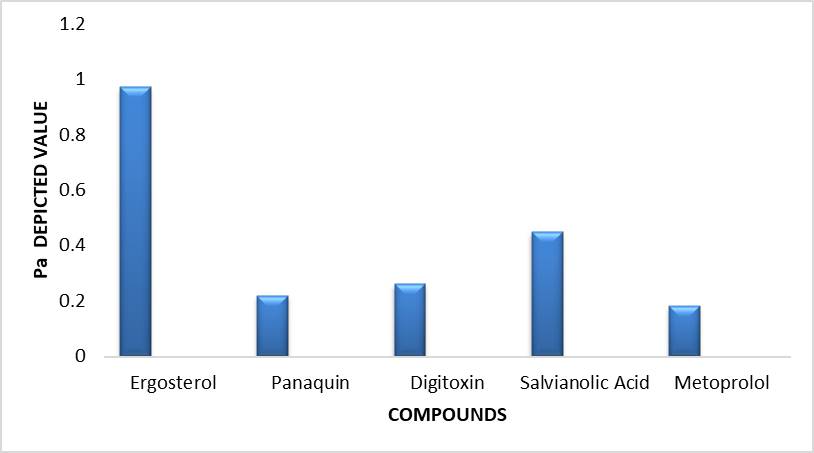
Figure 1. Relative Antihypercholesterolemic activity of selected compounds
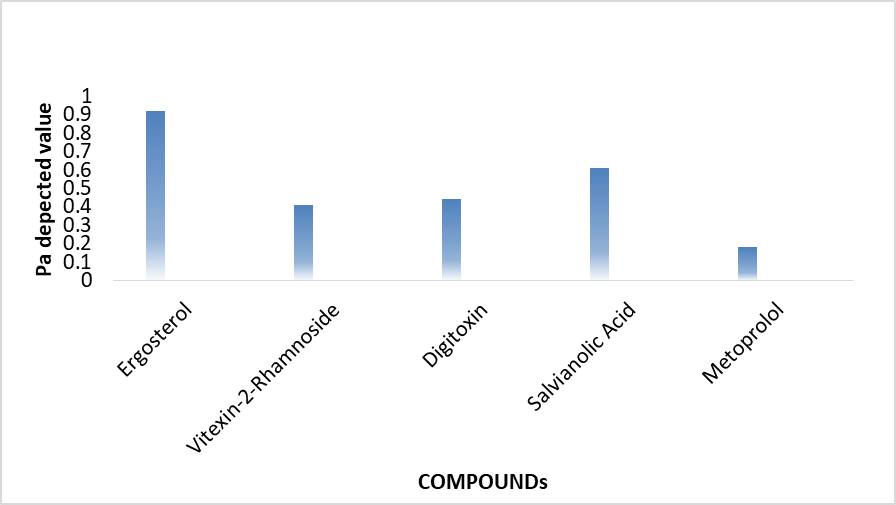
Figure 2. Relative Anti Antihypolipemic activity of selected compounds
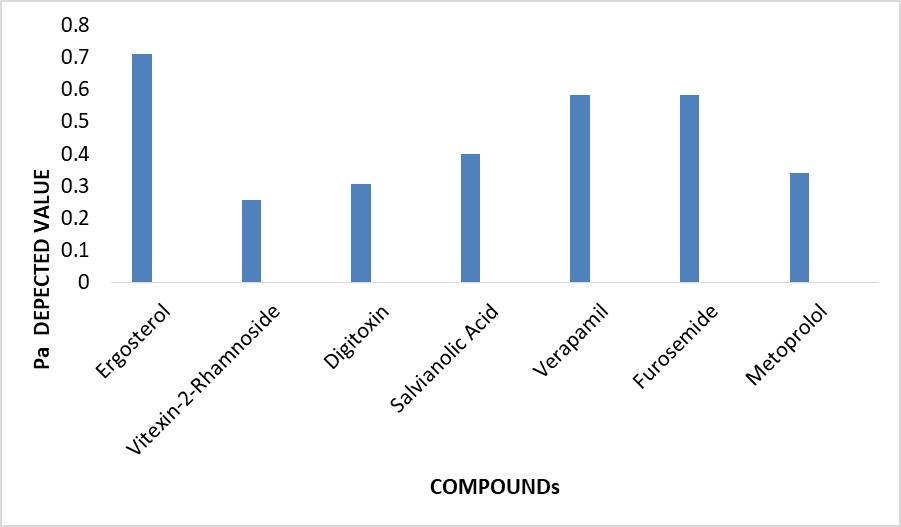
Figure 3. Relative Calcium Regulator activity of selected compounds
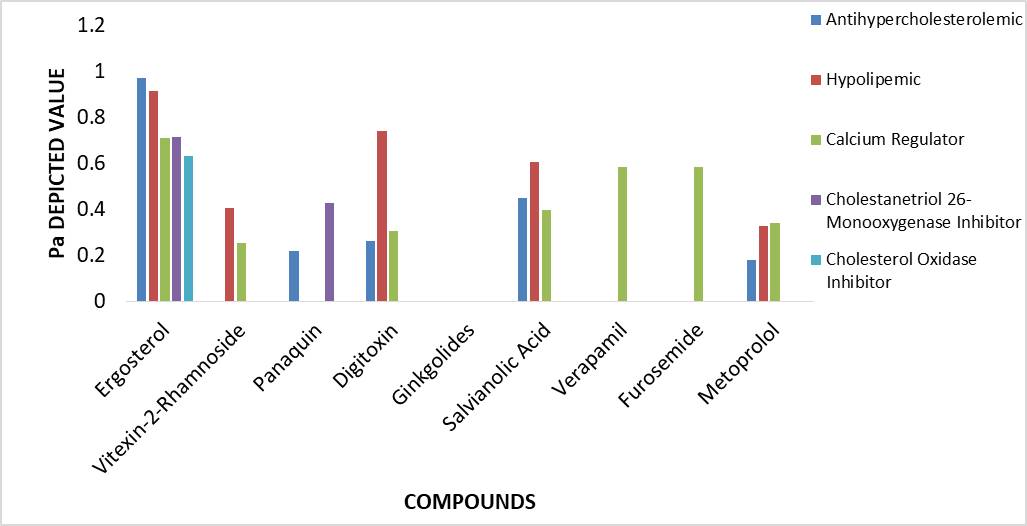
Figure 4. An impression of the prediction of activity spectra of substances predicted probable activity values for selected compounds under the 5 areas of pharmacological medications for treatment of HCM
Discussion
PASS is an online interface which takes into deliberation a problem free enlistment at no charge. The product predicts the natural exercises of mixes by three apparatuses – canonical SMILES, MOL documents, and an inbuilt JAVA applet for illustration 2D constructions (MarvinSketch). The organic exploit spectra for a marvelous number of molecules can be estimated by PASS in a short-lived timeframe (Filimonov et al., 2014).
The marketed drug was analysed with resected to the natural phytoconstituents which were reported in the literature for anti-HCM activity by PASS prediction. Further, the analysis was done under five area of the Pharmacotherapeutic Avenue, which at the end gave the results in terms of Pa value reported in table 1 and graphically represented in figure 4.
While selected phytoconstituents did not exhibit Anti-HCM, which perhaps could be co-related with the selected pharmacotherapeutic intervention, hence resulted phytoconstituents were Ginkgolides were one of them. Where Ergosterol shows more Pa value resulted most optimum for Anti-HCM activity which has shown all the activity by PASS software. Beforehand if we have to take a look the comparison of both marketed and phytoconstituents intervention, reported phytoconstituents have shown better-depected activity as compared to the marketed drug which has only been proven to show certain action mention in Table 1. With severe side effects. But this cannot be neglected that metoprolol has shown certain accepted activities as well.
PASS benefits in picking and optimizing the compounds, based on the structure of predicted target site of attention for computer-aided drug design and enables the pharmacist to speed up the process. It is a very beneficial instrument for skimpy novel modes of action of existing molecules. It helps in finding new lead compounds which can be further optimized. The chief benefit is the software’s capability to predict a wide array of organic activities in a nominal amount of time.
Acknowledgments
I would like to thank Dr. Navneet Khurana for his support. This research did not receive any specific grant from funding agencies in the public, commercial, or not-for-profit sectors. The authors declare no conflict of interest.
References
Alcalai R, Seidman JG, Seidman CE. 2008. Genetic basis of hypertrophic cardiomyopathy: from bench to the clinics. Journal of Cardiovascular Electrophysiology 19(1): 104-10.
Chang Q, Zuo Z, Harrison F, Chow MS. Hawthorn. 2002. The Journal of Clinical Pharmacology 42(6): 605-12.
Filimonov DA, Lagunin AA, Gloriozova TA, Rudik AV, Druzhilovskii DS, Pogodin PV, Poroikov VV. 2014. Prediction of the biological activity spectra of organic compounds using the PASS online web resource. Chemistry of Heterocyclic Compounds 50(3): 444-57.
Filimonov DA, Lagunin AA, Poroikov VV. 2005. Prediction of activity spectra for substances using new local integrative descriptors. QSAR and Molecular Modelling in Rational Design of Bioactive Molecules. Esin Aki Sener, Ismail Yalcin Eds., Ankara (Turkey): 98-9.
Fonseka MM, Seneviratne SL, De Silva CE, Gunatilake SB, De Silva HJ. 2002. Yellow oleander poisoning in Sri Lanka: outcome in a secondary care hospital. Human & experimental toxicology 21(6): 293-5.
Goel RK, Singh D, Lagunin A, Poroikov V. 2011. PASS-assisted exploration of new therapeutic potential of natural products. Medicinal Chemistry Research 20(9): 1509-14.
Ho CY, Seidman CE. 2006. A contemporary approach to hypertrophic cardiomyopathy. Circulation 113(24): e858-62.
Luo JZ, Luo L. 2009. Ginseng on hyperglycemia: effects and mechanisms. Evidence-Based Complementary and Alternative Medicine 6(4): 423-7.
Maron BJ, Casey SA, Hauser RG, Aeppli DM. 2003. Clinical course of hypertrophiccardiomyopathy with survival to advanced age. Journal of the American College of Cardiology 42(5): 882-8.
Maron BJ. 2002. Hypertrophic cardiomyopathy: a systematic review. JAMA 287(10): 1308-20.
Mogensen J, Murphy RT, Kubo T, Bahl A, Moon JC, Klausen IC, Elliott PM, McKenna WJ. 2004. Frequency and clinical expression of cardiac troponin I mutations in 748 consecutive families with hypertrophic cardiomyopathy. Journal of the American College of Cardiology 44(12): 2315-25.
Naidu SS, editor. 2018. Hypertrophic Cardiomyopathy. Springer.
Newman DJ, Cragg GM. 2007. Natural products as sources of new drugs over the last 25 years. Journal of natural products 70(3): 461-77.
Nicolaï SP, Gerardu VC, Kruidenier LM, Prins MH, Teijink JA. 2010. From the Cochrane library. Ginkgo biloba for intermittent claudication. Vasa 39(2): 153-8.
O'mahony C, Jichi F, Pavlou M, Monserrat L, Anastasakis A, Rapezzi C, Biagini E, Gimeno JR, Limongelli G, McKenna WJ, Omar RZ. 2013. A novel clinical risk prediction model for sudden cardiac death in hypertrophic cardiomyopathy (HCM risk-SCD). European heart journal 35(30): 2010-20.
Parasuraman S. 2011. Prediction of activity spectra for substances. Journal of pharmacology & pharmacotherapeutics 2(1):52.
Semsarian C, Ingles J, Maron MS, Maron BJ. 2015. New perspectives on the prevalence of hypertrophic cardiomyopathy. Journal of the American College of Cardiology 65(12): 1249-54.
Seto SW, Lam TY, Tam HL, Au AL, Chan SW, Wu JH, Yu PH, Leung GP, Ngai SM, Yeung JH, Leung PS. 2009. Novel hypoglycemic effects of Ganoderma lucidum water-extract in obese/diabetic (+ db/+ db) mice. Phytomedicine 16(5): 426-36.
Srinivasan NT, Patel KH, Qamar K, Taylor A, Bacà M, Providência R, Tome-Esteban M, Elliott PM, Lambiase PD. 2017. Disease severity and exercise testing reduce subcutaneous implantable cardioverter-defibrillator left sternal ECG screening success in hypertrophic cardiomyopathy. Circulation: Arrhythmia and Electrophysiology 10(4): p.e004801.
Yu S, Zhong B, Zheng M, Xiao F, Dong Z, Zhang H. 2009. The quality of randomized controlled trials on DanShen in the treatment of ischemic vascular disease. The Journal of Alternative and Complementary Medicine 15(5): 557-6.