Vaishali D. Naphade1,2*, Dishant Gupta1
1Department of Pharmacy, Oriental University, Indore, M.P., 453555 India
2School of Pharmaceutical Sciences, Sandip University, Nashik, Maharashtra, 422213 India
*Address for Corresponding Author
Vaishali D. Naphade
Department of Pharmacy, Oriental University, Indore, M.P. 453555 India
Abstract
Diarrhea is a common gastrointestinal disorder that might result in mortality if left untreated because of dehydration. 1.7 to 5 billion new cases of diarrhea have been identified each year. Numerous chemical drugs are prescribed as routine treatment for diarrhea, however they have drawbacks. It is possible to recommend a safe and efficient herbal remedy for diarrhea. Medicinal floras have been used as a traditional remedy for diarrhea since ancient times. This article reviews the common medicinal plants that have been scientifically proven to possess antidiarrheal activity. The plants discussed in this review include Psidium guajava, Zingiber officinale, Aegle marmelos, Terminalia chebula, and many others. The article summarizes the pharmacological properties, phytochemicals, and mechanisms of action of these plants. In addition, the article provides information on the safety and toxicity of these plants, as well as their traditional uses. This analysis seeks to provide a comprehensive guide for healthcare professionals and researchers in the field of natural medicine, as well as individuals seeking safe and effective natural remedies for diarrhea.
Keywords: Antidiarrheal, phytoconstituents, pharmacological action, diarrhea, Antidiarrheal Medication Classes
Introduction
In all age categories, diarrhea ranks as one of the most widespread infections and a leading origin of illness and death in countryside areas. It has been acknowledged as a significant hazard to people's health globally and in underdeveloped nations (Ugboko et al., 2020). A digestive illness known as diarrhea is marked by an augment amount of stool, consistency, or frequency that causes a loss of vitamins and nutrients, salts, and water (Fine et al., 1998). In diarrhea, there are more losses or liquid stools each day. It is typically a sign of gastrointestinal infection. This infection may be brought on by a wide range of microbes, viruses, and parasite species, and it transmits through food that has been contaminated, water, or people due to inadequate hygiene. Diarrhea may vary from a minor, socially awkward condition to a significant contributor to malnutrition among kids in impoverished nations. The World Health Organisation (WHO) estimates that diarrhea fatalities over 2.2 million individuals worldwide every year, predominantly kids in developing nations, accounting for 4% of all fatalities and 5% of health losses due to disability (Ugboko et al., 2020). The causes of diarrhea are diverse and varied ranging from non-infectious to infectious origin (Farmer et al.,1990). The use of herbs is still a significant at-home remedies for diarrhea. In the rice fields of India and Ceylon, a common weed known as Cryptocyanin spiralis Fisch. Ex. Wydler., family: Araneae, can be found. It is extensively accessible in Calicut, West Bengal and the Coromandel Coast of India. The plant's rhizomes are commonly utilised as an inexpensive alternative to the pricey Aconitum heterophyllum Wall. (Ranunculaceae) for the handling diarrhea (Prasad et al., 2014). The most common causes of diarrhea among people are a variety of enteric pathogenic organisms such as Vibrio cholerae, Shigella flexneri, Salmonella typhi, Escherichia coli, Staphylococcus aureus and Candida albicans. A couple of these medicinal herbs have gained popularity recently, and research is being done to objectively assess their antidiarrheal effects (Giannella et al., 1989). In example, studies conducted on experimental animals has examined the antidiarrheal properties of the plants Cordia Africana, Stereospermum kunthianum, Calpurnia aurea, Indigofera spicata, Lepidium sativum, Vernonia amygdalina, and Zehneria scabra (Woldeab et al., 2018).
Material and methods
The publicly accessible documentation, including textbooks, theses, conferences, and reports, was consulted for information on the utilization of healing plants to treat diarrheal disorders. Pubmed, Medline and other electronic databases were used to conduct literature searches like- Google Scholar and Elsevier. Certain search parameters like “medicinal plants”, “herbal medicines”, and “Indigenous” were used for literature survey. Data collected from the literature includes biological source, parts used, additives, condition, and dosages used. This review only included journal reports, research papers, conference proceedings, books, book chapters, and policy statements that discussed plant identification, dysentery, and used plant components.
Types of diarrhea
There are several types of diarrhea, each with its own underlying causes and characteristics. Acute diarrhea is typically caused by viral or bacterial infections, and it lasts for a short period. Traveler's diarrhea occurs when individuals consume contaminated food or water while traveling to new regions (Kim and Ravinde, 2010). Chronic diarrhea, on the other hand, persists for an extended duration and might be indicative of underlying health issues, such as inflammatory bowel disease or irritable bowel syndrome. Another type is osmotic diarrhea, caused by malabsorption of nutrients, which draws excess water into the intestines. Inflammatory diarrhea is related to inflammation of the digestive tract, often due to infections or certain diseases. Identifying the specific type of diarrhea is crucial for proper diagnosis and effective treatment. Hydration and seeking medical advice are essential, especially when diarrhea is severe or persistent (Schiller et al., 2013). The pictorial form of types of diarrhea is shown in figure 1.
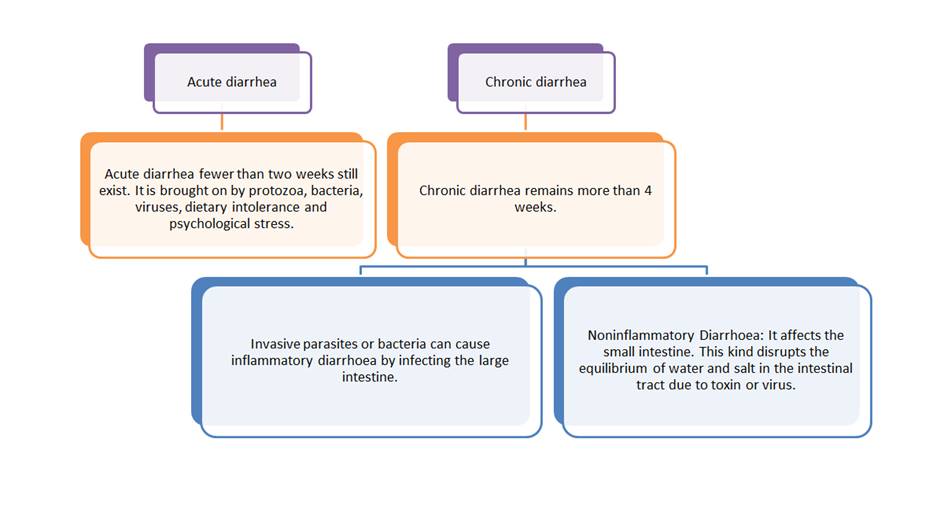
Figure 1. Types of diarrhea
Causes of diarrhea
There are two groups of causes of diarrhea: variables from the environment and pathogenic entities.
Environmental factors
Compared to breastfed children, fed through bottles youngsters experience more diarrhea. Infection of milk, an ideal medium for the growth and proliferation of organisms, may result from unclean milk feed preparations, the use of dirty bottles, and flies and other insects contaminating them (Hashi et al., 2016). Contrarily, breast milk is pure and prevents the growth of organisms because it contains antibodies, lactoferrin, lysozymes, leucocytes, macrophages, and lactobacillus. In older children and adults, diarrhea is frequently caused by contaminated water and food (Dearden et al., 2017).
Causative agents
Diarrhea can be caused by various infectious agents, toxins, and other factors. The most common causative agents of diarrhea are viral and bacterial infections (Hashi et al., 2016). Viral infections, such as norovirus, rotavirus, and enteric adenoviruses, are highly contagious and spread through contaminated food, water, or person-to-person contact. Bacterial infections can be caused by pathogens like Escherichia coli (E. coli), Salmonella, Campylobacter, Shigella, and Vibrio cholerae. These bacteria enter the body through contaminated food, water, or poor hygiene practices. Additionally, parasites like Giardia lamblia and Cryptosporidium can also lead to diarrhea when ingested through contaminated water sources (Mohammeda et al., 2016). Apart from infectious causes, certain medications, food intolerances, and underlying medical conditions, such as inflammatory bowel disease or celiac disease, can trigger diarrhea. Accurate identification of the causative agent is essential for appropriate treatment and management of diarrhea episodes. The causative agents are shown in table 1.
Table 1. Detail of causative agents and their modes of transmission
|
Causative agents |
Transmission |
Transmission and Etiology |
|
Vibrio cholerae (Cholera) (Wong et al., 1999)
|
Tainted food or drink from a patient or carrier. The diagnosis is frequently clinical. Dark-field illumination used to detect fast moving vibrios in fresh faeces is diagnostic. Rectal swabs or stool culture should be obtained. |
Mucinase aids Vibrio cholerae in adhering to the microvilli of the intestinal epithelium's brush border. diarrhoea results from the release of cholera enterotoxin. Stools include mucus, epithelial cells, and vibrios and resemble rice water. |
|
Escherichia coli (Tânia et al., 2016; Shane et al., 2017) |
The primary means of transmission to people is by consumption of contaminated foods, including as raw or undercooked ground beef products, raw milk, contaminated uncooked vegetables, and sprouts. |
There are two components in it: A and B. A glycolipid in the microvillus membrane is bound by subunit B. The 60S ribosomal subunit is rendered inactive when subunit A enters the cell. Bloody diarrhoea results from the stoppage of the synthesis of proteins and the shedding of cells that have died. |
|
Rotavirus (Crawford et al., 2017; Graham etal., 1984) |
Rotavirus can be identified in the faeces of an infected individual 2 days before the beginning of symptoms and for up to 10 days after they go away. Even when the infected person is symptom-free, the virus can easily spread by hand-to-mouth contact during this time. |
Rotavirus predominantly affects enterocytes and causes dysentery by destroying absorbent enterocytes, which results in poor absorption, stimulating intestinal outflow in response to rotavirus non-structured protein 4, and activating the nervous system of the gut. |
|
Shigella: S. flexneri, S. sonnei, S. boydii, and S. dysenteri. (Aslam et al., 2022; Williams et al., 2018; Zaidi et al., 2014) |
via direct human contact, ill-maintained facilities, or eating food that has been tainted |
dysentery caused by Shigella is extremely fatal and serious. It is a prevalent illness among kids under the age of five.
|
|
Salmonella (Black et al., 1960) |
It can be obtained by food, water, direct contact with animals, and very seldom, interpersonal contact. It spreads via the fecal-oral pathway. |
When epithelial cells are penetrated, proinflammatory cytokines are produced, which causes an inflammatory reaction. The initial inflammatory response may result in mucosal rupture and injury in addition to diarrhoea. |
|
Clostridium perfringens (spore-bearing bacillus) (Carney et al., 2002, Modi et al., 2001, Azimirad etal., 2019) |
causes that result from food eating. Heat kills vegetative cells in cooked, stored food, whereas cooling or preserving the food causes spores to develop into cells that grow. |
After consuming affected food, people with infringes infection have diarrhoea and stomach pains. Consume lots of water since diarrhoea can lead to dehydration. |
|
Staphylococcus aureus: (enterotoxins) (Avery et al., 2015; McDonald et al., 1982; Pecha et al., 2005) |
It frequently lives in people's throat, nostrils, faeces, and skin. Items like meat and potato products are excellent development media for it. Despite being thermally stable, toxins is not eliminated by warming. |
Symptoms of Staphylococcus aureus toxicity include nausea, vomiting, and severe cramps in the abdomen. Diarrhoea is another common condition. Symptoms often appear 30 minutes to 8 hours after ingesting or consuming anything containing Staph toxin, and they disappear within a day. |
|
Bacillus cereu (McDowell etal., 2022; Fox etal., 2020) |
Food that has been tainted with the emetic toxin (cereulide) produces vomiting when consumed. Whenever enterotoxins are created in the gut as a result of eating food infected with B. cereus, the diarrheal syndrome develops. |
The foodborne bacteria Bacillus cereus can cause two GI disorders, the emetic (vomiting) syndrome and the syndrome of diarrhoea. Vomiting happens after consuming contaminated food when the emetic toxin (cereulide) is created in the meal. |
|
Entamoeba histolytica (Dans et al., 2007) |
Cysts and RBC-containing trophozoites are diagnostic. Cysts are contagious, while trophozoites are not. External encystment does not take place. It spreads from person to person and through undercooked food, drink, and other surfaces. |
Cysts from colon produce trophozoite, which invade the big bowel's mucous membrane. The cecum is most severely impacted, however ulcers in the form of flasks can develop in any area of the colon. A localised granuloma (ameboma) can occasionally manifest as a lump that can be felt in the rectum. |
|
Giardia lamblia (Rumsey et al., 2022) |
Giardia lamblia cysts are transmitted by human and animal excretions, which contaminate food. Additionally, it spreads through touch with other people and in water. |
They adhere to the jejunum and duodenal mucosa, causing inflammation and partial villous atrophy. Giardia lamblia is characterised by loose, pale stool, fatigue, nausea, epigastric pain, flatulence, and abdominal distension. |
Treatment
Antidiarrheal agents (Antidiarrheal Medication Classes)
Adsorbents, which aid in removing toxins or gastrointestinal tract bacteria with anti-motility drugs, which decrease peristalsis, and probiotics, which aid in re-establishing the normal bacteria present in the lower intestine, are the 3 typical modes of action used by of antidiarrheal drugs. Patients with diarrhea may also use oral rehydration medications to replenish. Diarrhea is not treated by replenishing fluid or electrolytes. Infection-specific diarrhea may also be treated with antibacterial medications (Cindy et al., 1998).
Adsorbents
The attachment of molecules to a surface is known as adsorption. Contrasted with absorption, which occurs when a material dissolves or permeates a surface, is this process. Adsorbent drugs function by covering the walls of the GI tract and binding the harmful bacteria or toxin for removal from the GI tract from side to side the stool. Bismuth subsalicylate is an example of an adsorbent (Lilley et al., 2014). Additionally, by limiting the stream of fluid and salts into the gut, bismuth subsalicylate lowers inflammation in the intestine.
Antimotility
By reducing motility, antimotility drugs can cure diarrhea. Anticholinergics and opiate-like medications fall under the category of these drugs (Turnheim et al., 1989).
(a) Anticholinergics
The mode of Action of Anticholinergics Hyoscyamine is an anticholinergic that inhibits locomotor motility in the GI tract's smooth muscle cells and reduces stomach acid output.
(b) Drugs that resemble opioids
Although it has a molecular structure similar to an opioid, loperamide has less CNS side effects. It functions by lowering the bowel's motility and reducing the passage of fluids and electrolytes into the intestine to reduce the frequency of stool production (Portnoy et al 1976).
Probiotics
They are used to manage as well as avoid diarrhea by re-establishing the natural bacterial flora in the digestive system. Diarrhea can be prevented and treated with probiotics. They are frequently taken in conjunction with antibiotics to lessen the likelihood of diarrhea's major adverse effects (Paul et al., 2021).
Modalities of execution: Probiotics aid in restoring the gastrointestinal tract's natural culture of bacteria.
The details of different classes of antidiarrheal agents with their therapeutic and adverse effects were shown in table 2.
Table 2. Details of different classes of antidiarrheal agents with their therapeutic and adverse Effects
|
Groups |
Examples |
Curative Efficacy |
Adverse Action |
|
Adsorbent |
Bismuth subsalicylate |
reduced signs of diarrhoea |
May result in a darker or black tongue. If signs intensify, a temperature appears, tinnitus develops, or if diarrhoea persists for more than 48 hours, call your doctor right once. |
|
Anticholinergic |
hyoscyamine |
reduced signs of diarrhoea |
may result in CNS & erstwhile negative effects from anti-cholinergic agents |
|
Opiate derivatives |
loperamide |
reduced signs of diarrhoea |
Black Box Warning: Could result in an irregular heart beat |
|
Probiotics |
lactobacillus |
reduced signs of diarrhoea |
mild, like gas and feeling bloated |
|
Antimotility agents |
Anti-muscarinic agents like- mepenzolate, propantheline & atropine |
Decreased diarrhea Symptoms |
stomach pain or bloating, dizziness |
|
Loperamide |
Decreased diarrhea Symptoms |
tiredness, or constipation may occur |
|
|
Antibiotic therapy |
Metronidazole
|
treat inflammation of the large intestine |
A racing pulse (palpitations), nausea, abdominal pain, hot flashes, and difficulties respiration |
|
Levofloxacin |
To treat febrile diarrhea / dysentery in regions with high rates of Shigella, |
Inactive against invasive causes of diarrhea |
|
|
Miscellaneous |
Octreotide |
prevents the release of some gastrointestinal hormones, including serotonin, glucagon, gastrin, motilin, VIP, and gastrin. |
GIT disturbances and nausea. Continued treatment may result in cholelithiasis-like side effects from elevated somatostatin. |
Botanical Characteristics of antidiarrheal medicinal plants
Indigenous antidiarrheal plants belong to different plant families, including Acanthaceae, Fabaceae, Lamiaceae, and Zingiberaceae, among others. These plants are mostly found in hot and subtropical area and can grow in a variety of habitats, including forests, savannahs, and wetlands. Some common examples of indigenous antidiarrheal plants include Anogeissus leiocarpa, Zanthoxylum zanthoxyloides, and Psidium guajava (Shoba et al., 2001).
Phytochemistry of antidiarrheal medicinal plants
The chemical composition of indigenous antidiarrheal plants is complex and varies depending on the plant species, the plant part used, and the geographic location. These plants contain various phytochemicals, including alkaloids, flavonoids, tannins, terpenoids, and saponins, among others (Schiller et al., 2013). These phytochemicals have been found to possess antidiarrheal action by regulating GI motility, reducing inflammation & inhibiting pathogenic microorganisms.
Reported Pharmacological Actions of antidiarrheal plants
Indigenous antidiarrheal plants have been widely studied for their pharmacological activities. A number of works have demonstrated that this flora possesses significant antidiarrheal action through various mechanisms of action, including:
Inhibition of intestinal motility: Many indigenous antidiarrheal plants, such as Anogeissus leiocarpa and Zanthoxylum zanthoxyloides, have been shown to reduce intestinal motility and secretion, resulting in the reduction of diarrhea symptoms (Zavala et al., 1998; Shashi et al., 1993).
Anti-inflammatory activity: Several indigenous antidiarrheal plants, such as Psidium guajava and Anacardium occidentale, possess anti-inflammatory activity, which helps reduce inflammation in the intestinal tract and promote healing of the gut lining (Shamkuwar et al., 2013; Sheikh et al., 2010).
Antimicrobial activity: Some indigenous antidiarrheal plants, such as Senna alata and Terminalia avicennioides, have been found to have noteworthy antimicrobial action against pathogenic microorganisms responsible for causing diarrhea (Brijesh et al., 2009).
Antioxidant activity: Many indigenous antidiarrheal plants, such as Carica papaya and Ageratum conyzoides, possess antioxidant activity, which helps reduce oxidative stress in the intestinal tract and promote healing (Amabeoku, 2009).
We had collected the data of antidiarrheal medicinal plants from different credible and reliable sources. It includes published articles, books, scientific journals, online databases, and other reputable sources of information. The process of data collection involved using specific search terms or keywords related to antidiarrheal medicinal plants, such as their common or scientific names, active compounds, pharmacological properties, traditional uses, and safety profiles.
After the relevant information has been identified, it was evaluated for quality and reliability of each source, as well as the accuracy and relevance of the information obtained. The collected information can helps to facilitate the analysis and comparison of different sources of information, and to identify any gaps or inconsistencies in the data. The collected information is shown in table 3.
Table 3. The analysis and comparison of different plant species
|
Sr. No |
Plant |
Investigated part |
Chemical Constituents |
Solvent used for isolation |
Technique utilized |
|
1 |
Acacia catechu (leguminosae) (Ray et al., 2006) |
Bark |
Flavonoids |
Ethyl acetate, methanol, Petroleum ether, aqueous |
Castor oil–induced diarrhea in mice, Against pathogenic Escherichia coli |
|
2 |
Acacia nilotica (Patel et al., 2010) |
Bark |
Tannin |
Methanol, chloroform, Petroleum ether, aqueous |
Against pathogenic Escherichia coli |
|
3 |
Acorus calamus (Shoba et al., 2001) |
Rhizome |
- |
Aqueous and methanol |
Castor oil–induced diarrhea in mice |
|
4 |
Aegle marmelos(Rutaceae) (Brijesh et al., 2009, Joshi et al., 2009) |
Unripe fruit, |
proteins, amino acids, Glycosidestannins, flavanoids, phytosterols, coumarins such as marmelide, marmelosin |
Aqueous and methanolic, Petroleum ether, chloroform, Ethanol |
Mouse with castor oil-induced diarrhoea, invasive Escherichia coli, colonisation, fabrication, and enterotoxin activity. Efficacy towards 4 shigella species |
|
5 |
Alhagi maurorum (Atta et al., 2004) |
- |
Flavonoids, tannins, sterols, triterpenes, saponins, anthraquinones. |
Methanol |
Castor oil-induced diarrhoea |
|
6 |
Alstonia scholaris (Apocynaceae) (Shah et al., 2010, Saifuzzaman et al., 2013) |
barks |
porphyrin, alstonine, echitamine, picrinine, detamine, and strictamine |
Methanolic |
Castor oil–induced diarrhea in mice |
|
7 |
Alternathera repens (Amaranthaceae) (Zavala et al.,1998) |
Dried powdered plant |
- |
Hexane, methanol, chloroform, aqueous |
Castor oil and MgSO4 cause diarrhoea in mice |
|
8 |
Andrographis paniculata (Acanthaceae) (Zavala et al.,1998, Shashi et al., 1993) |
Whole plant |
Diterpenes, Andrographolide, neoandrographol |
Alcoholic |
the secretory reaction to an E. coli enterotoxin that causes diarrheal symptoms |
|
9 |
Annona senegalensis (Annonaceae) (Suleiman et al., 2008) |
Stem-bark |
Flavonoids, tannins, sterols, triterpenes, saponins, |
Methanol, Petroleum ether, chloroform, and aqueous |
Intestinal transit time against pathogenic Escherichia coli with meal containing charcoal |
|
10 |
Annona squamosa (Patel et al., 2010) |
Leaves |
Alkaloid, tannins |
Petroleum ether, chloroform, methanol and aqueous |
Against pathogenic Escherichia coli |
|
11 |
Anthocephalus cadamba (Rubiaceae)(Dubey et al., 2011) |
Flowering tops |
triterpenes and saponins, secoiridoids, Indole alkaloids |
Hydroethanolic |
Castor oil–induced diarrhea in mice |
|
12 |
Aristea spp. (Ojewole et al., 2008) |
Stem |
- |
Aqueous and methanolic |
Castor oil-induced diarrhoea in rats cause diarrhoea |
|
13 |
Artemisia ludoviciana (Miguel et al., 2002) |
- |
Nonanal, flavonoids |
Essential oil |
Castor oil-, magnesium sulphate-, arachidonic acid- and PGE2 -induced diarrhoea in CD1 mice |
|
14 |
Asparagus racemosus (Venkatesan et al., 2005) |
Root |
Alkaloids, saponins, flavonoids, sterols, terpenes and sugars |
Ethanol and aqueous |
Castor oil-induced diarrhoea model in rats |
|
15 |
Azadirachta indica (Snyder et al., 1982) |
Leaves |
- |
Petroleum ether, chloroform, methanol and aqueous |
Against pathogenic Escherichia coli |
|
16 |
Baphia nitida (Papilionaceae) (Adeyemi et al., 2008) |
Fresh leaves |
Flavonoids, isoflavonoids, isoflavones, saponins, tannins, and alkaloids |
Ethyl acetate |
diarrhoea caused by castor oil Abdominal transit caused by castor oil |
|
17 |
Berberis lyceum Royle (Berberidaceae) (Shamkuwar et al., 2013; Sheikh et al., 2010) |
Roots, fruits, leaves, and stem |
palmitine, berberine, iron, zinc, calcium, and vitamin C |
Ethanolic |
Against pathogenic Escherichia coli |
|
18 |
Bidens bipinnata) (Atta et al., 2005) |
Aerial parts |
- |
Ethanolic |
Castor oil-induced diarrhoea, and on the motility of duodenum isolated from freshly slaughtered rabbits |
|
19 |
Bridelia micrantha (Ojewole et al., 2008) |
Bark |
- |
Aqueous and methanolic |
Rats' diarrheal illness brought on by castor oil |
|
20 |
Butea (Gunakkunru etal., 2005) |
Stem bark |
Steroids, |
Ethanolic |
Castor oil-induced dysentery and PGE2-induced enteropooling in rodents, as well as changes in GI motility following the administration of charcoal |
|
21 |
Byrsocarpus coccineus (Connaraceae) (Akindele et al., 2006) |
Leaf |
Alkaloids, saponins, flavonoids, anthraquinones, glycosides, simple sugars |
Aqueous |
Gastric draining, enteropooling, normal and castor oil-induced diarrhoea, and transit of the gut. |
|
22 |
Calotropis gigantean (Ascelpiadaceace) (Chitme et al., 2004) |
Aerial parts |
Sugars, flavonoids, flavonol glycosides, terpenes, terpene derivatives, triterpenoids |
Hydroalcoholic |
Castor oil-induced diarrhoea in rats |
|
23 |
Calotropis procera (Kumar et al., 2001) |
Aerial parts |
- |
Latex |
Castor oil–induced diarrhea in mice |
|
24 |
Capparis zeylanica L (Capparaceae) ( Ghule et al., 2006; Sini et al., 2011) |
flowers and leaves |
|
Methanolic |
Castor oil–induced diarrhea in mice |
|
25 |
Careya arborea Roxb (Lecythidaceae)(Adzu et al., 2003) |
Leaves and stem |
flavonoids, tannins, saponins, and triterpenoids |
methanol |
Castor oil-induced diarrhea |
|
26 |
Cassia fistula (Shashi et al., 1993) |
- |
- |
Hexane, chloroform, butanol and aqueous |
Forced release by E.coli guinea pig ileal loop models & enterotoxin in rabbit |
|
27 |
Celosia argentea Linn (Amaranthaceae) (Sharma et al., 2010; Priya et al., 2004) |
seeds |
|
Alcoholic |
castor oil and PGE (2). |
|
28 |
Cinnamomum tamala (Rao et al., 2008) |
Dried leaves |
Germacrene A, a-gurjunene, cymene, methyl eugenol and Tannins |
50% aqueous ethanol. |
Castor oil-induced diarrhoea in rats |
|
29 |
Cleome viscosa (Capparidaceae) (Devi et al., 2002) |
Entire plant |
Tannins, steroids, and flavonoids |
Methanol |
Castor oil-induced |
|
30 |
Clerodendrum phlomidis (Verbenaceae) (Rani et al., 1999) |
Leaf |
Steroid, alkaloid, flavanoids |
Methanolic |
Rats with enteropooling caused by PGE2 and castor oil-induced gastroenteritis |
|
31 |
Combretum (Sini et al. 2008) |
Roots |
Alkaloids, flavonoids |
Aqueous |
Gut motility, fluid buildup, and diarrhoea caused by castor oil |
|
32 |
Commelina coelestis (Commelinaceae) |
Dried powdered plant |
- |
Hexane, chloroform, methanol and aqueous |
Castor oil and MgSO4-induced diarrhoea in mouse |
|
33 |
Convolvulus fatmensis (Zavala et al. 1998) |
Aerial parts |
- |
- |
Rats' intestinal motility was affected by castor oil (charcoal meal), as was the duodenum of newly killed rabbits, which was separated. |
|
34 |
Conyza dioscoridis (Atta et al., 2004) |
- |
- |
Methanol |
Castor oil-induced diarrhoea |
|
35 |
Costus lucanusianus (Costaceae) (Owolabi et al., 2007) |
Leaves |
Tannins, saponins, reducing sugars a |
Aqueous |
Castor oil-induced diarrhoea |
|
36 |
Cylicodiscus gabunensis (Mimosaceae) (Kouitcheu et al. 2006) |
Stem bark |
Tannins, Flavonoids, tannins, sterols, triterpenes, saponins, anthraquinones, sugar |
Ethyl acetate |
Castor oil-induced diarrhoea |
|
37 |
Cynachum acutum (Atta et al., 2005) |
Aerial parts |
- |
- |
Rats' intestinal motility was affected by castor oil (charcoal meal), as was the duodenum of newly killed rabbits, which was separated. |
|
38 |
Dalbergia lanceolaria (Fabaceae) (Mujumdar et al. 2005) |
Bark |
- |
Ethanol |
Castor oil and MgSO4-induced diarrhoea in mouse |
|
39 |
Dalbergiasissoo (Fabaceae) (Brijesh et al., 2009) |
leaves |
Carbohydrates, saponins, glycosides, flavonoids, amino acids, phytosterols, alkaloids, proteins, tannins. |
Aqueous |
gastrointestinal epithelial cell colonisation and enterotoxin generation and activity |
|
40 |
Diplotaxis acris (Atta etal., 2005) |
Aerial parts |
- |
- |
Castor oil-induced (charcoal meal) and on the motility of duodenum isolated from rabbits |
|
41 |
Eleutherina bulbosa (Birdi et al., 2006) |
Bulb |
- |
Aqueous and methanolic |
Castor oil-induced diarrhoea |
|
42 |
Emilia coccinea (Teke et al., 2007) |
Leaves |
Tannins, flavonoids, saponins, alkaloids, steroids, terpenoids |
Methanol and aqueous |
Castor oil-induced diarrhoea |
|
43 |
Eremomastax speciosa (Acanthaceae) (Oben et al, 2006) |
Ground leaves |
Tannins and flavonoids |
Aqueous |
Castor oil-induced diarrhoea |
|
44 |
Eugenia jambolana (Mukherjee et al., 1998) |
Bark |
Alkaloids,steroids and tannins |
Ethanol |
Rats with enteropooling caused by PGE2 and castor oil-induced gastroenteritis |
|
45 |
Euphorbia paralias (Atta etal., 2005) |
Aerial parts |
- |
Methanol |
Castor oil–induced diarrhea in mice |
|
46 |
Ficus bengalensis (Moraceae) (Mukherjee et al., 1998) |
Hanging roots |
Alkaloids, steroids and tannins |
Ethanol |
Rats with enteropooling caused by PGE2 and castor oil |
|
47 |
Ficus hispida (Mandal et al., 2002) |
Leaf |
Tannins triterpenoids, alkaloid and saponin |
Methanol |
Rats with enteropooling caused by PGE2 and castor oil |
|
48 |
Ficus hispida (Moraceae) (Ali et al., 2011) |
leaves |
glucoside, tannin, beta-sitosterol, caoutchouc acid, bergapten, hispidin, psoralen latex |
Methanol |
Castor oil–induced diarrhea in mice Prostaglandin-E2 induced Diarrhea |
|
49 |
Ficus racemosa (Moraceae) (Mukherjee et al., 1998) |
Bark |
Alkaloids, steroids and tannins |
Ethanol |
Castor oil-induced diarrhoea |
|
50 |
Gentianopsis paludosa (Gentianaceae) (Wang et al., 2006) |
Whole herb |
Xanthones, terpenoids and flavonoids |
Ethanol |
Castor oil-induced diarrhoea |
|
51 |
Geranium incanum (Geraniaceae) (Amabeoku, 2009). |
Leaf |
Tannins, saponins flavonoids, Gallic acid |
Aqueous |
Castor oil-induced diarrhoea |
|
52 |
Guiera senegalensis (Combretaceae) (Aniagu et al., 2005) |
Root |
flavonoids, Tannins, quinic acid gallates, anthraquinones, ascorbic acid polyphenols, alkaloids |
Aqueous |
Castor oil-induced diarrhoea |
|
53 |
Holarrhena antidysenterica (Patel et al., 2010) |
Bark |
- |
Petroleum ether,chloroform, methanol and aqueous |
Against pathogenic Escherichia coli |
|
54 |
Jatropha curcus (Euphorbiaceae) (Mujumdar et al., 2000) |
Root |
- |
Methanol |
Castor oil induced diarrhoea |
|
55 |
Juniperus phoenicia (Cupressaceae) (Qnais et al., 2005) |
Leaves |
Flavonoids, alkaloids and tannins |
Aqueous |
Castor oil-induced diarrhoea |
|
56 |
Leucas lavandulaefolia (Mukherjee et al., 1998) |
Aerial parts |
Alkaloids, steroids and tannins |
Ethanol |
Castor oil-induced diarrhoea and PGE2-induced enteropooling in rats. |
|
57 |
Litsea polyantha (Lauraceae) (Poonia et al., 2007). |
Dried bark and aerial parts |
Alkaloids, carbohydrate, flavonoids and saponins |
Methanol |
Castor oil–induced diarrhea in mice and propulsive gut motility in mice |
|
58 |
Ludwigia hyssopifolia (Onagraceae) (Shaphiullah et al., 2003) |
Whole plant parts |
Terpenoid and alkaloid |
Methanol |
Castor oil and serotonin induced diarrhea |
|
59 |
Mangifera indica (Sairam et al., 2003) |
Seed |
- |
Methanolic and aqueous |
Castor oil and magnesium sulphatein mice |
|
60 |
Mentha longifolia (Lamiaceae)(Ali et al., 2011). |
dried leaves and young twigs |
|
Petroleum ether, chloroform, methanol and aqueous |
Castor oil–induced diarrhea in mice |
|
61 |
Mezoneuron Benthamianum (Caesalpiniaceae) (Mbagwu et al., 2008). |
Whole plant |
Tannins, flavonoids |
Aqueous |
Rats with enteropooling caused by PGE2 and castor oil |
|
62 |
Momordica cymbalaria (Cucurbitaceae) (Hornbuckle et al., 2008) |
Fruit |
Tannins, alkaloids, sterols, terpenes and flavanoids. |
Methanol |
Rats with enteropooling caused by PGE2 and castor oil |
|
63 |
Nelumbo nucifera (Pulok et al.,1995). |
Rhizome |
- |
Methanolic |
Rats with enteropooling caused by PGE2 and castor oil |
|
64 |
Ocimum basilica (Patel et al., 2010) |
Leaves |
- |
Petroleum ether, chloroform, methanol and aqueous |
Against pathogenic Escherichia coli |
|
65 |
Ocimum gratissimum (Labiatae) (Ezekwesili et al., 2005) |
Leaves |
Thymol eugenol, xanthones, terpenes and lactone |
Aqueous |
Castor oil–induced diarrhea in mice |
|
66 |
Ocimum selloi (Lamiaceae) (Franca et al., 2008) |
Leaves |
trans-anethole, caryophyllene Methyl chavicol, cis-anethole, estragole |
Essential oil |
Castor oil in mice |
|
67 |
Papaver somniferum (Suleiman et al., 2008) |
- |
Steroid |
Alcohol, hexane, chloroform, butanol and aqueous |
Enhanced release by Escherichia coli toxins in rabbit and guinea pig ileal loop models |
|
68 |
Parkia biglobosa (Leguminosae) (Tijani et al., 2009). |
Stem bark |
Reducing sugars, |
Aqueous |
Castor-oil-induced diarrhoea |
|
69 |
Paullinia pinnata (Sapindaceae) (Qnais et al., 2005) |
Leaves |
Carbohydrates, reducing sugars, saponins, tannins cardiac glycosides and anthracene derivatives. |
Methanolic |
Castor oil induced |
|
70 |
Pentaclethra macrrophylla (Akah et al.,1999) |
Leaf |
- |
Aqueous and ethanol |
Castor oil in mice |
|
71 |
Phoenix dactylifera (Al-zoreky et al., 2015) |
- |
Reducing sugars |
Aqueous |
Castor oil in mice |
|
72 |
Plantago major (Atta et al., 2005) |
Leaves |
Reducing sugars |
Methanol |
Castor oil in mice |
|
73 |
Plantago major (Atta et al., 2005) |
Leaves |
Steroid, flavonoids and tannin |
Methanol |
Castor oil in mice |
|
74 |
Pongamia glabra (Myrtaceae)(Shoba et al., 2001). |
Leaves |
Steroid, flavonoids and tannin |
Aqueous and methanolic |
Castor oil–induced diarrhea in mice |
|
75 |
Psidium guajava (Ojewole et al.,2008; Sheikh et al.,2010) |
Fresh leaves |
tannins, polyphenolic compounds, pentacyclic triterpenoids Quercetin, |
Aqueous and methanolic |
Castor oil in mice |
|
76 |
Punica granatum (Punicaceae) (Das et al.,1999). |
Seed |
Steroid, flavonoids and tannin |
Methanol |
PGE2 induced enteropooling in rats. |
|
77 |
Rhus javanica (Anacardiaceae) (Tangpu et al.,2004) |
Fruit |
Steroid, flavonoids and tannin |
Methanolic |
Castor oil in mice |
|
78 |
Rumex maritimus (Polygonaceae (Rouf et al., 2003) |
Root |
- |
Partitioned nhexane,ethylacetate and residual methanol |
Castor oil in mice |
|
79 |
Saccharum spontaneum (Gramineae)( Vhuiyan et al.,2008) |
Whole plant |
Steroid, flavonoids and tannin |
Methanolic |
Castor oil in mice |
|
80 |
Sanseviera liberica (Agavaceae) (Adeyemi et al.,2009) |
Root |
saponins,Reducing sugars, , anthraquinones, alkaloids, tannins |
Aqueous |
Castor oil in mice |
|
81 |
Schouwia thebaica (Atta et al., 2004) |
Aerial parts |
Reducing sugars, tannins, saponins, alkaloids, anthraquinones |
Aqueous |
Castor oil in mice |
|
82 |
Securinega virosa (Euphorbiaceae)(Magaji et al.,2007) |
Leaves, stem, root |
Flavonoids |
Methanolic |
Castor oil–induced diarrhea in mice |
|
83 |
Sphaeranthus senegalensis (Asteraceae) (Rouf et al.,2003) |
Whole plant |
Tannin |
Aqueous |
Castor oil in mice |
|
84 |
Spondias Mangifera (Sameh et al.,2018) |
Bark |
Steroid, flavonoids and tannin |
Methanolic |
Castor-oil induced diarrhoeal activity |
|
85 |
Stereospermum kunthianum (Bignoniaceae) (Ching et al., 2008). |
Stem bark |
Reducing sugars |
Aqueous |
Castor oil-induced intestinal transit in mice |
|
86 |
Strychnos nuxvomica (Shoba et al., 2001) |
Root bark |
Reducing sugars |
Aqueous and methanolic |
Castor oil in mice |
|
87 |
Strychnos Potatorum (Loganiaceae)(Biswas et al., 2002) |
Seed |
Steroids, alkaloids, tannins and reducing sugars. |
Methanol |
Castor oil in mice, PGE2 |
|
88 |
Swietenia macrophylla (Meliaceae) (Maiti et al., 2007) |
Seed |
Steroids and triterpenes |
Petroleum ether |
Castor oil induced |
|
89 |
Terminalia bellirica (Combretaceae) (Gilani et al., 2008) |
fruit |
chebulagic acid, tannins, ethyl gallate, beta-sitosterol, gallic acid, ellagic acid |
|
|
|
90 |
Thespesia populnea (Malvaceae) (Nampoothiri et al.,2011) |
Stem barks |
Steroid, flavonoids and tannin |
Aqueous and alcoholic |
Castor oil in mice, PGE2 |
|
91 |
Trachyspermum ammi (Patel et al., 2010) |
Seeds |
- |
Petroleum ether, chloroform, methanol and aqueous |
Against pathogenic Escherichia coli |
|
92 |
Trichodesma indicum (Boraginaceae) (Perianayagam et al., 2005). |
roots |
n-decanyl laurate, n-nonacosanyl palmitate, n-tetradecanyl laurate |
Aqueous, chloroform, Petroleum ether, methanol |
Castor oil induced |
|
93 |
Tridex procumbens (Shashi et al., 1993) |
- |
- |
Aqueous, Alcoholic, hexane, butanol chloroform |
Enhanced release by E. coli toxins in guinea pig & rabbit |
|
94 |
Vitex doniana (Suleiman et al., 2008) |
Fruits |
Flavonoids,tannins |
Aqueous |
Castor oil–induced diarrhea in mice |
|
95 |
Xanthium Indicum(Compositae) (Akter et al., 2009) |
Leaves |
Flavonoids,Tannins |
Hydromethanolic |
Castor oil andMgSO4-induced |
|
96 |
Xylocarpus granatum (Uddin et al., 2005) |
Bark |
Anthraquinones, flavonoids, tannins and saponins |
Methanol |
magnesium sulphate and Castor oil in mice |
|
97 |
Xylocarpus moluccensis (Meliaceae) (Uddin et al.,2005) |
Barks |
- |
Methanol |
magnesium sulphate and Castor oil in mice |
|
98 |
Zingiber officinale (Zingiberaceae) (Daswani et al., 2010) |
Rhizomes |
essential oil, gingerols flavonoids, sulphonatated compounds, zingerone, Tannins, |
Water |
synthesis of enterotoxins and colonisation of epithelial cells. |
|
99 |
Ziziphus mauritiana (Dahiru, et al., 2006) |
Root
|
saponins Alkaloids, flavonoids glycosides, volatile oils |
Methanolic |
Castor oil induced |
|
100 |
Zizyphus spinachristi (Rhamnaceae) (Adzu et al., 2003) |
Stem bark |
Tannins |
Methanol |
Castor oil induced |
Discussion and conclusion
The use of indigenous antidiarrheal plants is associated with minimal adverse effects and offers a cost-effective and accessible alternative to conventional pharmacological therapies. Further investigations are needed to set up the safety and effectiveness of these plants, as well as to explore their potential for use in combination with other natural remedies or conventional medications.
In conclusion, indigenous antidiarrheal plants offer a promising source of natural remedies for handling the diarrhea. The literature review suggest that these plants and their parts being used from long time as a conventional remedy for diarrhea and have been scientifically proven to possess antidiarrheal activity. The active compounds found in these plants, such as tannins, flavonoids, and alkaloids, exert their antidiarrheal effects through various mechanisms of action, including inhibition of intestinal motility, reduction of fluid secretion, and modulation of gut microbiota.
Future scope
The review highlights the significance of indigenous antidiarrheal flora as a valuable foundation of natural remedies for the handling the diarrhea, and suggests that further research in this field can lead to the establishing new and effective therapies for gastrointestinal disorder
Acknowledgement
The authors are thankful to Oriental university, Indore for providing the proper direction all through the track of work
Conflict of interest: None
References
Adeyemi OO, Akindele AJ, Ogunleye EA. 2009. Evaluation of the antidiarrheal effect of Sanseviera liberica Gerome & Labroy (Agavaceae) root extract. Journal of Ethnopharmacology, 123(3):459–463. https://doi.org/10.1016/j.jep.2009.03.023
Adeyemi OO, Akindele AJ. 2008. Antidiarrheal activity of the ethyl acetate extract of Baphia nitida (Papilionaceae). Journal of Ethnopharmacology, 116(3):407–412. https://doi.org/10.1016/j.jep.2007.12.004
Adzu B, Amos S, Amizan MB, Gamaniel, K. 2003. Evaluation of the antidiarrheal effects of Zizyphus spina-christi stem bark in rats. Acta tropica, 87(2), 245–250. https://doi.org/10.1016/s0001-706x(03)00114-1
Akah, P.A., Aguwa, C.N. and Agu, R.U. 1999. Studies on the antidiarrheal properties of Pentaclethra macrophylla leaf extracts. Phytother. Res., 13: 292-295. https://doi.org/10.1002/(SICI)1099-1573(199906)13:4<292::AID-PTR415>3.0.CO;2-N
Akindele AJ, Adeyemi OO. 2006. Evaluation of the antidiarrheal activity of Byrsocarpus coccineus. Journal of Ethnopharmacology. 108(1):20-25. DOI: 10.1016/j.jep.2006.03.038.
Akter, Raushanara & Hasan, Raquibul & Hossain, Mokarram & Jamila, M. & Hoque Mazumder, Mohammed Ehsanul, Rahman, Shafiqur. 2009. In Vitro Antioxidant and In Vivo Antidiarrheal Activity of Hydromethanolic Extract of Xanthium Indicum Koenig. Leaves. European Journal of Scientific Research. 33:305-312.
Ali M, Chaudhary N. 2011. Ficus hispida Linn.: A review of its pharmacognostic and ethnomedicinal properties. Pharmacognosy reviews, 5(9): 96–102. https://doi.org/10.4103/0973-7847.79104
Al-zoreky, Najeeb, Al–Taher, Abdulla. 2015. Antibacterial activity of spathe from Phoenix dactylifera L. against some food-borne pathogens. Industrial Crops and Products. 65:241-246. 10.1016/j.indcrop.2014.12.014.
Amabeoku GJ. 2009. Antidiarrheal activity of Gerannium incanum Burm. f. (Geraniaceae) leaf aqueous extract in mice. Journal of Ethnopharmacology, 123:190-193.
Aniagu SO, Binda LG, Nwinyi FC, Orisadipe A, Amos S, Wambebe C, Gamaniel K. 2005. Anti-diarrheal and ulcer-protective effects of the aqueous root extract of Guiera senegalensis in rodents. Journal of Ethnopharmacology, 97(3):549–554. https://doi.org/10.1016/j.jep.2005.01.009
Aslam A, Okafor CN. Shigella. In: StatPearls. Treasure Island (FL): StatPearls Publishing; 2022 Available from: https://www.ncbi.nlm.nih.gov/books/NBK482337/
Atta AH, Mouneir SM. 2004. Antidiarrheal activity of some Egyptian medicinal plant extracts. Journal of Ethnopharmacology, 92(2-3):303–309. https://doi.org/10.1016/j.jep.2004.03.017
Atta AH, Mouneir SM. 2005. Evaluation of some medicinal plant extracts for antidiarrheal activity. Phytotherapy research PTR, 19(6):481-485. https://doi.org/10.1002/ptr.1639
Attah EI, Ugwuagbo SC, Chinnam S, Eze FI, Nnadi CO, Agbo MO, Obonga W, Rudrapal M, Walode SG, Nizam A, Sahoo RK. 2022. Anti-inflammatory activity of Sabicea brevipes Wernharm (Rubiaceae). Pharmacia, 69(2):311-317.
Avery LM, Zempel M, Weiss E. 2015. Case of antibiotic-associated diarrhea caused by Staphylococcus aureus enterocolitis. American journal of health-system pharmacy, AJHP official journal of the American Society of Health-System Pharmacists, 72(11): 943–951. https://doi.org/10.2146/ajhp140672
Azimirad M, Gholami F, Yadegar A. et al. 2019. Prevalence and characterization of Clostridium perfringens toxinotypes among patients with antibiotic-associated diarrhea in Iran. Sci Rep 9, 7792. https://doi.org/10.1038/s41598-019-44281-5
Birdi T, Brijesh S, Daswanin PG, Tetali P, Antia NH. 2006. Studies on Dalbergia sissoo (Roxb.) leaves: Possible mechanism(s) of action in infectious diarrhea. Indian Journal of Pharmacology, 38(2):120. doi:10.4103/0253-7613.24618
Biswas S, Murugesan T, Sinha S, Maiti K, Gayen JR, Pal M, Saha BP. 2002. Antidiarrheal activity of Strychnos potatorum seed extract in rats. Fitoterapia, 73(1):43–47. https://doi.org/10.1016/s0367-326x(01)00368-9
Black PH, Kunz LJ, Swartz MN. 1960. Salmonellosis—a review of some unusual aspects. The New England Journal of Medicine. 262:811, 864, 921.
Brijesh S, Daswani P, Tetali P, Antia N, Birdi T. 2009. Studies on the antidiarrheal activity of Aegle marmelos unripe fruit: validating its traditional usage. BMC complementary and alternative medicine, 9, 47. https://doi.org/10.1186/1472-6882-9-47
Brijesh S, Daswani P, Tetali P, Antia N, Birdi T. 2009. Studies on the antidiarrheal activity of Aegle marmelos unripe fruit: validating its traditional usage. BMC complementary and alternative medicine, 9,47. https://doi.org/10.1186/1472-6882-9-47
CarneyT, Perry JD, Ford M, Majumdar S, Gould FK. 2002. Evidence for antibiotic induced Clostridium perfringens diarrhea. Journal of clinical pathology, 55(3):240. https://doi.org/10.1136/jcp.55.3.240
Chen JC, Ho TY, Chang YS, et al. 2009. Identification of Escherichia coli enterotoxin inhibitors from traditional medicinal herbs by in silico, in vitro, and in vivo analyses. Journal of Ethnopharmacology. Jan; 121(3):372-378. https://doi.org/10.1016/j.jep.2008.11.011.
Chin FP, Omogbai EKI, Ozolua RI, Okpo SO. 2008. Antidiarrheal activities of aqueous extract of Stereospermum kunthianum (Cham, Sandrine Petit) stem bark in rodents. African Journal of Biotechnology , 7(9):1220-1225
Chitme HR, Chandra M, Kaushik S. 2004. Studies on anti-diarrheal activity of Calotropis gigantea R.Br. in experimental animals. Journal of pharmacy & pharmaceutical sciences : a publication of the Canadian Society for Pharmaceutical Sciences, Societe canadienne des sciences pharmaceutiques, 7(1):70–75.
Cindy I, Pharm D.1998. Antidiarrheal agents for the management of treatment-related diarrhea in cancer patients, American Journal of Health-System Pharmacy, Volume 55, Issue 15, 1 August, Pages 1573–1580, https://doi.org/10.1093/ajhp/55.15.1573
Crawford SE, Ramani S, Tate JE, Parashar UD, Svensson L, Hagbom M, Franco MA, Greenberg HB, O'Ryan M, Kang G, Desselberger U, Estes MK. 2017. Rotavirus infection. Nature reviews. Disease primers, 3, 17083. https://doi.org/10.1038/nrdp.2017.83
Dahiru D, Sini JM, John-Africa L. 2006. Antidiarrheal activity of Ziziphus mauritiana root extract in rodents. African Journal of Biotechnology, 5(10):941-945. https://doi.org/10.5897/AJB06.051
Dans LF, Martínez EG. 2007. Amoebic dysentery. BMJ clinical evidence, 0918.
Danao K, Kale S, et. al. 2023. In Silico Prediction of Antidiabetic Activity of Phytoconstituents of Pterocarpus Marsupium Targeting α-Amylase Enzyme. Biosciences Biotechnology Research Asia, 2023;20(1).
Das AK, Mandal SC, Banerjee SK, Sinha S, Das J, Saha BP, Pal M. 1999. Studies on antidiarrheal activity of Punica granatum seed extract in rats. Journal of Ethnopharmacology, 68(1-3), 205–208. https://doi.org/10.1016/s0378-8741(99)00102-6
Daswani PG, Brijesh S, Tetali P, Nh A, Birdi T. 2010. Antidiarrheal activity of Zingiber officinale (Rosc.). Current Science, 98, 222-229.
Dearden KA, Schott W, Crookston BT, Humphries DL, Penny ME, Behrman JR. 2017. Children with access to improved sanitation but not improved water are at lower risk of stunting compared to children without access: a cohort study in Ethiopia, India, Peru, and Vietnam. BMC Public Health, 17(1):110.
Devi BP, Boominathan R, Mandal SC. 2002. Evaluation of anti-diarrheal activity of Cleome viscosa L. extract in rats. Phytomedicine : international journal of phytotherapy and phytopharmacology, 9(8):739–742. https://doi.org/10.1078/094471102321621368
Dubey A, Nayak S, Goupale DC. 2011. Anthocephalus Cadamba: A Review. Pharmacognosy Journal, 2(18):71–76. https://doi.org/10.1016/s0975-3575(11)80029-5
Ezekwesili CN, Obiora KA, Ugwu OP. 2005a. Evaluation of anti-diarrheal property of crude aqueous extract of Ocimum gratissimum L. (labiatae) in rats. Biokemistri, 16(2): https://doi.org/10.4314/biokem.v16i2.32580
Farmer RG. 1990. Infectious causes of diarrhea in the differential diagnosis of inflammatory bowel disease. Medical Clinics of North America, 74:29–37.
Fine KD, Krejs GJ, Fordtran JS, Diarrhea In, Sleisenger MH, Fordtran JS. 1998. editors. Gastrointestinal Disease: Pathophysiology, Diagnosis, Management. 6th ed. WB Saunders; Philadelphia. pp. 1043–1072
Fox D, Mathur A, Xue Y, Liu Y, Tan WH, Feng S, Pandey A, Ngo C, Hayward JA, Atmosukarto II, Price JD, Johnson MD, Jessberger N, Robertson AAB, Burgio G, Tscharke DC, Fox EM, Leyton DL, Kaakoush NO, Märtlbauer E, Leppla SH, Man SM. 2020. Bacillus cereus non-haemolytic enterotoxin activates the NLRP3 inflammasome. Natural Communication, Feb 06;11(1):760
Franca CS, Menezes FS, Costa LC, Niculau ES, Alves PB, Pinto JE, Marçal RM. 2008. Analgesic and antidiarrheal properties of Ocimum selloi essential oil in mice. Fitoterapia, 79(7-8):569–573. https://doi.org/10.1016/j.fitote.2008.06.002
Ghule BV, Murugananthan G, Nakhat PD, Yeole PG. 2006. Immunostimulant effects of Capparis zeylanica Linn. leaves. Journal of Ethnopharmacology, 108(2):311–315. https://doi.org/10.1016/j.jep.2006.03.041
Giannella RA. Gastrointestinal infections. In: Kelley WN, ed. Textbook of Internal Medicine. Philadelphia: JB Lippincott, 1989:554–562
Gilani AH et al. 2008. Mechanisms underlying the antispasmodic and bronchodilatory properties of Terminalia bellerica fruit. Journal of Ethnopharmacology. 116(3):528-538
Graham DY, Sackman JW, Estes MK. 1984. Pathogenesis of rotavirus-induced diarrhea. Digestive Diseases and Sciences, 29:1028–1035. https://doi.org/10.1007/BF01311255
Gunakkunru A, Padmanaban K, Thirumal P, Pritila J, Parimala G, Vengatesan N, Gnanasekar N, Perianayagam JB, Sharma SK, Pillai KK. 2005. Anti-diarrheal activity of Butea monosperma in experimental animals. Journal of Ethnopharmacology, 98(3):241–244. https://doi.org/10.1016/j.jep.2004.12.021
Gupta S, Choudhry MA, Yadava JNS, Srivastava V, Tandon JS. 1990. Antidiarrheal Activity of Diterpenes of Andrographis paniculata (Kal-Megh) against Escherichia coli Enterotoxin in in vivo Models, International Journal of Crude Drug Research, 28:4, 273-283, 10.3109/13880209009082833
Gupta S, Yadava JNS, Tandon JS. 1993. Antisecretory (Antidiarrheal) Activity of Indian Medicinal Plants Against Escherichia Coli Enterotoxin-Induced Secretion in Rabbit and Guinea Pig Ileal Loop Models, International Journal of Pharmacognosy, 31:3,198-204, DOI: 10.3109/13880209309082942
Hashi A, Kumie A, Gasana J. 2016. Prevalence of Diarrhea and associated factors among under-five children in Jigjiga District, Somali region, eastern Ethiopia. Open journal of Preventive Medicine, 6(10):233.
Hornbuckle WE, Simpson KW, Tennant BC. 2008. Gastrointestinal Function. Clinical Biochemistry of Domestic Animals, 413–457. https://doi.org/10.1016/B978-0-12-370491-7.00014-3
Joshi PV, Patil RH, Maheshwari VL. 2009. In vitro antidiarrheal activity and toxicity profile of Aegle marmelos Correa ex Roxb. dried fruit pulp. Natural Product Radiance, 8(5):498-502.
Joshi PV, ShirkhedkarAA, Prakash K, Maheshwari VL. 2011. Antidiarrheal activity, chemical and toxicity profile of Berberis aristata. Pharmaceutical Biology, 49(1):94–100. https://doi.org/10.3109/13880209.2010.500295
Kim H, Ravinder G. 2010. Infectious diarrhea, Gut Microbes, 1:1, 4-21, DOI: 10.4161/gmic.1.1.11036
Kouitcheu MLB, Penlap BV, Kouam J, Ngadjui BT, Fomum ZT, Etoa FX. 2006. Evaluation of antidiarrheal activity of the stem bark of Cylicodiscus gabunensis (Mimosaceae). African Journal of Biotechnology, 5(11).
Kumar S, Dewan S, Sangraula H, Kumar V L. 2001. Anti-diarrheal activity of the latex of Calotropis procera. Journal of Ethnopharmacology, 76(1):115–118. https://doi.org/10.1016/s0378-8741(01)00219-7
Lilley L, Collins S, Snyder J. 2014. Pharmacology and the Nursing Process. pp. 782-862. Elsevier
Magaji MG, Yaro AH, Mohammed A, Tanko Y. 2007. Preliminary antidiarrheal activity of methanolic extracts of Securinega virosa (Euphorbiaceae). African Journal of Biotechnology, 6:2752-2757.
Maiti A, Dewanjee S, Mandal SC. 2007. In Vivo Evaluation of Antidiarrheal Activity of the Seed of Swietenia macrophylla King (Meliaceae). Tropical Journal of Pharmaceutical Research: TJPR, 6(2):711–716. doi:10.4314/tjpr.v6i2.14650
Mandal SC, Ashok Kumar CK. 2002. Studies on anti-diarrheal activity of Ficus hispida. Leaf extract in rats. Fitoterapia, 73(7-8):663–667. https://doi.org/10.1016/s0367-326x(02)00225-3
Mbagwu HOC, Adeyemi OO. 2008. Anti-diarrheal activity of the aqueous extract of Mezoneuron benthamianum Baill (Caesalpiniaceae). Journal of Ethnopharmacology, 116(1):16–20. doi:10.1016/j.jep.2007.10.037
McDonald M, Ward P, Harvey K. 1982. Antibiotic-associated diarrhea and methicillin-resistant Staphylococcus aureus. The Medical journal of Australia, 1(11):462–464.
McDowell RH, Sands EM, Friedman H. 2022. Bacillus Cereus. [Updated 2021 Sep 16]. In: StatPearls [Internet]. Treasure Island (FL): Stat Pearls Publishing.
Miguel A, Zavala-S, Salud P-G, Cuauhtemoc P-G, David S-S Lucina A-G. 2002. Antidiarrheal Activity of Nonanal, an Aldehyde Isolated from Artemisia ludoviciana, Pharmaceutical Biology, 40:4, 263-268, DOI: 10.1076/phbi.40.4.263.8465
Modi N, Wilcox MH. 2001. Evidence for antibiotic induced Clostridium perfringens diarrhea. Journal of Clinical Pathology, 54(10):748–751. https://doi.org/10.1136/jcp.54.10.748
Mohammeda A, Zungub L. 2016. Environmental health factors associated with diarrheal diseases among under-five children in the Sebeta town of Ethiopia. Southern African Journal of Infectious Diseases, 31(4):122–9
Mujumdar AM, Misar AV, Upadhye AS. 2005. Antidiarrheal activity of ethanol extract of the bark of Dalbergia lanceolaria. Journal of Ethnopharmacology, 102(2):213–216. https://doi.org/10.1016/j.jep.2005.06.014
Mujumdar AM, Upadhye AS, Misar AV. 2000. Studies on antidiarrheal activity of Jatropha curcus root extract in albino mice. Journal of Ethnopharmacology, 70(2):183–187. https://doi.org/10.1016/s0378-8741(99)00167-1
Mukherjee PK, Saha K, Murugesan T, Mandal SC, Pal M, Saha BP. 1998. Screening of anti-diarrheal profile of some plant extracts of a specific region of West Bengal, India. Journal of Ethnopharmacology, 60(1):85–89. https://doi.org/10.1016/s0378-8741(97)00130-x
Nampoothiri SV et al. 2011. In vitro antioxidant and inhibitory potential of Terminalia bellerica and Emblica officinalis fruits against LDL oxidation and key enzymes linked to type 2 diabetes. Food and Chemical Toxicology, 49(1):125-131
Naphade VD, Bendale AR, Narkhede SP, Narkhede SB, Jadhav AG. 2018. Phytopharmacognostical investigation of Samasarkara churna. International Journal of Pharmacognosy, 5(4):249-55.
Oben JE, Assi SE, Agbor GA, Musoro DF. 2006. Effect of Eremomastax speciosa on experimental diarrhoca. African Journal of Traditional and Complimentary Alternative Medicine, 3(1):95–100.
Ojewole JA, Awe EO, Chiwororo WD. 2008. Antidiarrheal activity of Psidium guajava Linn. (Myrtaceae) leaf aqueous extract in rodents. Journal of smooth muscle research Nihon Heikatsukin Gakkai kikanshi, 44(6):195–207. https://doi.org/10.1540/jsmr.44.195
Owolabi OJ, Omogbai EKI, Oduru EE. 2007. Antidiarrheal Evaluation of the aqueous leaves extract of Costus lucanusianus-Family Costaceae. Journal of Applied Sciences Research, 3(12): 2052-2055
Patel JD, Patel DK, Shrivastava A, Kumar V. 2010. Screening of Plant Extracts used in Traditional Antidiarrheal Medicines against Pathogenic Escherichia coli. Scientific World, 6(6):63–67. https://doi.org/10.3126/sw.v6i6.2636
Paul A. Antidiarrheal Agents. In: Paul A, Anandabaskar N, Mathaiyan J, Raj GM. 2021. (eds) Introduction to Basics of Pharmacology and Toxicology. Springer, Singapore. https://doi.org/10.1007/978-981-33-6009-9_38
Pecha R. Erick MD. Prindiville Thomas MD. Drell Eliot RMD, Redor Mark WMD. 2005. Severe Colitis Caused by Staphylococcus aureus Associated with Antibiotic Use, American Journal of Gastroenterology, 100: S167
Perianayagam JB, Sharma SK, Pillai KK. 2005. Evaluation of antidiarrheal potential of trichodesma indicum root extract in rats. Methods and findings in experimental and Clinical Pharmacology, 27(8):533–537. https://doi.org/10.1358/mf.2005.27.8.928298
Poonia BS, Sasmal D, Mazumdar PM. 2007. Anti-diarrheal activity of methanol extract of Litsea polyantha bark in mice. Fitoterapia, 78(3):171–174. doi:10.1016/j.fitote.2006.10.004
Portnoy BL, DuPont HL, Pruitt D, Abdo JA, Rodriguez JT. 1976. Antidiarrheal Agents in the Treatment of Acute Diarrhea in Children. JAMA. 236(7):844–846. doi:10.1001/jama.1976.03270080026025
Prasad SK, Jain D, Patel DK, Sahu AN, Hemalatha S. 2014. Antisecretory and antimotility activity of Aconitum heterophyllum and its significance in treatment of diarrhea. Indian Journal of Pharmacology, 46(1):82–87. https://doi.org/10.4103/0253-7613.125182
Priya KS, Arumugam G, Rathinam B, Wells A, Babu M. 2004. Celosia argentea Linn. leaf extract improves wound healing in a rat burn wound model. Wound repair and regeneration : official publication of the Wound Healing Society [and] the European Tissue Repair Society, 12(6):618–625. https://doi.org/10.1111/j.1067-1927.2004.12603.x
Pulok Mukherjee K, Das J, Balasubramanian R, Kakali S, Pal M, Saha BP. 1995. Antidiarrheal evaluation of Nelumbo nucifera rhizome extract. Indian Journal of Pharmacology, 27(4): 262.
Qnais FA, bdulla YY, Abu G. 2005. Antidiarrheal Effects of Juniperus phoenicia L. Leaves Extract in Rats. Pakistan Journal of Biological Sciences, 8:867-871. https://doi.org/10.3923/pjbs.2005.867.871
Rani S, Ahamed N, Rajaram S, Saluja R, Thenmozhi S, Murugesan T. 1999. Anti-diarrheal evaluation of Clerodendrum phlomidis Linn. leaf extract in rats. Journal of Ethnopharmacology, 68(1–3):315–319. https://doi.org/10.1016/s0378-8741(99)00103-8
Rao CV, Vijayakumar M, Sairam K, Kumar V. 2008. Antidiarrheal activity of the standardised extract of Cinnamomum tamala in experimental rats. Journal of Natural Medicines, 62(4):396–402. https://doi.org/10.1007/s11418-008-0258-8
Ray D, Sharatchandra Kh, Thokchom IS. 2006. Antipyretic, antidiarrheal, hypoglycaemic and hepatoprotective activities of ethyl acetate extract of Acacia catechu Willd. in albino rats. Indian Journal of Pharmacology, 38:408-13.
Rouf ASS, Islam MS, Rahman MT. 2003. Evaluation of antidiarrheal activity Rumex maritimus root. Journal of Ethnopharmacology, 84(2–3):307–310. doi:10.1016/s0378-8741(02)00326-4
Rudrapal M, Celik I, Chinnam S, Ansari MA, Khan J, Alghamdi S, Almehmadi M, Zothantluanga JH, Khairnar SJ. 2022. Phytocompounds as potential inhibitors of SARS-CoV-2 Mpro and PLpro through computational studies. Saudi Journal of Biological Sciences, 29(5):3456-3465.
Rumsey P, Waseem M. 2022. Giardia Lamblia Enteritis. [Updated 2021 Nov 7]. In: StatPearls [Internet]. Treasure Island (FL): StatPearls Publishing; 2022 Jan. Available from: https://www.ncbi.nlm.nih.gov/books/NBK531495/
Saifuzzaman HA, ShahinulA IA, Ali ES. 2013. Antidiarrheal and cytotoxic activities of Alstonia scholaris bark. International Research Journal of Pharmacy, 4:101-3.
Sairam K, Hemalatha S, Kumar A, Srinivasan T, Ganesh J, Shankar M, Venkataraman S. 2003. Evaluation of anti-diarrheal activity in seed extracts of Mangifera indica. Journal of Ethnopharmacology, 84(1):11–15. https://doi.org/10.1016/s0378-8741(02)00250-7
Sameh S, Al-Sayed E, Labib RM, Singab AN. 2018. Genus Spondias: A Phytochemical and Pharmacological Review. Evidence-based Complementary and Alternative Medicine: eCAM, 2018, 5382904. https://doi.org/10.1155/2018/5382904
Schiller LR, et al. Gastro. 2013. APDW/WCOG Shanghai working party report: chronic diarrhea: definition, classification, diagnosis.J Gastroenterol Hepatol, 29 (2014), pp. 6-25
Shah AJ, Gowani SA, ZuberiAJ, Ghayur MN, Gilani AH. 2010. Antidiarrheal and spasmolytic activities of the methanolic crude extract of Alstonia scholaris L. are mediated through calcium channel blockade. Phytotherapy Research, 24(1):28–32. https://doi.org/10.1002/ptr.2859
Shamkuwar PB, Pawar DP. 2013. Antidiarrheal and Antispasmodic Effect of Berberis aristata. International Journal of Pharmacognosy and Phytochemical Research, 5(1):24-26
Shane AL, Mody RK, Crump JA, Tarr PI, Steiner TS, Kotloff K, et al. 2017. Infectious Diseases Society of America clinical practice guidelines for the diagnosis and management of infectious diarrhea. Clinical Infectious Diseases. 2017. Oct 19;65(12):e45–80.
Shaphiullah M, Bachar SC, Kundu JK, et al. 2003. Antidiarrheal activity of the methanol extract of Ludwigia hyssopifolia Linn. Pakistan Journal of Pharmaceutical Sciences. 16(1):7-11.
Sharma P, Vidyasagar G, Singh S, Ghule S, Kumar B. 2010. Antidiarrheal activity of leaf extract of celosia argentea in experimentally induced diarrhea in rats. Journal of advanced pharmaceutical technology & research, 1(1):41–48.
Sheikh NW, Upwar NI, Patel R, Darshana. 2010. Evaluation of antidiarrheal activity of alcoholic extract of stem of Berberis aristata DC. Journal of Pharmacy Research, 3:2232-2234.
Shoba FG, Thomas M. 2001. Study of antidiarrheal activity of four medicinal plants in castor-oil induced diarrhea. Journal of Ethnopharmacology, 76(1):73–76. https://doi.org/10.1016/s0378-8741(00)00379-2
Sini JM, Umar IA, Anigo KM, Stantcheva I, Bage EN, Mohammed R. 2008. Antidiarrheal activity of aqueous extract of Combretum sericeum roots in rats. African Journal of Biotechnology, 7(17): 3134-3137.
Sini KR, Sinha BN, Rajasekaran A. 2011. Antidiarrheal activity of Capparis zeylanica leaf extracts. Journal of Advanced Pharmaceutical Technology & Research, 2(1):39–42. https://doi.org/10.4103/2231-4040.79803
Snyder JD, Merson MH. 1982. The magnitude of the global problem of acute diarrheal disease: a review of active surveillance data. Bulletin of the World Health Organization, 60(4):605–613.
Suleiman MM, Dzenda T, Sani CA. 2008. Antidiarrheal activity of the methanol stem-bark extract of Annona senegalensis Pers. (Annonaceae). Journal of Ethnopharmacology, 116(1):125–130. https://doi.org/10.1016/j.jep.2007.11.007
Suleiman MM, Yusuf S. 2008.Antidiarrheal Activity of the Fruits of Vitex doniana. in Laboratory Animals, Pharmaceutical Biology, 46:6, 387-392.
Tangpu V, YadavAK. 2004. Antidiarrheal activity of Rhus javanica ripen fruit extract in albino mice. Fitoterapia, 75(1):39–44. https://doi.org/10.1016/j.fitote.2003.08.015.
Tânia AT, Gomes et al. 2016. Diarrheagenic Escherichia coli, Brazilian Journal of Microbiology, 47, 1, 3-30, https://doi.org/10.1016/j.bjm.2016.10.015.
Teke GN, Kuiate JR, Ngouateu OB, Gatsing D. 2007. Antidiarrheal and antimicrobial activities of Emilia coccinea (Sims) G. Don extracts. Journal of Ethnopharmacology, 112(2):278–283. doi:10.1016/j.jep.2007.03.007
Tijani A Okhale S, Salawu T. Onigbanjo H, Obianodo L. Akingbasote J Salawu OA, Okogun J, Kunle F, Emeje M. 2009. Antidiarrheal and Antibacterial properties of crude aqueous stem bark extract and fractions of Parkia biglobosa (Jacq.) R. Br. Ex G. Don. African Journal of Pharmacy and Pharmacology, 3(7):347-353.
Turnheim K. 1989. Antidiarrhöika: Werkzeuge und Therapeutika [Antidiarrheal agents: tools and therapeutic agents]. Zeitschrift fur Gastroenterologie, 27(2):112–119.
Uddin SJ Shilpi JA, Alam SMS, Alamgir M, Rahman MT, Sarker SD. 2005. Antidiarrheal activity of the methanol extract of the barks of Xylocarpus moluccensis in castor oil- and magnesium sulphate-induced diarrhea models in mice, Journal of Ethnopharmacology, 101(1-3): 139-143 doi: 10.1016/j.jep.2005.04.006
Uddin SJ, Shilpi JA, Alam SM, et al. 2005. Antidiarrheal activity of the methanol extract of the barks of Xylocarpus moluccensis in castor oil- and magnesium sulphate-induced diarrhea models in mice. Journal of Ethnopharmacology, 101(1-3):139-143. DOI: 10.1016/j.jep.2005.04.006.
Ugboko HU, Nwinyi OC, Oranusi SU, Oyewale JO. 2020. Childhood diarrheal diseases in developing countries. Heliyon, 6(4), e03690. https://doi.org/10.1016/j.heliyon.2020.e03690
Venkatesan N, Thiyagarajan V, Narayanan S, Arul A, Raja S, Kumar VSG, Rajarajan T, Perianayagam, JB. 2005. Anti-diarrheal potential of Asparagus racemosus wild root extracts in laboratory animals. Journal of Pharmacy & Pharmaceutical Sciences, 8(1):39–46.
Vhuiyan MMI, Biva IJ, Saha MR, Islam MS. 2008. Anti-diarrheal and CNS Depressant Activity of Methanolic Extract of Saccharum spontaneum Linn. Stamford Journal of Pharmaceutical Sciences, 1(1): 63-68.
Viswanatha GL, Srinath R, Nandakumar K, Shylaja H, Lakshman K. 2007. Antidiarrheal activity of alcoholic and aqueous extracts of stem bark of Thespesia populnea in rodents. Pharmacologyonline, 3:222–230.
Wang H, Tan C, Bai X, Du Y, Lin B. 2006. Pharmacological studies of anti-diarrheal activity of Gentianopsis paludosa. Journal of Ethnopharmacology, 105(1-2):114–117. https://doi.org/10.1016/j.jep.2005.10.002
Williams P, Berkley JA. 2018. Guidelines for the treatment of dysentery (shigellosis): a systematic review of the evidence. Paediatrics and international child health, 38(sup1), S50–S65. https://doi.org/10.1080/20469047.2017.1409454
Woldeab B, Regassa R, Alemu T, Megersa M. 2018. Medicinal Plants Used for Treatment of Diarrheal Related Diseases in Ethiopia. Evidence-based Complementary And Alternative Medicine: eCAM, 4630371. https://doi.org/10.1155/2018/4630371
Wong PM, Desmarchelier VIBRIO, Vibrio C, Richard K. 1999. Robinson, Encyclopedia of Food Microbiology, Elsevier, 2242-2248, https://doi.org/10.1006/rwfm.1999.1655.
World Health Organization. (2017, May 2). Diarrheal disease.https://www.who.int/en/news-room/fact-sheets/detail/diarrheal-disease
Zaidi MB, Estrada-García T. 2014. Shigella: A Highly Virulent and Elusive Pathogen. Current Tropical Medicine Reports 1:81–87 (2014). https://doi.org/10.1007/s40475-014-0019-6
Zavala MA, Pérez S, Pérez C, Vargas R, Pérez RM. 1998. Antidiarrheal activity of Waltheria americana, Commelina coelestis and Alternanthera repens. Journal of Ethnopharmacology, 61(1):41–47. https://doi.org/10.1016/s0378-8741(98)00014-2