Kolomi Muhammad Lawan1, Jaya Bharti2*, Mohammed Auwal Kargo3, Usman Rabiu Bello4
1Department of Medical Lab. Technology, Mewar University Gangrar, Chittorgarh, Rajasthan, India
2Department of Medical Lab. Technology, Mewar University Gangrar, Chittorgarh, Rajasthan, India
3Department of Pharmacy, Mewar University Gangrar, Chittorgarh, Rajasthan, India
4Department of Life Sciences, Mewar University Gangrar, Chittorgarh, Rajasthan, India
*Address for corresponding Author
Jaya Bharti
Department of Medical Lab. Technology, Mewar University Gangrar, Chittorgarh, Rajasthan, India
Abstract
Medicinal plants or herbs are plants used for management and treatment of specific diseases. They are used in both allopathic and traditional systems of medicine across the world, World Health Organization estimates 80% of the global population relies on traditional herbs for health care. As human needs and commercial trade for medicinal plants increases,so also its demands for a wide variety of wild species. Some herbal medicines have been used for the treatment of other coronavirus pandemic like SARS-CoV in 2013 and MERS-CoV in 2012, it is also used influenza viruses and dengue virus. Extracts from Lycoris radiate, Artemisia annua and Lindera aggregate, and products isolated from Isatisindigotica, Torreyanucifera and Houttuyniacordata, showed anti-SARS effects and also Lycoris radiate and Pyrrosia lingua exerted anti‐SARS‐CoV effect with 50% effective concentration. Also plants like Acanthaceae (Kalmegh), and Papilionaceae (Licorice) are reported to be effective on influenza virus.
Keywords: Medicinal plants, herbs, traditional medicine, SARS COV-2, influenza
Introduction
Medicinal plants or medicinal herbs are plants used for managing fitness or treating particular diseases, medicinal plants are used in both allopathic and conventional systems of medicine in countries across the globe. In fact public using only allopathic medicine all over their life are likely to be moderately using medicinal plant as 20-25% of allopathic drugs given are plant-derived Medicinal plant (Rates, 2001).
The World Health Organization (WHO) estimate that 80% of the global population relies largely on traditional herbs for health care (Lambert et al., 1997) and the impact of medicinal plants in health care is progressively more recognized as consultation on the function of conventional medicine in contributing to achieving the Millennium Development Goals (MDGs), three of which are health related (Ahn, 2017).
Hundreds of chemical compounds synthesise by plants for defence against lots of human diseases. A single plant contains broadly unlike phytochemicals and the impact of using an entire plant as medicine is doubtful. Also the phytochemical content as well as the pharmacological behaviour of many plants with medicinal potential remains un-assessed by scientific study to define its potency and safety.
Medicinal plants play a vital role as traditional medicines as is used in many cultures, similarly, is used as trade product which meet the demand of often distant markets. As human needs and commercial trade for medicinal plants increases also its demands for a wide variety of wild species. Some wild species of plants are being over-exploited, and this lead to recommendation by various agencies to brought wild species into cultivation systems (Lambert et al, 1997).
Table 1. List of medicinal plants for infectiveness diseases
|
Family |
Scientific name |
Diseases treated |
Parts used |
Ways of usage |
|
Rosaceae |
Agrimonia eupatoria L. |
Swelling and infection of stomach |
Inflorescence |
oiled and brewed |
|
Malvaceae |
Altheae hirsute L. |
Pulmonary infections |
Root |
Boiled and brewed, fumigation |
|
Fabaceae |
Alhagi camelorum Fisc |
Intestinal infection, bladder infection |
Aerial part |
Boiled and brewed |
|
Cucurbitacea |
Bryonia dioica L. |
Kidney infection, intestinal infection |
Root and fruit powder |
Boiled |
|
Brassicaceae |
Capsella bursa-pastorris (L.) Medik. |
Urinary tract infections (UTI) |
Leaf |
Boiled |
|
Brassicaceae |
Cardaria draba (L.) Desv. |
Respiratory infection |
Leaf, seed |
Boiled and brewed, fumigation |
|
Solanaceae |
Datura stramonium L. |
Wound disinfection |
Seed |
Boiled and poultice |
|
Dipsacaceae |
Dipsacus laciniatus L. |
Anti-infection of urinary tract and genital system |
Root, leaf, seed |
Boiled and poultice |
|
Equisetaceae |
Equisetum arvense L. |
Kidney infection, antipyretic |
Aerial part |
Boiled |
|
Rubiaceae |
Galium humifusum Bieb |
Infectious diarrhea |
Aerial part |
Boiled |
|
Fabaceae |
Glycyrrhiza glabra L. |
Stomach infection |
Root, aerial par |
Boiled |
|
Amaryllidacea |
Ixillirion tataricum (Pall.) Roem et Schult |
Washing skin abscesses, disinfection of infected wounds |
Gland, flowering shoot |
Poultice |
|
Lamiaceae |
Lamium album L. |
Kidney infection, UTI, vaginitis |
Flowering shoot |
Boiled and washed with boiled form |
|
Lamiaceae |
Lamium purpureum L. |
Vaginitis |
Flowering shoot |
Boiled |
|
Lamiaceae |
Mentha spicata |
Infectious diarrhea |
Aerial part |
Boiled |
|
Lamiaceae |
Mentha longifolia L. |
Pulmonary infections |
Aerial part |
Boiled and brewed,fumigation |
|
Apiaceae |
Cuminum cyminum L. |
Intestinal inflammation |
Seed |
Boiled |
|
Poaceae |
Phragmites australis (Cav.) Trin |
Gastroenteritis |
Rhizome |
Boiled |
|
Plantaginacea |
Plantago major L. |
Pulmonary infections and stomach ulcers |
Seed, leaf, root |
Boiled |
|
Salicaceae |
Salix alba L. |
Antipyretic |
Bark, leaf |
Boiled |
|
Lamiaceae |
Salvia verticillata L. |
Antipyretic, antimicrobial |
Leaf, flowering shoot |
Boiled |
|
Rosaceae |
Sanguisorba minor Scop |
Disinfectant of skin wounds |
Fruit |
Boiled and raw |
|
Scrophulariaceae |
Scropholaria kurdica subsp. Glabra |
Antimicrobial and antiseptic |
Aerial part |
Boiled |
|
Asteraceae |
Lactuca serriola L. |
Antipyretic |
Leaf |
Boiled |
|
Brassicaceae |
Sisymbrium officinale L. |
Antipyretic |
Seed |
Boiled |
|
Asteraceae |
Tanacetum parthenium (L.) Schultz. |
Sinusitis, gastritis |
Leaf, flower |
Boiled |
|
Lamiaceae |
Teucrium orientale L. |
Antipyretic |
Aerial part |
Boiled |
|
Lamiaceae |
Teucrium polium L. |
Antimicrobial |
Flowering shoot |
Boiled |
|
Lamiaceae |
Thymus kotschyanus Boiss. |
Infectious diarrhea |
Flowering shoot |
Brewed, fumigation |
|
Scrophulariacea |
Verbascum agrimonifolium |
Bacterial infection of the wound |
Leaf, flower |
Boiled |
|
Scrophulariacea |
Verbascum macrocarpum Boiss. |
Fungal infection of nail |
Leaf, flower |
Boiled |
|
Scrophulariaceae |
Verbascum speciosum Schord. |
Bacterial infection of the wound |
Leaf, flower |
Poultice, boiled and concentrated |
|
Lamiaceae |
Ziziphora tenuior L. |
Gastritis |
Inflorescence |
Boiled |
Medicinal plants effective against infectious diseases of various body systems and their traditional therapeutic effects (Mahmoud Bahmani et al., 2015)
Medicinal plants and their utility for SARS-CoV-2
Coronavirus disease 2019 or COVID-19 is the illness caused by Severe acute respiratory syndrome coronavirus-2 (SARS-CoV-2),a pandemic disease that is currently spreading worldwide (affecting 216 countries) with more than 4,628,903 confirmed cases and 312,009deaths (as of 19thMay, 2020)(WHO, 2020).
Several drugs are being developed rapidly some drugs undergoing clinical trialsand new targets are being identified every day (Balachandar et al., 2020). Indian medicinal plants are well recognized for handling of various diseases.
Herbal medicines have been second-hand in coronavirus outbreaks like SARS-CoV in 2013 and MERS-CoV in 2012, it is also used in epidemics caused by influenza viruses and dengue virus. Extracts from Lycoris radiate, Artemisia annua and Lindera aggregate, and the natural products isolated from Isatis indigotica, Torreya nucifera and Houttuynia cordata, showed anti-SARS effects (Lau et al., 2008, Li et al., 2005, Lin et al., 2005, and Yu et al., 2012), also Lycoris radiate and Pyrrosia lingua exerted anti‐SARS‐CoV effect with 50% effective concentration (Li et al., 2005).
Medicinal plants for H1N1 and influenza viruses
Swine influenza is also known as H1N1 flu, swine flu, hog flu, and pig flu. Swine influenza virus (SIV) is any strain of the influenza that is prevalent in pigs. It is a rising viral infection with thousands of cases in all over the world (Avani and Krishnamurthy, 2013). The H1N1 virus was first reported in America in the year 2009. Due to the nature of respiratory virus, the transmission of this pathogenic virus is air borne transmission and its spreading rapidly, this makes the control of this infection very difficult. The known SIV strains include influenza C and the subtypes of influenza A known as H1N1, H1N2, H3N1, H3N2, and H2N3. The pandemic of the swine flu was declared over by World Health Organisation on August 2010 (The Merck Veterinary Manual. 2008).

Figure 1. Electron microscopic image of H1N1 influenza virus (Wiwanitkit, 2009)
Table 2. List of medicinal plants which may prove useful to combat Swine flu
|
S. No. |
Plant name |
Family |
Principal chemical compound |
Anti-influenza Action |
|
1. |
Basil |
Lamiaceae |
Oleanolic acid, ursolic acid, rosmarinic acid, eugenol, carvacrol, linalool, and β-caryophyllene |
Antimicrobial properties |
|
2. |
Ginger |
Zingiberaceae |
allicin, alliin, |
Anti-nausea and anti-inflammatory properties |
|
3. |
Garlic |
Alliaceae |
Ajoene |
Anti-inflammatory antiviral, antibacterial, and immune‐boosting properties |
|
4. |
Giloy |
Menispermaceae |
tinosporone, tinosporic acid, syringe, alkaloid, berberine, Giloin, crude Giloininand |
Anti-periodic, Anti-pyretic, Alterative, Diuretic, Anti-inflammatory properties |
|
5. |
Licorice |
Papilionaceae |
Glycyrrhizic acid, glycosides, coumarin, and cinnamic acid |
Antiviral activity anti‐inflammatory, antioxidant, and immune‐modulating activities |
|
6. |
Kalmegh |
Acanthaceae |
Andrographolide |
Anti‐inflammatory, antipyretic (anti‐fever), antiviral, and immunostimulatory properties |
|
7. |
Ashwagandha |
Solanaceae |
Anaferine, anahygrine, beta-sisterol, chlorogenic acid, cysteine, cuscohygrine, pseudotropine, scopoletin, somniferinine, withaferin α, withanine, withananine, andwithanolides |
Stimulant for the immune system, also avery potent adaptogen. |
|
8. |
Turmeric |
Zingiberaceae |
Curcumin |
Antioxidant , anti‐inflammatory properties |
|
9. |
Neem |
Meliaceae |
Azadirachtin |
Antidiabetic, antibacterial, and antiviral properties. |
|
10. |
Bael |
Rutaceae |
alkaloids, coumarins, and steroids |
Analgesic, anti-inflammatory, antibacterial, and antiviral properties |
|
11. |
Mentha |
Labiatae |
Menthol, menthone, flavonoids, carotenes, tocopherols, betaine, and choline |
Antimicrobial and antiviral activity |
The molecular mechanism of SARS-CoV-2
The SARS-CoV-2 belongs to the family of RNA viruses and its genome ranges from 125 nm or 0.125μm. It is a single stranded enveloped RNA virus which possess a positive-sense RNA genome also known as (+ssRNA) with a 5′-cap structure and 3′-poly-A tail (Chen et al., 2020). Viruses belonging to this class have some similar characteristics that are applicable to SARS-CoV-2. There are four essential structural proteins required to regulate the function and viral structure of the virus; which are (E) the envelope protein, (M) the membrane protein, (S) the spike protein, and (N) the nucleocapsid protein (Schoeman and Fielding, 2019). The most important proteins are S and N, where the latter helps in development of the capsid and the entire viral structure of the virus and the former helps in attachment of virus to the host cells (Siu et al., 2008; Walls et al., 2020). The three major sections of S protein are the large ectodomain, a single-pass transmembrane anchor and a short intracellular tail. These play a major role in anchoring the host cells. The ectodomain two subunits are S1 receptor-binding subunit and S2 the membrane fusion subunit. The two subunits are in crown like structure, hence the name coronavirus (corona = crown) (Zumla et al., 2016).
Many researches shows that SARS-CoV and SARS-CoV-2 have similar kind of receptors, especially the receptor binding domain (RBD) and the receptor binding motif (RBM) in the viral genome (Zhanget al., 2020; Tai et al., 2020; Wunderink, 2018; Yin 2018). The RBM of the S protein attached to the Angiotension-Converting Enzyme 2 (ACE2) in the host cells during SARS infection (Phan, 2020). The ACE2 protein is expressed mainly in the lungs, kidney and intestine which are main targets of the coronavirus (Zhao et al., 2020) and SARS-CoV-2 infects host cell through ACE2 receptors leading to COVID-19 related pneumonia, acute myocardial injury and chronic damage to the cardiovascular system (Zheng et al., 2020). Researches shows that the RBM of the SARS-CoV-2 has an amino acid residue (Gln493) which help in attachment and fusion of the viral S protein of the virus into the ACE2 protein of the host cell mainly, the cells of the lungs which results in respiratory infections (Yin and Wunderink, 2018; Phan, 2020).
The simplest method to combat SARS-CoV-2 is by neutralizing the virus from entering host cells as this has been seen effective in previous viruses (Walker and Burton, 2018). Since host ACE2 protein does not change, so there is no fear about advantageous mutations that may hinder drug development (Karakus et al., 2020).
The Knowledge of the receptors and its targets and basis of viral replication will assist in finding treatment for the SARS-CoV-2 infection.
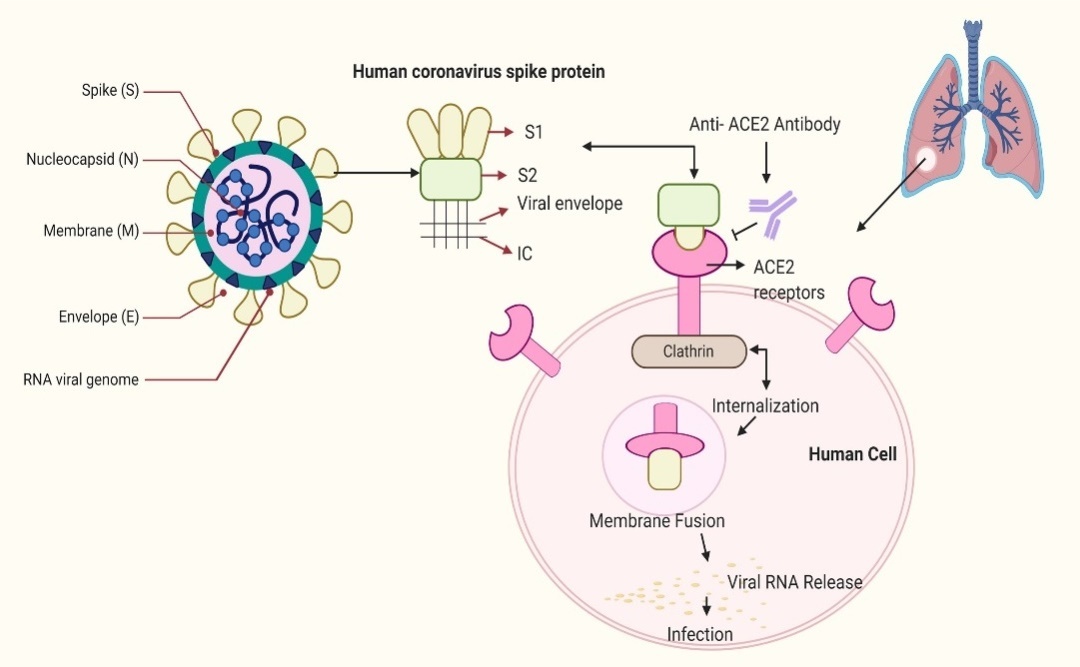
Figure 2. Structure and binding of COVID-19 virus to ACE2 (Balachandar Vellingiri et al., 2020)
When SARS-CoV-2 virus entered in to host cells, its require RNA replication for survival. The process of replication required open reading frames (ORFs), two replicase genes (rep1a and rep1ab), a slippery sequence (5′-UUUAAAC-3′) and two polyproteins (pp1a and pp1ab). The two polyproteins contain Nsp proteins (Nsp1–11and Nsp1–16), these proteins are a common occurrence in these virus types(Baranov et al., 2005).Current studies shows that, the Nsp 15 protein besides attacks the immune system of the host during viral duplication (Youngchang et al., 2020). These Nsp proteins assemble to form the replicase-transcriptase complex which creates a suitable environment the host cells for synthesis and replication of RNA. Also, Nsps plays a major roles in RNA replication of the virus. RNA-dependent RNA polymerase (RdRP) domain is codes by Nsp12, and Nsp13 is encrypted with RNA helicase domain and RNA 5′-triphosphase.SARS-CoV-2 have similar process of replication to SARS-CoV virus (Youngchang et al., 2020). The genomic RNA contains a 5′ end region that has the untranslated leader sequence with the transcription regulation sequence present at the descending region of the genome (Fehr and Perlman, 2015).
Medicinal plants for COVID-19
Indian herbs have been second-hand for treatment and avoidance for numerous diseases, together with respiratory viral infections (Ravishankar and Shukla, 2007) unluckily only few study were conducted in India on treatment of coronavirus with medicinal plants.

Figure 3. Allium sativum reported to have an ability to target the viral replication of SARS-COV (Keyaerts et al., 2007)
A study has shown anti-mouse coronaviral activity by some plants like Indigo feratinctoria (AO), Vitex trifolia, Gymnema sylvestre, Abutilon indicum, Leucas aspera, Cassia alata, Sphaeranthus indicus, Clitoria ternatea, and Evolvulus alsinoides in Tamil Nadu (Vimalanathan et al., 2009). Among which Vitex trifolia and Sphaeranthus indicus have been found to reduce inflammatory cytokines using the NF-kB pathway (Alam et al., 2002; Srivastava et al., 2015). Clitoria ternatea is also been reported as a metalloproteinase inhibitor (Maity et al., 20012). The plants Glycyrrhiza glabra and Allium sativum have been reported severally that they have the ability to target the viral replication of SARS-CoV, this place them as one of the most promising candidates against SARS-CoV-2. Clerodendrum inerme Gaertn is also another medicinal plant reported to have the potential to inactivate the viral ribosome which can be investigated further as a drug targeting SARS-CoV-2 protein translation (Nourazarian, 2015; Keyaerts et al., 2007).

Figure 4. Glycyrrhiza glabra reported to have an ability to target the viral replication of SARS-COV (Nourazarian, 2015)
Conclusion
World Health Organization (WHO) and other international as well as national health regulatory agencies should not only be emphasis on producing vaccines alone, attention should also be given to some medicinal plants that might be effective on treatment of SARS-COV, SARS-COV-2 and Influenza virus that has been reported India and other part the world.
References
Ahn K. 2017. The worldwide trend of using botanical drugs and strategies for developing global drugs. BMB Reports 50 (3):4873–4876.
Alam G, Wahyuono S, Ganjar I, Hakim L, Timmerman H, Verpoorte R. 2002. Cheo spasmolytic activity of viteosin-A and vitexicarpin isolated from Vitex trifolia. Planta Medica (68): 1047-1049.
Avani Shah, Krishnamurthy R. 2013. Swine Flu and Its Herbal Remedies. The International Journal of Engineering and Science 2(5):68-78.
Balachandar V, Mahalaxmi I, Kaavya J, Vivek G, Ajithkumar S, Arul N, Singaravelu G, Nachimuthu SK, Mohanas Devi. 2020. COVID-19: emerging protective measures. European Review for Medical and Pharmacological Sciences (24): 111-116.
Balachandar V. 2020. COVID-19: A promising cure for the global panic. Science of the total Environment (725):1382-1387.
Baranov PV, Henderson CM, Anderson CB, Gesteland RF, Atkins JF, Howard MT. 2005. Programmed ribosomal frame shifting in decoding the SARS-CoV. Genome Virology 332: 498-510.
Chen, Zhou N, Dong M, Qu X, Gong J, Han F, Zhang Y. 2020. Epidemiological and clinical characteristics of 99 cases of 2019 novel coronavirus pneumonia in Wuhan, China: A descriptive study. Lancet 395: 507–513.
Fehr AR, Perlman S. 2015. Coronaviruses: an overview of their replication and pathogenesis Methods Molecular Biology 1282: 1-23.
Karakus U, Pohl MO, Stertz BS. 2020. The convention: sialoglycan variants, coreceptors, and alternative receptors for influenza a virus entry. Journal of Virology 2(94):1018-1128.
Keyaerts E, Vijgen L, Pannecouque C, Van E, Damme, Peumans W, Egberink H, Balzarini J, Van Ranst M. 2007. Plant lectins are potent inhibitors of coronaviruses by interfering with two targets in the viral replication cycle. Antiviral Research 75: 179-187.
Kolomi ML, Bharti J. 2020. Diagnostic Testing of Corona Virus Disease 2019 (COVID-19): A Challenge to the Developing Nations. International Journal of Science and Research 9(4): 776 – 7.
Lambert J, Srivastava J, Vietmayer N. 1997. Medicinal plants – rescuing a global heritage. Washington DC: World Bank. Technical Paper no. 355: 222-33.
Lau KM, Lee KM, Koon CM, Cheung CS, Lau CP, Ho HM, Fung KP. 2008. Immunomodulatory and anti-SARS activities of Houttuynia cordata. Journal of Ethnopharmacology 118: 79–85.
Li, S, Chen Y, Zhang C, Guo HQ, Wang HY, Wang L, Tan X. 2005. Identification of natural compounds with antiviral activities against SARS-associated coronavirus. Antiviral Research 67: 18–23.
Lin CW, Tsai FJ, Tsai CH, Lai CC, Wan L, Ho TY, Chao PD. 2005. Anti-SARS coronavirus 3C-like protease effects of Isatis indigotica root and plant-derived phenolic compounds. Antiviral Research 68:36–42.
Mahmoud Bahmani et al., 2015. Identification of medicinal plants effective in infectious diseases in Urmia, North West of Iran. Asian Pacific Journal of Tropical Biomedicine 5(10): 858–864.
Maity N, Nema NK, Sarkar BK, Mukherjee PK.2012. Standardized Clitoriaternatea leaf extract as hyaluronidase, elastase and matrix-metalloproteinase-1 inhibitor. Indian Journal of Pharmacology 44: 584-85.
Nourazarian A. 2015. Effect of root extracts of medicinal herb Glycyrrhiza glabra on HSP90 gene expression and apoptosis in the HT-29 colon cancer cell line. Asian Pacific Journal of Cancer Prevention, 116:15929–15948.
Olivieri F, Prasad, Valbonesi P, Srivastava S, Ghosal Chowdhury P, Barbieri L, Bolognesi A, Stirpe FA. 1996. Systemic antiviral resistance-inducing protein isolated from Clerodendrum inerme Gaertn. Is a polynucleotide: adenosine glycosidase (ribosome-inactivating protein). Federation of European Biochemical Societies Letters 396: 132-134.
Phan T. 2020. Novel coronavirus: from discovery to clinical diagnostics Infection. Genetics and Evolution 79: 104-11.
Rates SMK. 2001. Plants as source of drugs. Toxicon 39: 603–613.
Ravishankar B, Shukla V. 2007. Indian systems of medicine: a brief profile. African Journal of Traditional, Complementary and Alternative Medicine 4: 319-337.
Schoeman, Fielding, Schoeman D, Fielding BC. 2019. Coronavirus envelope protein: current knowledge. Virology Journal 16: 69-70.
Siu Y, Teoh K, Lo J, Chan C, Kien F, Escriou N, Tsao S, Nicholls J, Altmeyer R, Peiris J. 2008. Structural proteins of the severe acute respiratory syndrome coronavirus are required for efficient assembly, trafficking, and release of virus-like particles Journal of Virology 82: 11318-11330.
Srivastava RAK, Mistry S, Sharma SA. 2015. Novel anti-inflammatory natural product from Sphaeranthus indicus inhibits expression of VCAM1 and ICAM1, and slows atherosclerosis progression independent of lipid changes Nutrition and Metabolism 20(12): 101-18.
Tai W, He L, Zhang X, Pu J, Voronin D, Jiang S, Zhou Y, Du L. 2020. Characterization of the receptor-binding domain (RBD) of 2019 novel coronavirus: implication for development of RBD protein as a viral attachment inhibitor and vaccine Cell. Molecular Immunology Journal 10 (38): 1-8.
Vimalanathan S, Ignacimuthu S, Hudson J. 2009. Medicinal plants of Tamil Nadu(southern India) are a rich source of antiviral activities. Journal of Pharmaceutical Biology (47): 422-429.
Walker LM, Burton DR. 2018. Passive immunotherapy of viral infections: ‘super-antibodies’ enter the fray. Nature Review Immunology 18: 297-99.
Walls AC, Park YJ, Tortorici MA, Wall A, McGuire AT, Veesler D. 2020. Structure, function, and antigenicity of the SARS-CoV-2 spike glycoprotein Cell. Journal of Cell Science 20(302): 62-64.
Yin Y, Wunderink RG. 2018. MERS, SARS and other coronaviruses as causes of pneumonia. Respirology (23): 130-137.
Youngchang K, Robert J, Natalia M, Michael E, Adam G, Karolina M, Andrzej J. 2020. Crystal Structure of Nsp15 Endoribonuclease NendoU from SARS-CoV-2. BioRxiv 96(8): 388-90.
Yu MS, Lee J, Lee JM, Kim Y, Chin, Jee JG, Jeong YJ. 2012. Identification of myricetin and scutellarein as novel chemical inhibitors of the SARS coronavirus helicase, nsP13. Bioorganic & Medicinal Chemistry Letters (22): 4049–4054.
Zhao Y, Zhao Z, Wang Y, Zhou Y, Ma Y, Zuo W. 2020. Single-cell RNA expression profiling of ACE2, the putative receptor of Wuhan 2019-nCov. BioRxiv 10(11): 919-925.
Zheng Y, Ma Y, Zhang J, Xie X. 2020. COVID-19 and the cardiovascular system Nature Reviews Cardiology, (2):101-108.
Zumla A, Chan JF, Azhar EI, Hui DS, Yuen KY. 2016. Coronaviruses—drug discovery and therapeutic options. Nature Reviews Drug Discovery (15): 327-33.