Mujahed Shaikh*, Devendra Wagare, Mazahar farooqui, Ayesha Durrani
Department of Chemistry, Rafiq Zakaria College for Women, Aurangabad (M.S.), India
*Address for Corresponding Author
Mujahed Shaikh
Department of Chemistry, Rafiq Zakaria College for Women, Aurangabad (M.S.), India
Abstract
Objective: The multi-component one-pot approach becomes the need of the research due to its offer advantage like atom economy, minimum reaction time and most important one time workup. Therefore, there is an urgent need to design and developed the efficient and environmentally benign one-pot protocol for the synthesis of pyrazolyl-4-thiazolidinone. Material and Methods: Herein, we have developed a facial and convenient one-pot protocol for the synthesis of pyrazolyl-4-thiazolidinone by irradiating the mixture of isonicotinohydrazide, pyrazolyl carbaldehydes and thioglycolic acid (mercaptoacetic acid) in glycerol at 400 watt under microwave irradiator with 70-75oC temperature. The method provides a better alternative for the existing methods as it involves utilization of in-situ-generated imine linkage, avoids the use of toxic volatile organic solvents, easy work-up, reduces the reaction time to obtain excellent yield and most important the reaction is completed with reactant hence we have not use any external concerted acid to form the imine linkage. Result: Use of glycerol gives us higher yield, lesser reaction time and the most important it will enhance the reaction due to it forms hydrogen bonding network. The results obtained with excellent yield. Conclusion: This protocol are operationally simple, rapid, 100% atom economy, potential for recycling of the reaction medium, good to excellent yields, no need to separate intermediate precursor and finally agreement with green Chemistry principles, all these aspects make the designed protocol more reliable and attractive and alternative to existing methods.
Keywords: Pyrazole carbaldehyde, glycerol, thioglycolic acid, green, one-pot
Introduction
The drug discovery relies on the interface of chemical and biological diversity and the most spectacular advances in medicinal chemistry have made in the last few years, where the heterocyclic compound played an important role in regulating biological activities and wide range pharmacological properties. The heterocyclic compounds are an evergreen field in the branch of organic chemistry, which attracts to work not only on natural product but also in synthetic chemistry. Schiff bases are versatile C=N (Imine) containing compounds possessing broad spectrum of biological activity and shows antibacterial, antifungal, anti-inflammatory activity antitumor and also, they are giving many biochemical, clinical and pharmacological properties (Gupta et al., 1998; Isloor et al., 2009; Krishnaraj et al., 2008; Balsells et al., 1998; Eswaran et al., 2009; Przybylski et al., 2009). Schiff bases are formed when any primary amine reacts with an aldehyde under specific conditions. It shows the activity like anti-corrosion agent, Medicine, biological and pharmacological activity.
Schiff bases and amides derived from various heterocyclic compounds displayed broad range of biological activities such as anticancer, antiviral, antimicrobial, anticonvulsant, antidepressant, angiotension-II receptor antagonist, and anti-inflammatory and anti-glycation activity. The modifications of the Schiff bases have proven highly effective with improved potency and lesser toxicity. Thiazolidines derivatives shows pharmacological, medicinal and biological applications like antibacterial, (Sonwane and Srivastava, 2008; Mistry and Desai, 2004; Sayyed et al., 2006; Kohli et al., 2007; Mulwad and Abid, 2008; Sattigeri et al., 2005) analgesic, (Fraga-Dubrevil and Bazureau, 2003) anticancer, (Prabhaker et al., 2004) anti-inflammatory, (Ottana et al., 2005; Venkatesh and Pandeya, 2009; Vazzana et al., 2004; Patel et al., 2006) anti-tubercular (Shrivastava et al., 2005; Narute et al., 2008; Lv et al., 2010). Pyrazole is a five member ring containing three carbon atoms and two nitrogen atoms adjacent positions and refers to the class of simple aromatic ring organic compounds of the heterocyclic series. Pyrazole derivatives have pharmacological effects on humans and biologically important (Wilkes et al, 1991). Pyrazole derivatives are shows anti-inflammatory, (Hamad et al., 2012) antipyretic, (Pasin et al., 2010) antibacterial, (Kumar et al., 2012) antioxidant (Bandgar et al., 2009) and antimicrobial (Almeida et al., 2008).
Multicomponent one-pot reactions in aqueous solvents emerging tools in organic synthesis due to its advantages like, atom economy, rapid, operational simplicity and minimized the waste (Wagare et al., 2016a; Wagare et al., 2016b; Wagare et al., 2016c; Wagare et al., 2016d; Mujahed et al., 2012). In the interest of the above observations, the present investigation was planned to design the efficient and convenient environmentally green one-pot protocol for the synthesis of Thiazolidinones by using glycerol (“organic water”) under microwave irradiator.
Materials and methods
All the solvents and chemicals were of analytical reagent (A.R.) grade and used without further purification. Melting point is uncorrected taken on microcontroller based melting point apparatus CL-726. NMR spectra recorded by BRUKER 400 MHz spectrophotometer, IR Spectra recorded on JASCO FT IR 4000 Instruments. The product obtained monitor by thin layer chromatography. Reactions done at Microwave irradiator (MAS-II) (Sineo Microwave Chemistry Technology Co.Ltd), irradiation done at 400 watt power.
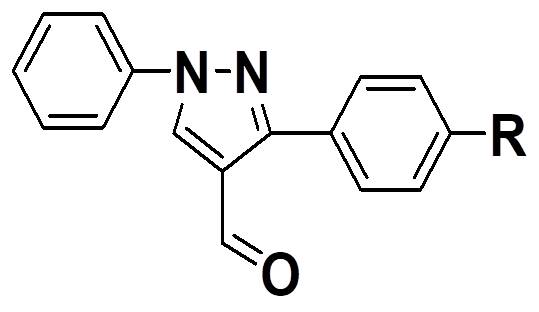
General procedure for the synthesis of N-(2-(1,3-diphenyl-1H-pyrazol-4-yl)-4-oxothiazolidin-3-yl)isonicotinamides [3a]
N-(2-(1,3-diphenyl-1H-pyrazol-4-yl)-4-oxothiazolidin-3-yl)isonicotinamide were prepared by dissolving the mixture of 1,3-diphenyl-pyrazole-4-carbaldehyde 0.01 mol, isonicotinohydrazide 0.01 mole and thioglycolic acid (mercaptoacetic acid) 0.015 mole in glycerol without any catalyst irradiating at 400watt with 70-75oC temperature, the reaction where continuously monitored with TLC, this reaction completed in just 18-20 minutes. When the single spot obtained in TLC, the reaction mixture has neutralised by saturated solution of sodium bicarbonate and then this reaction mask was poured on crush ice and the product were filtered and dried.
Synthesis of pyrazolyl-4-thiazolidinone
Scheme1: (figure 1) synthesis of N-(2-(1,3-diphenyl-1H-pyrazol-4-yl)-4-oxothiazolidin-3-yl)isonicotinamide
 Figure 1. N-(2-(1,3-diphenyl-1H-pyrazol-4-yl)-4-oxothiazolidin-3-yl)isonicotinamide
Characterization of synthesized compounds
N-(2-(1, 3-diphenyl-1H-pyrazol-4-yl)-4-oxothiazolidin-3-yl) isonicotinamide (3a):
Melting point: 130-132°C
1HNMR (400MHz, ppm): 3.3-3.5 (dd,2H, of thiozolidinone ring), 5.48 (1H,s, of thiozolidinone ring ), 7.30 (H,m, benzene ring), 7.40 (H,m, benzene ring), 7.50 (H,m, pyrazole ring), 7.8-7.90 (5H, m, pyridine ring), 8.6 (H, s, of NH of amide)
IR cm-1: 3406 (N-H), 3049 (C-H aromatic ring), 1693 (C=O) and 1594 (C=N).
ES-MS (m/z): 442 [M+H]; HRMS-EI: found: 15.71; calculated: C, 15.69.
N-(2-(3-(4-nitrophenyl)-1-phenyl-1H-pyrazol-4-yl)-4-oxothiazolidin-3-l) isonicotinamide (3b): Melting point: 185-187°C
1HNMR (400MHz, ppm): 3.4-3.5 (dd, 2H, thiozolidinone ring), 5.52 (1H,s, of thiozolidinone ring ), 7.3-7.4 (H,t, benzene ring), 7.90 (H, d, benzene ring), 7.50 (H, m, pyrazole ring), 8.1-8.3 (5H, m, pyridine ring), 8.75 (H, s, of NH of amide)
IR cm-1: 3422 (N-H), 3015 (C-H aromatic ring), 1698 (C=O) and 1597 (C=N).
ES-MS (m/z): 485 [M+H]; HRMS-EI: found: 17.28; calculated: C, 17.29.
N-(2-(3-(4-fluorophenyl)-1-phenyl-1H-pyrazol-4-yl)-4-oxothiazolidin-3-yl) isonicotinamides (3c): Melting point: - 162-164°C
IR cm-1: 3426 (N-H), 3015 (C-H aromatic ring), 1697 (C=O) and 1599 (C=N).
N-(2-(3-(4-hydroxyphenyl)-1-phenyl-1H-pyrazol-4-yl)-4-oxothiazolidin-3-yl) isonicotinamides (3d):- Melting point: 202-204°C
ES-MS (m/z): 457 [M+H]; HRMS-EI: found: 15.27; calculated: C, 15.25.
Result and discussion
The thiazolidinedione–pyrazole nucleus is found to be very much important in the field of pharmaceutical and agricultural industries because of its wide range of biological activities. These observations prompted our interest to design and developed the highly efficient and environmentally benign one-pot protocol for the synthesis of series of thiazolidinedione–pyrazole hybrids containing compounds. To optimize the reaction condition, we have synthesized the title compound 3a in various solvents although the reaction completed and product formed but counter with low yield, more reaction time and also use of non-volatile solvents. Whereas the entry 6 (Refer table 1) i.e. Use of glycerol gives us higher yield, lesser reaction time and the most important it will enhance the reaction due to it forms hydrogen bonding network. So that, The title compound were synthesized by irradiating the mixture of 0.01 mole of pyrazolyl carbaldehyde, 0.01 mole of isonicotinohydrazide and 0.01 mole of mercaptoacetic acid under microwave irradiator with 400 watt at 70-75oC temperature. This reaction completed in just 18/20 minutes. Where thioglycolic acid acts as catalyst which is reactant for the formation of pyrazolyl-4-thiazolidinone and hence no needs to separate the imine linkage (Schiff bases) directly we obtained pyrazolyl-4-thiazolidinone. The possible reaction mechanism is shown in figure 1. The IR and 1H-NMR peaks shows the formation of imine linkage which disappear in few minutes, it will conforms the again attack of thioglycolic acid to form thiazolidinones. To generalise the scope of this reaction, differently substituted pyrazolyl carbaaldehyde is taken in this mixture and same treatment is given. The results were obtained with excellent yield (Refer scheme 1 table 2). Although the reaction could be possible in all these solvents, but reaction exceptionally gives yield of product in minimum reaction time in glycerol. Glycerol also called as organic water because like water, it is polar, cheap, non-toxic, easily available, biodegradable and easily form strong hydrogen-bond networks with oxygen and nitrogen of aldehyde and isonicotinamides.
Table 1. Optimization of the solvent for the synthesis of pyrazolyl-4-thiazolidinones (3a)
|
Entry |
Solvents |
Volume (ml) |
Time (min)b |
Yield %a |
|
1 |
Dichloromethane |
5 |
40 |
60-64 |
|
2 |
Toluene |
5 |
35 |
64-68 |
|
3 |
1,4-dioxane |
5 |
32 |
70-74 |
|
4 |
Ethanol |
5 |
28 |
80-84 |
|
5 |
Isopropyl alcohol |
5 |
26 |
82-86 |
|
6 |
Glycerol |
5 |
20 |
89-92 |
aIsolated yield; b Time for overall reaction
Table 2. Evaluation of synthesized compounds [3a-3f] aa
|
Compounds |
R=
|
Yield % |
Reaction time (min.) |
|
3a |
H |
89-92 |
19-20 |
|
3b |
NO2 |
92-95 |
18-19 |
|
3c |
F |
90-94 |
19-20 |
|
3d |
OH |
87-90 |
20-21 |
|
3e |
CH3 |
88-91 |
19-20 |
|
3f |
OCH3 |
91-95 |
18-19 |
aaReaction conditions: (1) pyrazolyl carbaldehyde (1.0 mmol), isonicotinohydrazide (1.0 mmol), thioglycolic acid (1.5 mmol), Glycerol (10 ml), microwave power 400 W.
The IR spectra of the compound 3a shows prominent peaks at 3406 cm-1 for N-H near to C=O, 3049 cm-1 for C-H which is of aromatic ring, 2527 cm-1 for thiazilidinone ring, 1693 cm-1 for C=O attached to N-H and Schiff base formation conforms i.e. C=N with 1594 stretching. 1H NMR of compound 3a shows characteristic doublets for 2H of thiazolidinone ring at δ3.3-3.5, δ5.48 for 1H of thiazolidinones ring which is between Nitrogen and Sulphur, δ7.3- δ7.4 H of benzene ring, δ7.50 H of pyrazole ring, δ5.8 H of pyridine ring and the most important that shows the δ8.6 1H because of NH connected with C=O. All the above spectral data clearly shows the formation of title compound 3a.
Mechanism of the reaction
For the pot synthesis of N-(2-(1,3-diphenyl-1H-pyrazol-4-yl) -4-oxothiazolidin-3-yl) isonicotinamide (figure 2)
 Figure 2. N-(2-(1,3-diphenyl-1H-pyrazol-4-yl) -4-oxothiazolidin-3-yl) isonicotinamide
Conclusion
In summary, we have designed a simple, highly efficient, multi-component one-pot, environmentally benign protocol to obtained highly functionalized pyrazolyl-4-thiazolidinone using glycerol as an inexpensive, biorenewable and biodegradable, easily available promoting medium. Main advantages of this protocol are operationally simple, rapid, 100% atom economy, potential for recycling of the reaction medium, good to excellent yields, no need to separate intermediate precursor and finally agreement with green Chemistry principles, all these aspects make the designed protocol more reliable and attractive and alternative to existing methods.
References
Almeida da Silva PE, Ramosa DF, Bonacorso HG, de la Iglesia AI, Oliveira MR, Coelho T. 2008. Synthesis and in vitro antimycobacterial activity of 3-substituted 5-hydroxy-5- trifluoro[chloro]methyl-4,5-dihydro-1H-1-(isonicotinoyl)pyrazoles. International Journal of Antimicrobial Agents, 32(2):139-144.
Balsells J, Mejorado L, Phillips M, Ortega F, Aguirre G, Somanathan R, Walsh PJ. 1998. Synthesis of Chiral Sul- fonamide/Schiff Base Ligands. Tetrahedron: Asymmetry 9(23):4135-4142.
Bandgar BP, Gawande SS, Bodade RG, Gawande NM, Khobragade CN. 2009. Synthesis and biological evaluation of a novel series of pyrazole chalcones as anti- inflammatory, antioxidant and antimicrobial agents, Bioorg. Medicinal Chemistry Letter, 17(24): 8168-8173.
Wagare SD Prashant DN, Mujahed S, Mazahar F, Ayesha D. 2016a. Highly efficient microwave-assisted one-pot synthesis of 4-aryl-2-aminothiazoles in aqueous medium. Environmental Chemistry Letteres, 6:405-409.
Wagare SD, Dinesh L, Mazhar F, Ayesha D. 2016b. An enviornmentally benign one-pot synthesis of 3-aryl-furo [3,2-c]coumarins in PEG-400 and water. Der Pharma Chemica 8(1):408-411.
Wagare SD, Mazhar F, Tushar DK, Ayesha D. 2016c. Efficient and green microwave-assisted one-pot synthesis of azaindolizines in PEG-400 and water. Synthetic Communications, 46(21):1741–1746.
Wagare SD, Mujahed S, Mazahar F, Ayesha D. 2016d. PEG-1500 in water: A green, recyclable catalyst for the one-pot synthesis of imidazo[1,2-a]pyrimidines under microwave irradiation. Chemistry and Biology Interface, 6(6):405-409.
Eswaran S, Adhikari AV, Shetty NS 2009. Synthesis and Antimicrobial Activities of Novel Quinoline Deriva- tives Carrying 1,2,4-Triazole Moiety. European Journal of Medicinal Chemistry, 44(11):4637- 647.
Fraga-Dubrevil J, Bazureau JP. 2003. Efficient combination of task-specific ionic liquid and microwave dielectric heating applied to one-pot three component synthesis of small library of 4-thiazolidinones. Tetrahedron, 59 (32):6121-6130.
Gupta RR, Kumar M, Gupta V. 1998. Heterocyclic Chemistry I, XI, pp. 422, Springer-Verlag Berlin Heidelberg.
Hamad AS, Elgazwy, Nassar E, Zaki MY. 2012. Synthesis, Biological evaluation of some 2, 3-dihydopyrazoles and thiazoles as anti-inflammatory and antibacterial agents. Organic Chemistry: Current Research, 1(5):112.
Isloor AM, Kalluraya, Shetty P. 2009. Regioselective Reaction: Synthesis, Characterization and Pharmacological Studies of Some New Mannich Bases Derived from 1,2,4-Triazoles. European Journal of Medicinal Chemistry, 44 (9):3784-3787.
Kohli P, Srivastava SD, Srivastava SK. 2007. Synthesis and Biological Activity of Mercaptobenzoxazole Based Thiazolidinones and Their Arylidenes. Chinese Chemical Society. 54(4):1003-1010.
Krishnaraj S, Muthukumar M, Viswanathamurthi P, Sivakumar S. 2008. Studies On Ruthenium (Ii) Schiff Base Complexes as Catalysts for Transfer Hydrogenation Reactions. Transition Metal Chemistry, 33(5):643-648.
Kumar P, Chandak N, Kaushik P, Sharma C, Kaushik D, Aneja KR, Sharma PK. 2012. Synthesis and biological evaluation of some pyrazole derivatives as anti-inflammatory-Antibacterial agents. Medicinal Chemistry Research, 21(11):3396-3405.
Lv PC, Zhou CF, Chen J, Liu PG, Wang KR, Mao WJ, Li HQ, Yang Y, Xiong J, Zhu HL. 2010. Design, synthesis and biological evaluation of thiazolidinone derivatives as potential EGFR and HER-2 kinase inhibitors. Bioorganic and Medicinal Chemistry, 18(1):314-319.
Mistry KM, Desai KR 2004. Synthesis of Novel Heterocyclic 4-Thiazolidinone Derivatives and their Antibacterial Activity. European Journal of Chemistry, 1(4):189-193.
Mujahed HS, Wagare SD, Mazahar F, Ayesha D. 2017. Facile and green one-pot synthesis of 2-aminothiazole in glycerol-water. Heterocyclic Letter, 7(4):1061-1064.
Mulwad VV, Abid AM. 2008. Synthesis and antibacterial screening of N-[coumarin-6-yl] spiro-indoloazetidin-2--ones/thiazolidin-4-ones. Journal of the Korean Chemical Society 52(6):649–656.
Narute AS, Khedekar PB, Bhusari KP. 2008. QSAR studies on 4-thiazolidinones bearing benzothiophene nucleus as potential anti-tubercular agents. Indian Journal of Chemistry B 47:586-591.
Ottana R, Maccari R, Barreca ML, Bruno G, Rotondo A, Rossi A, Chiricosta G, Di Paola R, Sautebin L, Cuzzocrea S, Vigorita MG. 2005. 5-Arylidene-2-imino-4-thiazolidinones: Design and synthesis of novel anti-inflammatory agents. Bioorganic Medicinal Chemistry 13(13):4243-4252.
Pasin JSM, Ferreira APO, Saraiva ALL, Ratzlaff V, Andrighetto R, Machado P, Marchesan S, Zanette RA, Bonacorso HG, Zanatta N, Martins MAP, Ferreira J, Mello CF. 2010. Antipyretic and antioxidant activities of 5-trifluoromethyl-4,5-dihydro-1H-pyrazoles in rats. Brazilian Journal of Medicinal and Biological Research, 43(12):1193-1202.
Patel RB, Desai PS, Desai KR, Chikhalia KH. 2006. Synthesis of pyrimidine based thiazolidinones and azetidinones: antimicrobial and antitubercular agents. Indian Journal of Chemistry B 45:773-778.
Prabhaker YS, Solomon VR, Rawat RK, Gupta MK, Katti SB. 2004. S. B. CP-MLRJPLS Directed Structure-Activity Modeling of the HIV-IRT Inhibitory Activity of 2,3-Diaryl-I,3-thiazolidin-4-ones. QSAR & Combinatorial Science, 23(4):234-244.
Przybylski P, Huczynski A, Pyta K, Brzezinski B, Bartl F 2009. Biological Properties of Schiff Bases and Azo De- rivatives of Phenols. Current Organic Chemistry, 13(2):124-148.
Ritu S, Samadhiya P, Srivastava SD, Srivastava SK. 2012. Synthesis and biological activity of 4-thiazolidinone derivatives of phenothiazine. Journal of Serbian Chemical Society, 77 (1):17–26.
Sattigeri VJ, Soni A, Singhal S, Khan S, Pandya M, Bhateja P, Mathur T, Rattan A, Khanna JM, Mehta A. 2005. Synthesis and antimicrobial activity of novel thiazolidinones. Arkivoc, 2(ii):46-59.
Sayyed M, Mokle S, Bokhare M, Mankar A, Bhusare S, Vibhute Y. 2006. Synthesis of some new 2, 3-diaryl-1, 3-thiazolidin-4-ones as antibacterial agents. Arkivoc, 187-192.
Shrivastava T, Gaikwad AK, Haq W, Sinha S, Katti SB. 2005. Synthesis and biological evaluation of 4-thiazolidinone derivatives as potential antimycobacterial agents. Arkivoc, (ii):120-130.
Sonwane SK, Srivastava SD. 2008. Synthesis and biological significance of 2-amino-4-phenyl-1, 3-thiazole derivatives. Proceedings of the National Academy of Sciences 78:129–136.
Vazzana I, Terranova E, Mattioli F, Sparatore F. 2004. Aromatic Schiff Bases and 2,3-Disubstituted-1,3-thiazolidin-4-one Derivatives as Anti-Inflammatory Agents. Arkivoc (X):364-274.
Venkatesh P, Pandeya SN. 2009. Synthesis and anti-inflammatory activity of some novel 2,4-diaryl-3,5-bis(arylimino)-1,2,4-thiadiazolidine derivatives. European Journal of Chemistry, 6(2):495-503.
Wilkes MC, Lavrik PB, Greenplate J. 1991. Synthesis of N-benzoyl-N-alkyl-2-aminothiazole Heliothis virescens proinsecticides. Journal of Agricultural Food Chemistry 39(9):1652-1657.