A. K. Azad, Wan Mohd Azizi W. S*, N. A. Daud
Department of Basic Medical Sciences, Faculty of Pharmacy,
International Islamic University Malaysia (IIUM), Jalan Sultan Ahmad Shah, 25200 Indera Mahkota, Kuantan, Pahang, Malaysia
Address for Correspondence
Asst. Prof. Dr. Wan Mohd Azizi Wan Sulaiman,
Department of Basic Medical Sciences, Faculty of Pharmacy,
International Islamic University Malaysia, 25200 Kuantan, Pahang, Malaysia. Tel: 5704871
Abstract
Objective: This study aimed to determine the efficacy of Pomegranate based cosmeceutical product as skin whitening and hydrating agents. Materials and methods: The study are conducted by selecting marketed pomegranate skincare products which are the body shop pomegranate cream and skin food pomegranate emulsion and the subjected to applied the product every night on the back of the forearm for a duration of one month. The initial and final reading were compared and analyzed by DermaLab® Combo Handling Techniques. Results: This study found that both products showed positive result for skin whitening and hydrating activity however their superiority in terms of efficacy cannot be made due to subject compliance issue, the formulation differences as well as other environmental factors such as drinking and sun light exposure. Conclusion: Findings of this study suggest that the Punica granatum L. would be potential skin whitening and antihydrating agent in pharmaceutical or cosmeceutical products in near future.
Keywords: Hydration, Whitening, Pomegranate, Punica granatum, DermaLab®
Introduction
Natural plants have been used as a traditional medicine all over the world (Azad et al., 2012; Abul et al., 2013). One of these natural plants is pomegranate (Punica granatum). As to fulfilled the increasing demand of organic personal care products especially skincare product, many brands emerge to grab this opportunity by producing wide range of skincare products from sleeping pack to skin serum and emulsion for day and night application (Smit et al., 2009; Aviram et al., 2000). Some of them even took more advance approach by producing different kind of consumable skin whitening and collagen drinks that are not even clinically tested and the claim are not scientifically proven (Seeram et al., 2005). One of the widely trending nowadays is pomegranate based products. Pomegranate (Punica granatum L.) is considered one of the oldest known edible fruit that is mentioned in the Qu’ran, the Bible, the Torah, and the Babylonian Talmud as ‘Food of Gods’ that is symbolic of plentyness, fertility and prosperity (Seeram et al., 2006).
It has been used in folk medicine, food supplement as well as cosmetic in many countries. The chemical constituents of pomegranate actually differ from one part of the tree to another. However, many researchers have proved that almost all parts of pomegranate seed, leaves, peel and bark skin are actually beneficial to human being either for clinical or cosmeticuetical purposes (Azad et al., 2015; Azad et al., 2016; ). Pomegranate belongs to the family Punicacae, native from Iran to Himalayas in northern India area, and has been cultivated over entire Mediterranean region since ancient times. Now, it actually widely cultivated throughout Mediterranean countries, Iran, India, Southeast Asia, Malaysia, China, Japan, Rusian as well as the drier part of United States, California and Arizona (Aslam et al., 2006).
Phytochemicals are consider as nonnutritive part of plants (Azad et al., 2014) whereby it is thought to be produced to act as mechanical defense mechanism that help to protect the plant from dangers such as harmful ultraviolet radiation, pathogens and herbivors predators. Punica granatum L. is a nutrient dense fruit rich in phytochemical compounds and different types of phytochemicals compound had already identified from different part of pomegranate (Larrosa et al., 2010). Two predominant types of polyphenolic are flavonoids and hydrolyzed tannins (HTs). The major phytochemical ingredients available in the pomegranate peel are ellagitannis and gallotannins that in presence of acidic condition it will hydrolysed to form ellagic acid gallic acid and respectively.
Materials and methods
The purpose of study is to compare the target population skin color and hydration as after subjected to use certain products for about 4 weeks. A total number of 12 subjects are divided into 2 groups of A and B with of six subjects each. Before starting the experiment, all these subjects’ back of forearm skin is tested using Derma Lab Combo to record their individual skin color and hydration. After the readings are taken, Group A will be provided with Body Shop Pomegranate Cream whereby Group B will be provided with Skin Food Pomegranate Emulsion. Each of subjects was apply the product topically every day for 4 weeks. Then, the final skin hydration and skin color readings were recorded and both initial and final readings were compared and presented either descriptively or graphically.
DermaLab Combo Handling Techniques
Skin Color
This devices skin color probe offers read-out of erythema and melanin based on the light absorption characteristics of human skin, CIEl*a*b* values and RGB by the push of one button. With the optional LabView based application software package the unit may be connected to a PC via the built- in USB port in order to import data directly into Excel spreadsheets.
Hydration
The flat faced probe with its traditional electrode design is a popular choice for normal skin measurements, whereas the pin probe electrode design is ideal for dry skin and scalp applications. Both probes offer a spring loaded design in order to trigger the measurement at a preset skin load. The hydration screen allows for performing up to eight sequential measurements, which can be named for ease of operations.
Data analysis
Both reading prior and after topical application of products are recorded. The differences of initial and final reading value are calculated and the standard deviation is also recorded to determine the data distribution properties and prediction of data accuracy using Microsoft Excel. The data were then converted into bar graph to ease the comparison of initial and final reading for each subject. The total average value for initial and final reading cannot be made due to inappropriateness as each subject has their own special initial reading.
Results
In the context of the skin color improvement or skin whitening activity, the Body Shop Pomegranate Cream demonstrates higher efficacy due to wider different of initial and final reading of skin color with the highest different of 10.7 average melanin for subject number 4 compared to the Skin Food Pomegranate Emulsion where its highest different of initial and final skin color reading of 5.3 average melanin for subject number 3. This efficacy is also supported with the smaller standard deviation of Body Shop Cream that illustrates that the difference of final and initial reading data are more clustered and packed compared to Skin Food Emulsion (Figure 1 and 2).
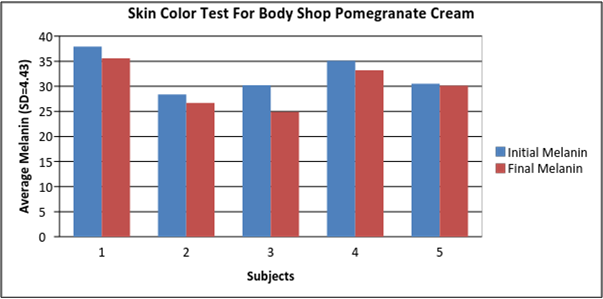
Figure 1. Skin color test for body shop Pomegranate cream
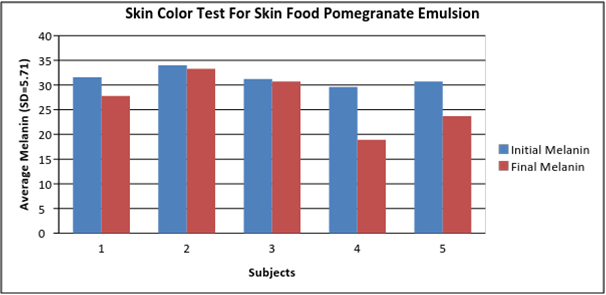
Figure 2. Skin color test for skin food Pomegranate emulsion
In context of hydration activity, both products successfully exhibit hydration improvement capability. However, Skin Food Emulsion gives out wider different of the hydration reading after a month of topical application compared to Body Shop Cream but with higher standard deviation value. Thus, this result reveals inconsistency of accurate result of the hydration activity of Skin Food Emulsion compared to Body Shop Cream. On the other hand, the Body Shop Cream hydration activity also cannot be presumably state as more superior than Skin Food Emulsion due to negative result in one of the subject whereby, a month of topical application of the product lead to negative skin hydration reading (Figure 3 and 4).
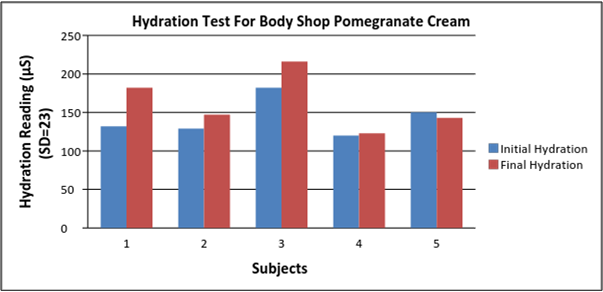
Figure 3. Hydration test for body shop Pomegranate cream
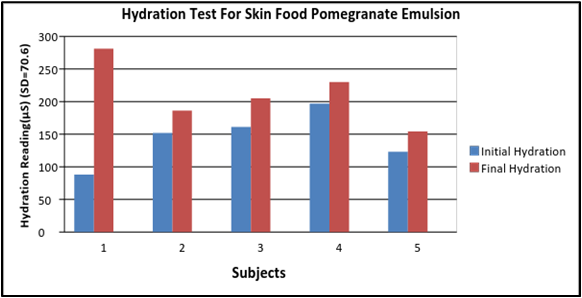
Figure 4. Hydration test for skin food Pomegranate emulsion
Discussion
Overall, both Body Shop Pomegranate Cream and Skin Food Pomegranate emulsion exhibits positive skin whitening and hydrating activity. In context of skin whitening activity, the Body Shop Pomegranate Cream exerts more effects with wider different of melanin reading after topical application of the product for a duration of four weeks, whereby for the hydrating activity Skin Food Pomegranate Emulsion reveals higher efficacy. However, both products cannot be presumably stated is more superior than one another and vice versa due to certain circumstances that will be further discussed later.
The major source of color in human skin derives from the presence within the epidermis of specialized melanin, the melanosomes. Melanosomes synthesized by melanocytes are acquired by keratinocytes and transported within them to the epidermal surface (Hachem et al., 2001). The melanin pigment is synthesized from the amino acid L-tyrosine that this converted by tyrosinase to dopaquinone. The ability of pomegranate based products to exert their skin whitening activity basically is due to the presence of hydrolyzed tannins that composed of gallic and ellagic acid (Ashoori et al., 1994).
The synergistic effect of tyrosinase inhibitory activity against melanin formation enable Punica granatum peel extract to exhibit as skin whitening agent (Fadavi et al., 2006). Another study’s findings stated that gallic acid also show promising activity against melasma. Melasma is a common hypermelanotic disorder affecting the face that is associated with considerable psychological impacts. Melasma is the darkening of large areas of skin cause by the female hormone estrogen which has been suggested that the increased frequency of occurrence of melasma in pregnancy. It has been found on whose having oral contraceptive pills, estrogen replacement therapy and estrogen treatment for prostatic cancer. The mechanism of induction of melasma by estrogen may be related to the presence of estrogen receptors on the melanocytes that stimulate the cells to produce more melanin. Gallic acid inhibitory action on tyrosinase activity on melanocyte enable reduced melanin formation and exerts as antimelanocyte agent thus help to treat melasma (Ortonne and Bissett, 2008).
Another main phytochemical ingredient of pomegranate extract is Ellagic acid which is able to shows fascinating action as skin whitening active agent in topical skin formulation because it can effectively suppress UV-induced skin pigmentation when applies topically in brownish guinea pig suggesting that EA can prevent skin pigmentation build-up after sunburn. This finding also proved by another research whereby ellagic acid show protective role as natural antioxidant against UVA (5-20 J/cm2) induced oxidative stress and apoptosis in human keratinocyte cell. Besides, ellagic acid pre-treatment prevented UVA-induced DNA damage as evaluated by the comet assay and significantly inhibited the UVA-induced apoptosis of human keratinocytes cells, as measured by a reduction of DNA fragmentation, mitochondria Thus, proved ellagic acids may be useful for UVA-induced skin damage treatment. Both findings however, so no concrete evidence about its ability to suppress UVA-induced skin damage when administered orally (Hseu et al., 2012).
Pomegranate extracts also rich in flavanoids which composed of quercetin, kaempferol and luteolin. Both quercetin and kaempferol exhibit tyrosinase inhibitory action whereby usually competitive inhibition for the oxidation of L-dopa by tyrosinase and the 3-hydroxy-4-keto moiety of the flavonol structure acts as the key role in copper chelation (Schubert et al., 1999). Inhibition of tyrosinase lead to low production of melanocytes thus, aid to treat skin pigmentation as well as melasma. The presence of both falvonoids and well as hydrolyzed tannins enable Punica granatum peel to exhibit skin whitening effect when being applied as topical skin preparation (Yoshimura et al., 2005).
The fruit extract also prolonged the life of cells in the dermis known as fibroblasts. Fibroblasts produce the skin’s essential structural fibers, including collagen and elastin. Pomegranate thus promotes regeneration of cells in the two most important layers of healthy skin, the epidermis and dermis. This is due to its high concentration of phenolic compounds, such as ellagic acid (Miguel et al., 2010). A Japanese study found that ellagic acid potently suppresses lipid peroxidation in the skin, thus helping to guard against damage from ultraviolet radiation (Hseu et al., 2012).
The first circumstance leads to probability of inaccurate result is the adherence of subjects to the guidelines of product application. Subjects are supposed to apply the product topically on the back of their forearm every night from day 1 to day 14. However, upon interviewing them, almost half of the subjects are not compliance with the regimen and guideline stated above. The second circumstance is the different in formulation used, the Body Shop Pomegranate product is water in oil emulsion that are more greasy and emollient compared to the Skin Food product that is oil in water emulsion that are spread easily and do not leave the skin highly greasy and sticky. The difference of formulation used also lead to inconsistency of the result due to different properties of the products itself. The third circumstance is the presence of other excipients in the products. Both products came from two different manufactures that used different excipient. Thus, the ability and efficacy of pomegranate extract cannot be thoroughly examine as some of the excipients for the examples glycerin improved the skin hydration thus, the result obtained might be misleading.
Conclusion
Both Body Shop Cream and Skin Food Emulsion Punica granatum L. or Pomegranate based products show positive hydrating and skin whitening activity after a month of topical application at the back of forearm. However, the superiority of the products cannot be presumed due to certain circumstances which are the subject compliance, the product formulation and the additive excipients effects. The skin whitening and hydrating effect of pomegranate basically contributed by the 2 main phytochemicals ingredients of pomegranate which are the hydrolyzed tannins that composed of gallic and ellagic acid as well as flavonoids that composed of quercetin, kaempferol and luteolin. These two groups of main phytochemicals ingredients were able to work synergistically to produce whitening and hydrating effect. Besides, upon conducting this study, no adverse reaction regarding the products was made by the subjects indicating that these products basically good for skin whitening and hydrating within the safety limit.
Acknowledgement
This study was supported by the IIUM endowment (EDW B13-065-0950) fund. The authors acknowledged the assistance of Basic Medical Science department of Kulliyah Pharmacy, International Islamic University of Malaysia.
Conflict of interest
All authors have declared no conflict of interest.
References
A K Azad, Wan Mohd Azizi WS. 2014. Toxicity study of Phaleria macrocarpa (Scheff.) Boerl. 2nd International Conference and Exhibition on Pharmacognosy, Phytochemistry & Natural Products. Natural Products Chemistry Research, 2: 5.
Ashoori F, Suzuki S, Zhou JH, Isshiki N, Miyachi Y. 1994. Involvement of lipid peroxidation in necrosis of skin flaps and its suppression by ellagic acid. Plastic and Reconstructive Surgery, 94(7): 1027-37.
Aslam MN, Lansky EP, Varani J. 2006. Pomegranate as a cosmeceutical source: pomegranate fractions promote proliferation and procollagen synthesis and inhibit matrix metalloproteinase-1 production in human skin cells. Journal of Ethnopharmacology, 103(3): 311-8.
Aviram M, Dornfeld L, Rosenblat M, Volkova N, Kaplan M, Coleman R, Hayek T, Presser D, Fuhrman B. 2000. Pomegranate Juice Consumption Reduces Oxidative Stress, Atherogenic modifications to LDL and Platelet Aggregation: Studies in humans and in Atherosclerotic Apolipoprotein E-deficient mice. The American Journal of Clinical Nutrition, 71(5):1062-1076
Azad AK, Awang M, Rahman MM, Akter SF. 2012. Biological and pre-clinical trial evaluation of a local medicinal plant Bacopa monnieri (L.) Penn. International Journal of Current Research and Review, 4(19): 92-99.
Azad AK, Awang M, Rahman MM. 2012. Phytochemical and Microbiological Evaluation of a Local Medicinal Plant Bacopa monnieri (L.) Penn. International Journal of Current Pharmaceutical Review and Research, 3(3): 66-78.
Azad AK, Rahman MK, Sunzida N K. 2015. Acute oral toxicity Study on Malaysian traditional herb: Lagerstroemia speciosa L. (Banaba). Journal of Pharmacognosy and Phytochemistry, 4 (4): 228-232.
Azad AK, Sulaiman W M AW, Sunzida NK. 2016. Phytochemical and toxicity evaluation of Phaleria macrocarpa (Scheff.) Boerl by MCF-7 cell line and brine shrimp lethality bioassay. Journal of Coastal Life Medicine, 4(1): 45-49.
Azad AK, Wan Azizi WS, Babar ZM, Labu ZK, Zabin S. 2013. An Overview on Phytochemical, Anti-Inflammatory and.Anti-Bacterial Activity of Basella alba Leaves Extract. Middle East Journal of Scientific Research, 14 (5): 650-655.
Fadavi A, Barzegar M, Azizi HM. 2006. Determination of fatty acids and total lipid content in oil seed of 25 pomegranates varieties grown in Iran. Journal of Food Composition and Analysis, 19:678-80.
Hachem J P, De Paepe K, Vanpee E, Kaufman L, Rogiers V, Roseeuw D. 2001. The effect of two moisturisers on skin barrier damage in allergic contact dermatitis. European Journal of Dermatology, 12(2): 136-138.
Hseu YC, Chou CW, Senthil Kumar KJ, Fu KT, Wang HM, Hsu LS, Yang HL. 2012. Ellagic acid protects human keratinocyte (HaCaT) cells against UVA-induced oxidative stress and apoptosis through the upregulation of the HO-1 and Nrf-2 antioxidant genes. Food and Chemical Toxicology, 50(5): 1245- 1255.
Larrosa M, González-Sarrías A, Yanez-Gascón MJ, Selma MV, Azorín-Ortuño M, Toti S, Tomás-Barberán F, Dolara P, Espina JC. 2010. Anti-inflammatory properties of a pomegranate extract and its metabolite urolithin-A in a colitis rat model and the effect of colon inflammation on phenolic metabolism. Journal of Nutritional Biochemistry, 21(8): 717–25.
Miguel MG, Neves MA. 2010. Antunes, Pomegranate (Punica granatum L.): a medicinal plant with myriad biological properties—a short review. Journal of Medicinal Plant Research, 4(25): 2836–2847.
Ortonne JP, Bissett DL. 2008. Latest insights into skin hyperpigmentation. In Journal of Investigative Dermatology Symposium Proceedings, 13(1): 10-14.
Schubert SY, Lansky EP, Neeman I. 1999. Antioxidant and eicosanoid enzyme inhibition properties of pomegranate seed oil and fermented juice flavonoids. Journal of Ethnopharmacology, 66(1):11-7.
Seeram NP, Adams LS, Henning SM, Niu Y, Zhang Y, Nair MG, Heber D. 2005. In vitro antiproliferative, apoptotic and antioxidant activities of Punicalagin, Ellagic acid and a total Pomegranate tannin extract are enhanced in Combination with other Polyphenols as found in Pomegranate juice. Journal of Nutritional Biochemistry, 16(6): 360-36.
Seeram NP, Zhang Y, Reed JD, Krueger CG, Vaya J. 2006. Pomegranate phytochemicals. Pomegranates: Ancient Roots to Modern Medicine, 3-29.
Smit N, Vicanova J, Pavel S. 2009. The hunt for natural skin whitening agents. International Journal of molecular sciences, 10(12): 5326-5349.
Yoshimura M, Watanabe Y, Kasai K, Yamakoshi J, Koga T. 2005. Inhibitory effect of ellagic acid-rich pomegranate extract on tyrosinase activity and ultraviolet-induced pigmentation. Bioscience Biotechnology and Biochemistry, 69: 2368-2373.