P. V. Sandhya1*, K. V. Satheesh Kumar2
1Department of Chemistry, Maharaja’s college, Ernakulam, Kerala, India, 682011
2Department of Chemistry, Government College, Kasaragod, Vidyanagar, 671123
*Address for Corresponding author:
Dr. Sandhya P. V.,
Associate professor in Chemistry, Maharaja’s College, Ernakulam, Kerala, India, 671123
Abstract
Objective: Pyrazoles and its derivatives have been explored in past and are still in practice for a variety of biological applications which make this scaffold as an interesting moiety for scientists especially in synthesis and designing new broad-spectrum pharmacophore. The objective of present study was to introduce a simple and efficient method to synthesis the compounds containing both substituted imino phenyl and pyrazole ring and investigate their biological activities both experimentally and theoretically. Materials and methods: The five membered N containing heterocyclic compounds have depicted various admirable biological properties in form of antioxidant, analgesic, antibacterial, antifungal activities. Clubbing imino or azo moiety to this compound has given a positive impact on its biological properties. Here we focused to synthesis pyrazole terminated imino phenyl derivatives and all the compounds were characterized by different spectroscopic techniques. The biological activities of the synthesized compounds were screened. The computational studies such as molecular docking with protein and DNA were also carried out. Results: All the synthesized compounds displayed moderate to good biological activities both experimentally and theoretically. Conclusion: From our compounds, pyrazole derivatives with electron withdrawing group at the 4th position of imino phenyl ring were showing more biological activities and molecular docking studies supported this finding.
Keywords: Vilsmeir -Haack reaction, pyrazole derivatives, antibacterial, antifungal, alamar blue assay, molecular docking, DNA binding
Introduction
Heterocycles are well known for displaying a wide range of biological properties (Monica Arora et al., 2013). The structural diversity and biological importance of nitrogen containing heterocycles have made them attractive synthetic targets over many years (Azam et al., 2007). In general, well-known five–membered heterocyclic compounds are oxadiazoline, pyrazole and pyrazoline derivatives. Compounds with pyrazole ring are of interest due to their broad spectrum of biological activities against NOS inhibitor (Carrión et al., 2008), monoamine oxidase inhibitor (Gökhan-Kelekçi et al., 2009), antibacterial (Faria et al., 2017), antiamoebic (Abid et al., 2009). Moreover, N-phenyl pyrazole derivatives play an important role in antitumor screening (Naito et al, 2002) as well as potent antimicrobial activity (Farag et al., 2008a). Furthermore, several hydrazide-hydrazone derivatives also have been claimed to possess interesting bioactivity such as antifungal (Karrouchi et al., 2018), anticonvulsant (Abdel-Aziz et al., 2009), antiinfloammatory (Farag et al., 2008b), anticancer activities (Chalina et al., 1998)1, antiviral (Shih SR et al., 2010), and anticoagulant (Michon et al., 1995). The pyrazole derivatives play important roles in the development of pesticides, insecticides, and herbicides (Saad et al., 2011).
From the literature, it was observed that the compounds with imino group are exhibiting excellent biological activities such as inhibition of DNA and RNA, protein synthesis, carcinogenesis (Balbi et al., 2006), and nitrogen fixation. The imino compounds are also having application in the field of hypnotic drugs for nervous system as well as showing biological activities against bacteria and fungus (Dai et al., 2014).
Herein, we focused to synthesis N-phenyl and C-4-methoxyphenyl pyrazole terminated imino phenyl derivatives, recognizing the importance of both pyrazole ring and imino moiety in biological activities. It is expected that the presence of methoxy phenyl group on pyrazole and different substituents on imino phenyl group may have an effect in the in vitro antibacterial and antifungal activities of these potential chemotherapeutics. In this work, we developed a simple and efficient method for the synthesis biologically active pyrazole terminated imino phenyl derivatives, all the synthesized compounds were characterized using IR, NMR, mass spectroscopy and elemental analysis and screened their biological activities.
Materials and methods
All chemicals and reagents used in the synthesis were of analytical grade and purchased from Sigma-Aldrich and Merck. All reagents were commercial products of analytical grade and were used directly without purification except where they were especially noted. Melting points were taken on a Yanaco MP-S3 microscopic melting point apparatus. The FT-IR spectra were recorded in KBr pellets on a Brucker Equinox-55 FT-IR apparatus. The 1H- NMR spectra were recorded on an INOVA- 400 (using TMS as internal standard, DMSO-d6 as solvent).
General procedure for the synthesis of the title compounds
The general procedure for the synthesis of the intermediates and target compounds were illustrated in Figure 1 and 2. Intermediate 1-phenyl-3-methoxy phenyl pyrazol-4-carboxaldehyde (3) was prepared from 4-methoxy acetophenone (1) and phenyl hydrazine (2) and followed by Vilsmeir-Haack reaction as shown in scheme 1. The formed pyrazole-4-carboxaldehyde on condensation reaction with p-substituted aniline to afford the title compounds (4a-4f) illustrated in Figure 2.
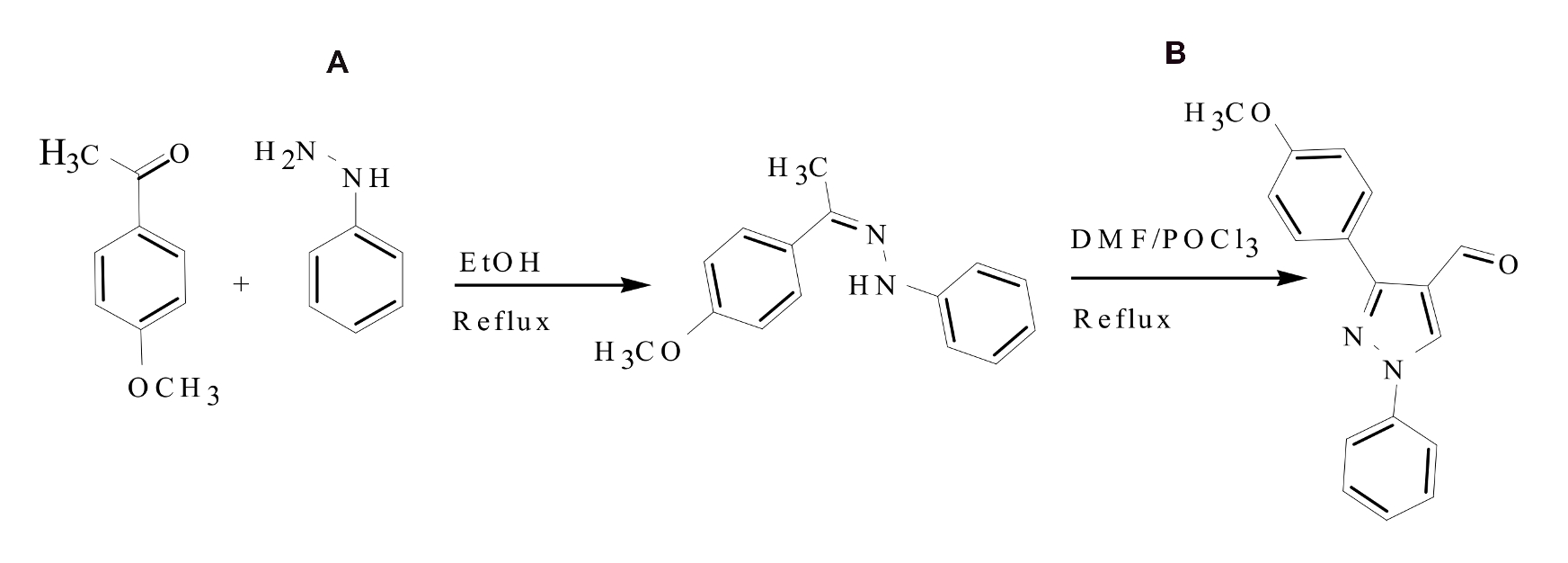
Figure 1. Schematic representation of synthesis of pyrazole carboxaldehyde
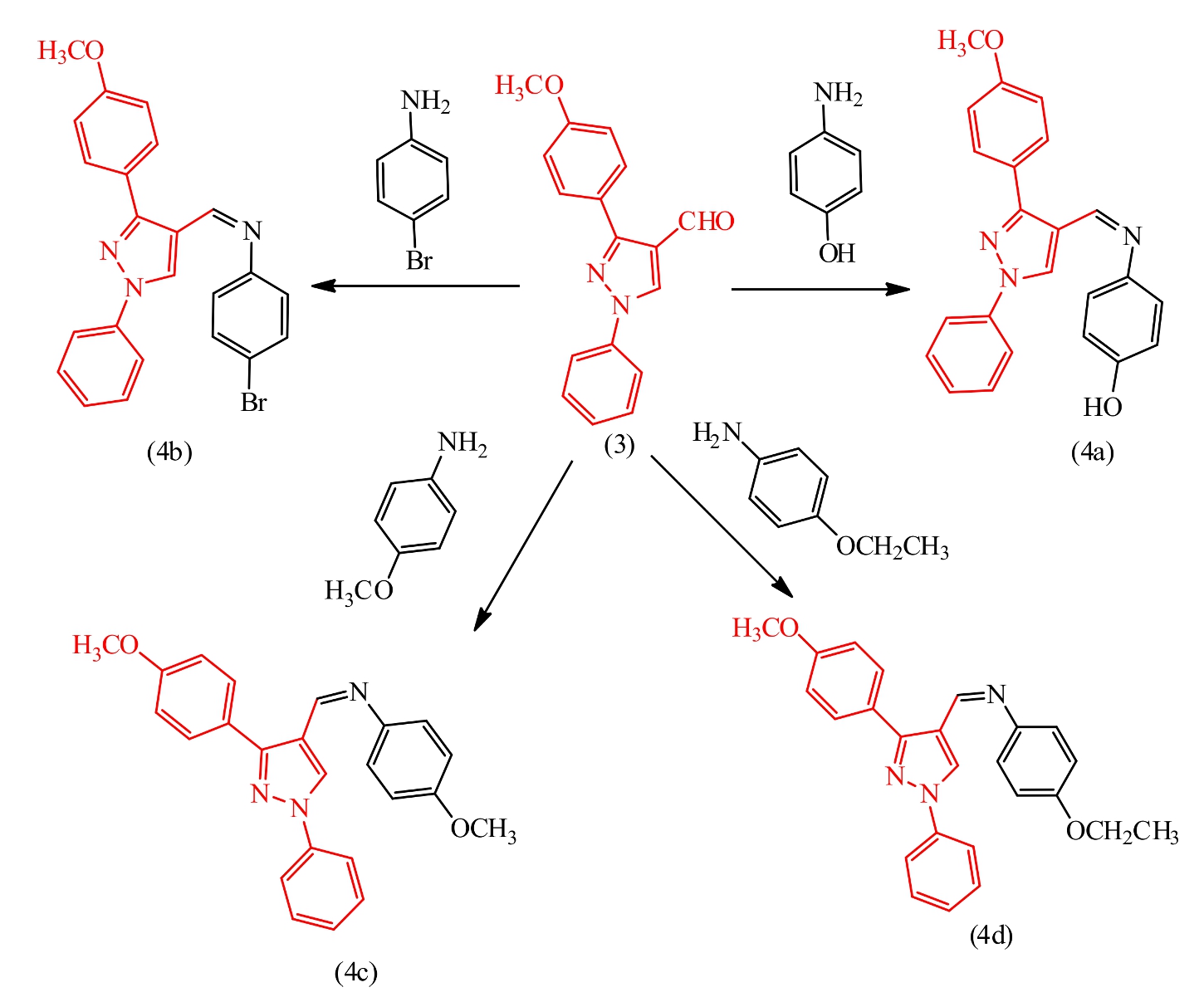
Figure 2. Schematic representation of synthesis of 4a-d
Synthesis of 4-(((3-(4-methoxyhenyl)-1-phenyl-1H-pyrazol-4-yl) methylene)amino)phenol (4a)
The compound was obtained by the reaction between 3-(4-methoxyphenyl)-1-phenyl-1H-pyrazole -4-carboxaldehyde with 4-aminophenol. Yield 48 %, brown solid, mp 164 0C, IR cm-1: 3420 ( OH str), 3054 (ArCH str), 1471 (ArC=C str), 1646 (C=N str), 1239 (C-N str); 1HNMR (ẟ ppm): 3.73 (s, 3H, OCH3), 5.02 (s, 1H, OH), 8.95 (s, 1H, HC=N), 8.52 (s, 1H, CH of pyrazole ring), 6.98-8.13 (m, 13H, aromatic H), 13CNMR (ẟ ppm): 107 -145 (all aromatic carbons), 19.03 (methoxy carbon)), MS: m/z 370 (M+).
Synthesis of 4-bromo-N-((3-(4-methoxyphenyl)-1-phenyl-1H-pyrazol-4-yl)methylene) aniline (4b)
The compound was obtained by the reaction between 3-(4-methoxyphenyl)-1-phenyl-1H-pyrazole -4- carboxaldehyde with 4-bromoaniline.Yield 66 %, reddish brown solid, mp143 0C, IR cm-1: 3038 (ArCH str), 1449 (ArC=C str), 1611 (C=N str), 1222 (C-N str), 744 (CBr str); 1HNMR (ẟ ppm): 3.78 (s, 3H, CH3), 9.16 1H, HC=N), 8.86 (s, 1H, CH of pyrazole), 7.08 -8.42 (m, 13H, aromatic H), 13CNMR (ẟ ppm): 118 ppm -159 ppm (all aromatic carbons), 14.96 (methoxy carbon), MS: m/z 432 (M+).
Synthesis of 4-(methoxy-N-((3-(4-methoxyphenyl)-1-phenyl-1H-pyrazol-4-yl) methylene) aniline (4c)
The condensation reaction was carried out between 3-(4-methoxyphenyl)-1-phenyl-1H-pyrazole -4- carboxaldehyde with 4-methoxyaniline to obtain 4c. Yield 54 %, yellow solid, mp 143 0C, IR cm-1 : 3035 (ArCH str), 1449 (ArC=C str), 1612 (C=N str), 1221 (C-N str), 1HNMR (ẟ ppm): 3.01 (s, 6H, two OCH3), 9.09 (s, 1H, HC=N), 8.93 (s, 1H, CH of pyrazole), 7.05-8.32 (m, 13H, aromatic H), 13CNMR (ẟ ppm): 107 ppm -143 ppm (all aromatic carbons), 28 ppm (methoxy carbon) MS: m/z 383 (M+).
Synthesis of 4-(ethoxy-N-((3-(4-methoxyphenyl)-1-phenyl-1H-pyrazol-4-yl) methylene) aniline (4d)
The condensation reaction was carried out between 3-(4-methoxyphenyl)-1-phenyl-1H-pyrazole -4- carboxaldehyde with 4-ethoxyaniline to obtain 4d. Yield 49 %, yellow powder, mp 143 0C, IR cm-1: 3041 (ArCH str), 1453 (ArC=C str), 1620 (C=N str), 1228 (C-N str), 1HNMR (ẟ ppm): 0.99 (t, 3H, CH3), 3.27 (s, 3H, OCH3), 4.34 (q, 2H, CH2), 9.06 (s, 1H, HC=N), 8.89 (s, 1H, CH of pyrazole), 7.07-8.12 (m, 13H, aromatic H), 13CNMR (ẟ ppm): 105 -147 (all aromatic carbons), 68.5, 55.7 and 14.08 ppm (aliphatic carbons); MS: m/z 398 (M+).
Antibacterial activity
The in vitro antibacterial activity (Desai et al., 2013) of the all the synthesized compounds have been investigated by adopting standard protocols available in the literature. The studies were carried on both gram-negative and gram-positive bacterial strains. Escherichia coli MTCC443 and Pseudomonas aeruginosa MTCC-1688 were selected as two different gram-negative bacteria and Staphylococcus aureus MTCC-96 and Streptococcus pyogenes MTCC-442 represented gram-positive bacterial strains. Ciprofloxacin was selected as the standard antibacterial drug.
Antifungal activity
Antifungal activity was screened against two fungal strains such as Candida albicans MTCC-227 and Aspergillus niger MTCC-282. Fluconazole was chosen as the standard antifungal drug. Here we adopted broth micro-dilution method to measure the minimal inhibitory concentration (MIC) according to National Committee for Clinical Laboratory Standards (NCCLS) (Khalil and Collins, 2010).
Antimycobacterial activity
The in vitro antitubercular activity was carried out against M. tuberculosis H37Rv by microplate alamar blue assay method (Zhan et al., 2014). Isonicotinic acid hydrazide (INH) was chosen as the standard antituberculosis drug, and all the compounds were screened (Young et al., 2014).
Molecular docking
In the present study we used the software Arguslab 4.0.1 version for docking to set up input file. First, we optimized the structures of all the compounds, after that its binding conformation in the active site of the selected protein thymidylate kinase (TMPK) (PDB Id: 4QGG, downloaded from PDB database) was prepared. Before running the docking all the miscellaneous residues, water molecules, and heterocyclic compounds present in the crystallographic structure of the target protein were removed to activate the binding sites of each protein only for the synthesized compounds and subsequently hydrogen atoms were added to amino acids. The docking process was proceeded by assuming that the ligand molecule is flexible (all the rotatable bonds of ligands are considered) and the target protein is rigid. A calculation box was generated with 60 x 60 x 60 grid points in XYZ directions and placed at the centre of the binding site residues and the docking was started with standard precision with default values.
Results and Discussion
The chemistry behind the synthesis of the title compounds is that the condensation of methoxy acetophenone with phenyl hydrazine followed by Vilsmeir-Hack reaction to yield 3-(4-methoxyphenyl)-1-phenyl-1H-pyrazole -4- carboxaldehyde, which on again undergo condensation with p-substituted amino compound to form imino phenyl compounds (4a-d). All the synthesized compounds were characterized by different spectroscopic techniques.
Antimicrobial activity
From the antibacterial activity data illustrated in table 1, the compounds 4a and 4b are active against S. aureus and 4c and 4d are inactive. All the synthesised compounds showed an activity (weak to high activity) against E. coli. The compounds 4b is highly active against P. aerugivosa, 4a and 4c are showing weak activity and 4d is almost inactive. The compounds 4a and 4b are exhibiting moderate activity towards S. pyrogenes 4c and 4d are less active. All our compounds displayed an outstanding antifungal activity with MIC 0.2 µg/ mL against A. niger than the standard drug fluconazole and this activity is found to be independent of the substituents on imino phenyl ring. Moreover, the compounds 4a showed good antifungal activity (MIC 50 µg/mL) against C. albicans than rest of the compounds. However, they all were exhibiting less activity than standard drug fluconazole (MIC 30 µg/mL).
Structure Activity Relationship (SAR)
The biological studies point out that the presence of electron releasing or withdrawing group on any of the phenyl ring of the compound extensively increases the conjugation and this will enhance the bioactivity and thus exhibiting a broad-spectrum of antimicrobial activity. The bioactivity for these compounds may be due to the combination of the factors such as substituted phenyl group on the pyrazole ring, the presence of the imino moiety, steric hindrance, and substituents at the imino phenyl ring. SAR study helps to understand the effect of different substitutions on imino phenyl and electronic effect on microbial strain (Dai et al., 2016). The substituents have been carefully chosen to generate different electronic environment around the molecules. Methoxy and ethoxy groups were selected as electron donating groups and hydroxy and bromo groups are chosen as electron withdrawing groups (Pai et al., 2016). From the antibacterial data illustrated in table 1, the compounds with electron withdrawing groups on imino phenyl ring show enhanced activity. Moreover, the hydrophobic substituents at 4th position of imino phenyl ring provide a positive impact on antimicrobial activity and its physiochemical properties. From our scanning the activity order follows as the compounds with Br> OH> OCH3 > OCH2CH3 (Ravi et al., 2020). It was true in our case as the chain length increases the inhibitory activity generally decrease, compound with methoxy group was more active than corresponding ethoxy compounds (De Oliveira et al., 2007).
Antituberculosis activity
The antitubercular efficacy of the prepared pyrazole terminated imino compounds was explored against M. tuberculosis by microplate blue Almar assay as reported in the literature (Mustapha et al., 2018). All the title compounds showed poor antitubercular activity (Table 1) and may be due to the lower lipophilicity as indicated by their C log P values, which resulted in the reduced cell wall permeation.
Table1. Antimicrobial activity of pyrazole clubbed phenyl derivatives(Inhibition zone measured in mm)
|
Compounds |
S. aureus |
E. Coli |
P. aerugi |
S-pyrogenes |
A. niger |
C. albicans |
M. tuberculosis |
|
4a |
14 |
16 |
12 |
15 |
0.2 |
70 |
100 |
|
4b |
18 |
21 |
21 |
19 |
0.2 |
100 |
51.2 |
|
4c |
9 |
14 |
13 |
12 |
0.2 |
100 |
51.2 |
|
4d |
6 |
11 |
9 |
7 |
0.2 |
100 |
51.2 |
|
Ciprofloxacin Fluconazole INH |
24 - - |
22 - - |
23 - - |
23 - - |
- 30 - |
- 30 - |
- - 0.4 |
Highly active-20-30, moderately active-15-20, weakly active -11-15, less than 11 inactive
Molecular docking studies with protein
Generally, the working of antibiotics may be by arresting the cell wall synthesis or inhibiting the protein synthesis or interrupting the nucleic acid synthesis or by anti-metabolism (Kapoor et al., 2017). That is the antibiotic attacks the specific proteins which is responsible for any of the above noted routes. Here we selected Thymidylate kinase (TMPK) as the target protein, which contains 50 monophosphate kinase, and the essential enzyme present in it catalyses the biosynthesis of DNA of bacterial cell. This protein TMPK generates dTTP for the above cell wall synthesis (Cui et al., 2013). The action of standard antibacterial drug ciprofloxacin is inhibiting the DNA gyrase which is necessary to separate the bacterial DNA and thus resulting the inhibition of the cell wall division. The H bond length and minimum binding energy of our compounds within the active site of the target protein were measured and tabulated in Table 2. The lowest energy onformation and its binding pose of all the compounds is shown in Figure 3.
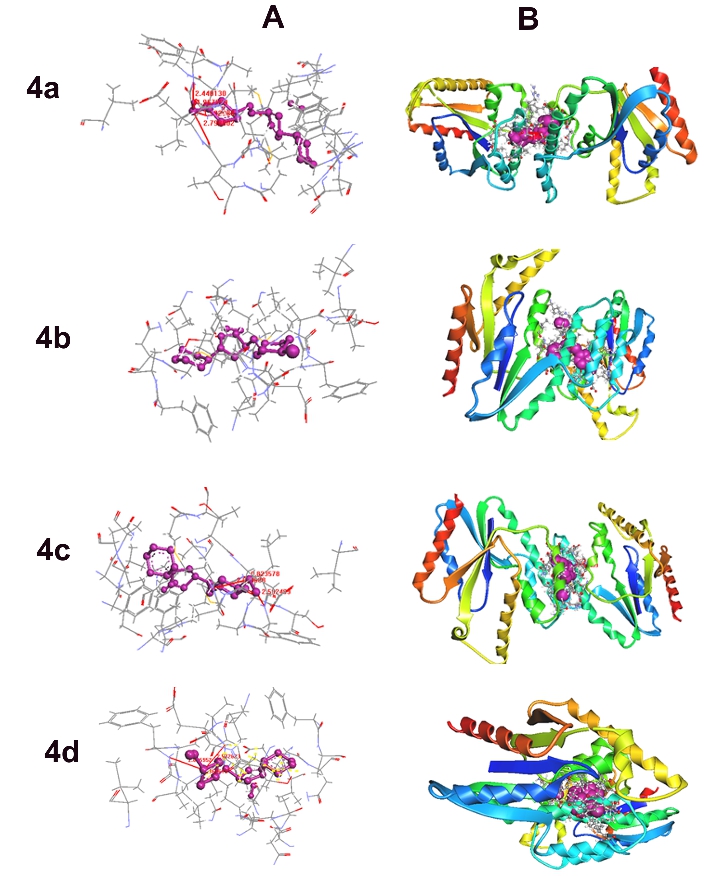
Figure 3. The docked pose of the compounds (4a – d, purple colour) in the active site of the target protein (grey and blue colour (A), H bondings in red colour and its cartoon view (protein as ribbon) (B)
Table 2. Binding energy of the compound and H-bond length calculated using Argus lab 4.0.1
|
Entry |
Binding energy (Kcal/mol) |
H bond length (A0) |
|
4a |
-8.53 |
2.79 (265 THR with O of OH), 2.44 (270 PHE with O of OH), 1.96 (266 LEU with O of OH), 1.58 (269 LEU with O of OH) |
|
4b |
-9.02 |
- |
|
4c |
-8.19 |
2.93 (268 MET with O of OCH3 of imino phenyl), 2.50 (270 PHE with O of OCH3 of imino phenyl), 0.823 (269 LEU with O of OCH3 of imino phenyl) |
|
4d |
-8.98 |
2.83 (270 PHE with O of OCH2CH3), 2.57 (268 MET with O of OCH2CH3), 0.366 (269 LEU with |
The binding free energy calculation and its value help us to measure the accuracy of affinity between target protein and the docking models. The literature says if lower the value of binding energy more will be the binding strength of the ligand in the active site of the target protein and the binding energy values ranging from -8.19 to - 9.02 Kcal / mol. The predicted binding energy values of our compounds were not higher than 2.5 Kcal / mol, indicated those were well fitted in the active pocket of the targeted protein. The compound 4a is forming three different H bond interactions with the amino acid moiety 265 THR, 270 PHE, 266 LEU and 269 LEU with O of OH with bond length 2.79, 2.44, 1.96 and 1.58 A0 respectively. In 4c, 268 MET, 270 PHE and 269 LEU amino acid moieties formed H bond with O of OCH3 with bond length 2.93, 2.50, and 0.823 A0 respectively. In compound 4d, there is three H bond interactions, 270 PHE, 268 MET and 269 LEU with O of OCH2CH3 with bond length 2.83, 2.57 and 0.366 A0 respectively.
Molecular docking with DNA
Molecular docking technique is important for recognizing the nature of drug – DNA interaction in the drug design and discovery, in the development of new chemotherapeutic drug as well as in studying the binding mechanism of new molecule with the binding site of the DNA target specific region of the DNA mainly in a non-covalent manner (Rosh et al., 2005). Even though there are several factors which affect the binding modes, here we concerned only one factor, the shape of the molecule for DNA binding to bind either in major groove or manor groove as binding site. From the literature the forces responsible for the stability of DNA-intercalator complex are van der Waals, hydrogen bonding, hydrophobic, charge transfer and electrostatic complementarity (Baginski et al., 1997; Proudfoot et al., 2001). The efficiency of the molecule to act as a biologically active drug highly depends on its favorable conformation and binding location within the DNA. The binding conformations of 4a-d with DNA were performed with CT-DNA duplex of sequence d (CGCGAATTCGCG)2 dodecamer (PDB ID: 355D) and the most favorable docked poses are given in Figure 4. All our synthesized compounds could bind well with DNA in an interactive fashion near the minor groove. The planarity of the compound amplifies the binding via partial intercalation with DNA. From literature usually small molecules interacting with minor groove due to little steric hindrance (Corradini et al., 2007). Moreover, the presence of aromatic ring connected by single bonds allow for torsional strain to the molecule to enter the curvature of the groove with displacement of water molecules. Presence of heterocyclic rings in the molecule also make stacking interactions between DNA base pairs, resulting van der Waals interactions and hydrophobic contacts with DNA functional groups that define the groove (Hill et al., 2011; Lakshmipraba et al., 2015). Thus, our molecular modeling studies fall light on the binding modes through which these compounds interact with DNA.
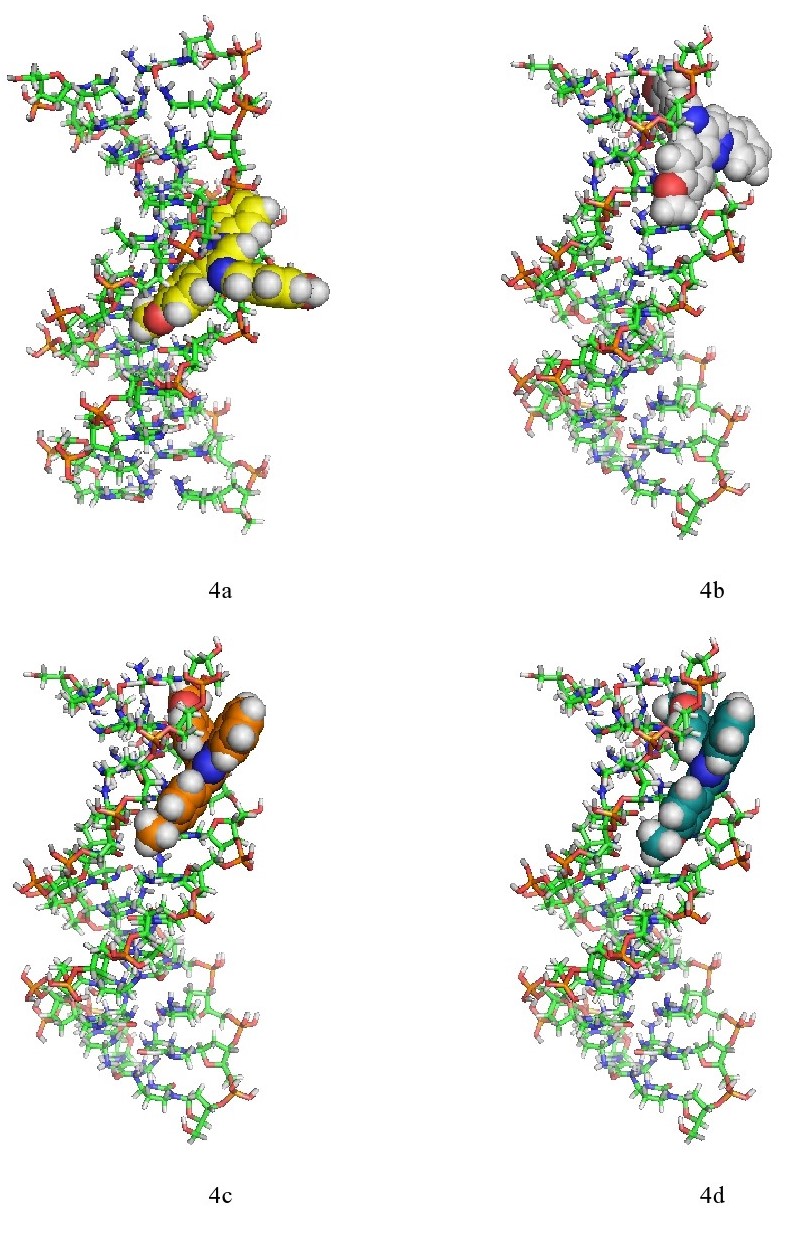
Figure 4. Molecular docked model of 4a-d with DNA dodecamer duplex of sequence d(CGCGAATTCGCG)2(PDB ID: 1BNA)
Conclusion
A series of four new 1-phenyl-3- methoxy phenyl pyrazole linked imino phenyl derivatives were synthesized and characterized and investigated their antibacterial activity against gram negative bacterial strains such as Escherichia coli MTCC-443 and Pseudomonas aeruginosa MTCC-1688 and two - gram positive strains as Staphylococcus aureus MTCC-96 and Streptococcus pyogenes MTCC-442. Antifungal and antituberculosis activities were also tabulated. Most of our compounds were very active, which might be due to the greater lipophilicity of three different phenyl groups present in the molecule. It may be also noticed that the electron withdrawing substituent present at 4th position of the imino phenyl ring and electron releasing group at 4th position of C-phenyl of pyrazole moiety enhanced its biological activity. Carrying out the molecular docking studies, minimum ligand pose binding energy and H-bond information of all the synthesized compounds in the protein TMPK were tabulated. The molecular docking with DNA also supported the non-covalent interactions into the groove binding mode.
Declaration of competing interest
The authors declare that they have no known competing financial interests or personal relationships that could have appeared to influence the work reported in this paper. Acknowledgements
One of the authors (Sandhya P.V.) would like to acknowledge the financial support from the University Grants Commission, India.
References
Abdel-Aziz M, Abuo-Rahma GA, Hassan AA. 2009. Synthesis of novel pyrazole derivatives and evaluation of their antidepressant and anticonvulsant activities. European Journal of Medicinal Chemistry, 44:3480. https://doi.org/10.1016/j.ejmech.2009.01.032.
Abid M, Bhat AR, Athar F, Azam A. 2009. Synthesis, spectral studies and antiamoebic activity of new 1-N-substituted thiocarbamoyl-3- phenyl-2-pyrazolines. European Journal of Medicinal Chemistry, 44(1):417–425. https://doi.org/10.1016/j.ejmech.2007.10.032.
Azam F, Singh S, Khokhra SL, Prakash O. 2007. Synthesis of Schiff bases of naphtha [1, 2-d]thiazol-2-amine and metal complexes of 2- (2'-hydroxy) benzylideneaminonaphthothiazole as potential antimicrobial agents. Journal of Zhejiang University, Science B, 8(6):446–452. https://doi.org/10.1631/jzus.2007.B0446.
Baginski M, Fogolari F, Briggs JM. 1997. Electrostatic and Non-electrostatic Contributions to the Binding Free Energies of Anthracycline Antibiotics to DNA. Journal of Molecular Biology, 274:253-67(1997); doi:10.1006/jmbi.1997.1399
Balbi A, Anzaldi M, Mazzei M, Miele M, Bertolotto M, Ottonello L, Dallegri F. 2006. Synthesis and biological evaluation of novel heterocyclic ionone-like derivatives as anti-inflammatory agents. Bioorganic and Medicinal Chemistry, 14(15):5152–5160. https://doi.org/10.1016/j.bmc.2006.04.007
Carrión MD, López Cara LC, Camacho ME, Tapias V, Escames G, Acuña-Castroviejo D, Espinosa A, Gallo MA, Entrena A. 2008. Pyrazoles and pyrazolines as neural and inducible nitric oxide synthase (nNOS and iNOS) potential inhibitors (III). European Journal of Medicinal Chemistry, 43 (11): 2579–2591. https://doi.org/10.1016/j.ejmech.2008.01.014.
Chalina EG, Chakarova L. 1998. Synthesis, hypotensive and antiarrhythmic activities of 3-alkyl-1-(2-hydroxy-5,8-dimethoxy-1,2,3,4-tetrahydro-3-naphthalenyl)ureas or thioureas and their guanidine analogues. European Journal of Medicinal Chemistry, 33: 975. https://doi.org/10.1016/S0223-5234(99)80022-1.
Corradini R, Sforza S, Tedeschi T, Marchelli R. 2007. Chirality as a Tool in Nucleic Acid Recognition: Principles and Relevance in Biotechnology and in Medicinal Chemistry. Chirality, 19:269-294. DOI: 10.1002/chir.20372
Cui Q, Shin WS, Luo Y, Tian J, Cui H, Yin D. 2013. Thymidylate kinase: an old topic brings new perspectives. Current Medicinal Chemistry, 20:1286–1305. doi: 10.2174/0929867311320100006
Dai H, Xiao YS, Li Z, Xu XY, Qian XH. 2014.The thiazoylmethoxy modification on pyrazole oximes: Synthesis and insecticidal biological evaluation beyond acaricidal activity. Chinese Chemical Letters, 25: 1014–1016. https://doi.org/10.1016/j.cclet.2014.06.011
Dai H, Chen J, Li H, Dai B, He H, Fang Y. 2016. Synthesis and Bioactivities of Novel Pyrazole Oxime Derivatives Containing a 5-Trifluoromethylpyridyl Moiety. Molecules, 21: 276. doi.org/10.3390/molecules21030276
De Oliveira Cabral MM, Mendonça PM, Da Silva Gomes CM, Barbosa-Filho JM, Da Silva Dias C, Soares MJ, De Carvalho Queiroz MM. 2007. Biological Activity of Yangambin on the Postembryonic Development of Chrysomya megacephala (Diptera: Calliphoridae). Journal of Medical Entomology, 44: 249. https://doi.org/10.1093/jmedent/44.2.249
Desai NC, Dodiya A, Shihory N. 2013. Synthesis and antimicrobial activity of novel quinazolinone-thiazolidinequinoline compounds. Journal of Saudi Chemical Society, 17 (3): 259–267. https://doi.org/10.1016/j.jscs.2011.04.001
Farag AM, Mayhoub AS, Barakat SE, Bayomi AH. 2008a. Regioselective synthesis and antitumor screening of some novel N-phenylpyrazole derivatives. Bioorganic and Medicinal Chemistry, 16(2): 881–889. https://doi.org/10.1016/j.bmc.2007.10.015
Farag AM, Mayhoub AS, Barakat, SE, Bayomi AH. 2008b. Synthesis of new N-phenylpyrazole derivatives with potent antimicrobial activity. Bioorganic and Medicinal Chemistry, 16 (8): 4569–4578. https://doi.org/10.1016/j.bmc.2008.02.043
Faria JV, Vegi PF, Miguita AGC, Dos Santos MS, Boechat N, Bernardino AMR. 2017. Recently reported biological activities of pyrazole compounds. Bioorganic & Medicinal Chemistry, 25: 5891. https://doi.org/10.1016/j.bmc.2017.09.035
Gökhan-Kelekçi N, Koyunoglu S, Yabanoglu S, Yelekçi K, Özgen O, Uçar G, Erol K, Kendi E, Yesilada A. 2009. New pyrazoline bearing 4(3H)-quinazolinone inhibitors of monoamine oxidase: synthesis, biological evaluation, and structural determinants of MAO-A and MAO-B selectivity. Bioorganic & Medicinal Chemistry, 17: 675. https://doi.org/10.1016/j.bmc.2008.11.068
Hill GM, Moriarity DM, Setzer WN. 2011. Attenuation of Cytotoxic Natural Product DNA Intercalating Agents by Caffeine. Scientia Pharmaceutica, 79: 729-747. doi.org/10.3797/scipharm.1107-19
Kapoor G, Saigal S, Elongavan A. 2017. Action and resistance mechanisms of antibiotics: A guide for clinicians. Journal of Anaesthesiology Clinical Pharmacology, 33:300-305. doi: 10.4103/joacp.JOACP_349_15.
Karrouchi K, Radi S, Ramli Y, Taoufik J, Mabkhot YN, AlAizari FA, Ansar M. 2018. Synthesis and Pharmacological Activities of Pyrazole Derivatives: A Review. Molecules, 23: 134 (2018); https://doi.org/10.3390/molecules23010134.
Khalil AS, Collins JJ. 2010. Synthetic biology: Applications come of age. Nature Reviews Genetics, 11(5): 367–379. https://doi.org/10.1038/nrg2775.
Lakshmipraba J, Arunachalam S, Vijay Solomon R, Venuvanalingam P. 2015. Synthesis, DNA binding and docking studies of copper (II) complexes containing modified phenanthroline ligands. Journal of Coordination Chemistry, 68: 1374-1386. DOI: 10.1080/00958972.2015.1014349.
Michon V, Du Penhoat CH, Tombret F, Gillardin JM, Lepage F, Berthon L. 1995. Preparation, structural analysis and anticonvulsant activity of 3- and Saminopyrazole N-benzoyl derivatives. European Journal of Medicinal Chemistry, 30: 147. https://doi.org/10.1016/0223-5234(96)88220-1
Monica Arora, Saravanan J, Mohan S, Shivaji Bhattacharjee. 2013. Synthesis, Characterization and Antimicrobial Activity of Some Schiff Bases of 2-amino-4-(4-chlorophenyl)–n-(3-furan-2-ylmethyl carboxamido) thiophenes. Asian Journal of Research in Chemistry. 6(1): 24-28. DOI: 10.5958/0974-4150
Mustapha Mandewalea, Bapu Thorata Y, Nivid Ram Jadhava, Aarti Nagarsekara, Ramesh Yamgar. 2018. Synthesis, structural studies and antituberculosis evaluation of new hydrazone derivatives of quinoline and their Zn (II) complexes. Journal of Saudi Chemical Society, 22(2): 218–228.
Naito H, Ohsuki S, Sugimori M, Atsumi R, Minami M, Nakamura Y, Ishii M, Hirotani K, Kumazawa E, Ejima A. 2002. Chem Pharm Bull, 50: 453. https://doi.org/10.1248/cpb.50.453
Pai A, Kumar DV, Jayashree BS. 2016. Synthesis, www.ajpp.in Asian Journal of Pharmacy and Pharmacology 2021; 7(1): 1-7 6 characterization, antibacterial and anticancer evaluation of some novel flavone-3-ols. Asian Journal of Pharmaceutical Sciences, 11(1): 187–188. https://doi.org/10.1016/j.ajps.2015.11.044
Proudfoot EM, Mackay JP, Karuso P. 2001. Probing Site Specificity of DNA Binding Metallointercalators by NMR Spectroscopy and Molecular Modeling. Biochemistry, 40: 4867-78. doi.org/10.1021/bi001655f
Ravi D, Sarkar S, Purvey S, Passero F, Beheshti A, Chen Y, Mokhtar M, David K, Konry T, Evens AM. 2020. Interaction kinetics with transcriptomic and secretory responses of CD19-CAR natural killer-cell therapy in CD20 resistant non-hodgkin lymphoma. Leukemia, 34 (5): 1291–1304. https://doi.org/10.1038/s41375-019-0663-x.
Rohs R, Bloch I, Sklenar H, Shakked Z. 2005. Molecular flexibility in ab initio drug docking to DNA: binding-site and binding-mode transitions in all-atom Monte Carlo simulations. Nucleic Acids Res, 33: 7048-57. doi: 10.1093/nar/gki1008
Saad HA, Osman NA, Moustafa AH. 2011. Synthesis and analgesic activity of some new pyrazoles and triazoles bearing a 6, 8- dibromo-2-methylquinazoline moiety. Molecules, 16(12): 10187-10201.https://doi.org/10.3390/molecules161210187.
Shih SR, Chu TY, Reddy GR, Tseng SN, Chen HL, Tang WZ, Wu M, Yeh JY, Chao YS, Hsu JTA, Hsieh HP, Horng JT. 2010. Research Pyrazole compound BPR1P0034 with potent and selective anti-influenza virus activity. Journal of Biomedical Science, 17: 13. https://doi.org/10.1186/1423-0127-17-13.
Zhang C, Chang S, Tian X, Tian Y. 2014. 3D-QSAR and Docking Modeling Study of 1,3,5-Triazine Derivatives as PSII Electron Transport Inhibitor. Asian Journal of Chemistry, 26: 264. https://doi.org/10.14233/ajchem.2014.15883